

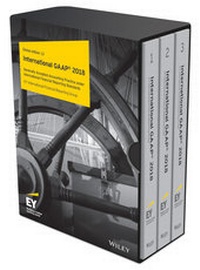
International GAAP 2018
Description

The essential guide to practical IFRS implementation, updated for 2018
International GAAP 2018 is the definitive reference for IFRS application around the world. Written by the expert practitioners at Ernst & Young, this invaluable resource provides both interpretation and practical implementation guidance for anyone applying, auditing, interpreting, regulating, studying, or teaching IFRS. Specific instruction written from a global perspective provides clarity on complex issues, and coverage of the latest changes ensures that you will apply the most current standards appropriately and effectively. Worked examples provide answers at a glance, and hundreds of illustrations from major companies' financial reports demonstrate IFRS implementation and bring technical concepts to life.
Countries around the world have adopted the International Financial Reporting Standards (IFRS), and in the US, foreign private issuers are allowed to report under IFRS without reconciling to US GAAP. This book provides the essential information practitioners need to correctly understand and apply these standards, using a clear, consistent approach to resolving global financial reporting issues under IFRS in real-world scenarios. Updated and expanded for 2018, this new edition allows you to:
- Get up to date on the newest amendments and interpretations issued in the past year
- Examine implementation issues caused by widespread adoption of IFRS 9, IFRS 15, and the upcoming adoption of IFRS 16 in 2019
- Understand the new insurance contract standard IFRS 17, which solves the comparison problem of IFRS 4
- Gain clarity and insight on practical matters involved with IFRS implementation
This three-volume set provides the depth and breadth of coverage necessary, with financial instruments covered separately for greater ease of navigation. As the world's most comprehensive reference for IFRS implementation, International GAAP 2018 is the resource no practitioner, regulator, student, or researcher should be without.
For further information on the various digital versions which are available for this material please visit www.wileyigaap.com
Ernst s talents, Ernst & Young provides solutions to clients based on financial, transactional, and risk-management knowledge in its core services of audit, tax, and transactions. The International Financial Reporting Group of Ernst & Young includes financial reporting specialists from throughout the world.
More details
Other editions
Additional editions

Content
- Cover
- Title Page
- Copyright
- About this book
- Preface
- Lists of chapters
- Volume 1
- Volume 2
- Volume 3
- Abbreviations
- Authoritative literature
- Chapter 1: International GAAP
- 1 Why International Financial Reporting Standards Matter
- 2 The IFRS Foundation and the IASB
- 2.1 The standard-setting structure
- 2.2 The IFRS Foundation
- 2.3 The Monitoring Board
- 2.4 The International Accounting Standards Board (IASB)
- 2.5 The IFRS Interpretations Committee (the Interpretations Committee)
- 2.6 The IASB's and IFRS Interpretations Committee's Due Process Handbook
- 2.7 The IFRS Advisory Council (the Advisory Council)
- 2.8 Accounting Standards Advisory Forum (ASAF)
- 2.9 Other advisory bodies
- 3 The IASB's Technical Agenda and Convergence with us GAAP
- 3.1 The IASB's current priorities and future agenda
- 3.2 IFRS/US GAAP convergence
- 4 The Adoption of IFRS Around the World
- 4.1 Worldwide adoption
- 4.2 Europe
- 4.3 Americas
- 4.4 Asia
- 4.5 Australia
- 4.6 Africa - South Africa
- 5 Consistency in Application of IFRS
- 6 Summary
- References
- Chapter 2: The IASB's Conceptual Framework
- 1 Introduction
- 1.1 What is a conceptual framework?
- 1.2 Why is a conceptual framework necessary?
- 2 The IASB's Conceptual Framework
- 2.1 Development of the IASB's Conceptual Framework
- 2.2 Contents, purpose and scope of the IASB's Conceptual Framework
- 2.3 Chapter 1: The objective of general purpose financial reporting
- 2.4 Chapter 2: The reporting entity
- 2.5 Chapter 3: Qualitative characteristics of useful financial information
- 2.6 Chapter 4: The Framework (1989): the remaining text
- 2.7 Management commentary
- 3 Future Developments
- 3.1 Objective of GPFR and qualitative characteristics of useful financial information
- 3.2 Reporting entities
- 3.3 Elements of financial statements
- 3.4 Recognition and derecognition
- 3.5 Measurement
- 3.6 Presentation and disclosure
- 3.7 Transition and effective date
- 3.8 Tentative decisions of the Board regarding the progression of the ED to a revised framework
- References
- Chapter 3: Presentation of financial statements and accounting policies
- 1 Introduction
- 1.1 Objective and scope of IAS 1
- 1.2 Objective and scope of IAS 8
- 2 The Purpose and Composition of Financial Statements
- 2.1 The purpose of financial statements
- 2.2 Frequency of reporting and period covered
- 2.3 The components of a complete set of financial statements
- 2.4 Comparative information
- 2.5 Identification of the financial statements and accompanying information
- 3 The Structure of Financial Statements
- 3.1 The statement of financial position
- 3.2 The statement of comprehensive income and the statement of profit or loss
- 3.3 The statement of changes in equity
- 3.4 The notes to the financial statements
- 4 Accounting Policies
- 4.1 General principles
- 4.2 The distinction between accounting policies and accounting estimates
- 4.3 The selection and application of accounting policies
- 4.4 Changes in accounting policies
- 4.5 Changes in accounting estimates
- 4.6 Correction of errors
- 4.7 Impracticability of restatement
- 5 Disclosure Requirements
- 5.1 Disclosures relating to accounting policies
- 5.2 Disclosure of estimation uncertainty and changes in estimates
- 5.3 Disclosure of prior period errors
- 5.4 Disclosures about capital
- 5.5 Other disclosures
- 6 Future Developments
- 6.1 Standard-setting projects
- 6.2 Maintenance projects
- 6.3 Research projects
- References
- Chapter 4: Non-current assets held for sale and discontinued operations
- 1 Objective and Scope of IFRS 5
- 2 Non-Current Assets (And Disposal Groups) Held for Sale or Held for Distribution to Owners
- 2.1 Classification of non-current assets (and disposal groups) held for sale or held for distribution to owners
- 2.2 Measurement of non-current assets (and disposal groups) held for sale
- 3 Discontinued Operations
- 3.1 Definition of a discontinued operation
- 3.2 Presentation of discontinued operations
- 3.3 Trading between continuing and discontinued operations
- 4 Comparative Information
- 4.1 Treatment of comparative information on initial classification as held for sale
- 4.2 Treatment of comparative information on the cessation of classification as held for sale
- 5 Disclosure Requirements
- 5.1 Requirements of IFRS 5
- 5.2 Disclosures required by standards other than IFRS 5
- 6 Future Developments
- References
- Chapter 5: First-time adoption
- 1 Introduction
- 1.1 Objectives of first-time adoption
- 1.2 Authoritative literature
- 1.3 Defined terms
- 1.4 Future developments
- 2 Who is a First-Time Adopter?
- 2.1 The first IFRS financial statements in scope of IFRS 1
- 2.2 When should IFRS 1 be applied?
- 2.3 Determining the previous GAAP
- 3 Opening IFRS Statement of Financial Position
- 3.1 First-time adoption timeline
- 3.2 Opening IFRS statement of financial position and accounting policies
- 3.3 Fair value and deemed cost
- 3.4 Transitional provisions in other standards
- 3.5 Departures from full retrospective application
- 4 Exceptions to Retrospective Application of Other IFRSs
- 4.1 Introduction
- 4.2 Estimates
- 4.3 Derecognition of financial assets and financial liabilities
- 4.4 Hedge accounting: general
- 4.5 Hedge accounting in the opening IFRS statement of financial position
- 4.6 Hedge accounting: subsequent treatment
- 4.7 Hedge accounting: examples
- 4.8 Non-controlling interests
- 4.9 Classification and measurement of financial instruments under IFRS 9
- 4.10 Impairment of financial instruments under IFRS 9
- 4.11 Embedded derivatives
- 4.12 Government loans
- 5 Optional Exemptions from the Requirements of Certain IFRSs
- 5.1 Introduction
- 5.2 Business combinations and acquisitions of associates and joint arrangements
- 5.3 Share-based payment transactions
- 5.4 Insurance contracts
- 5.5 Deemed cost
- 5.6 Leases
- 5.7 Cumulative translation differences
- 5.8 Investments in subsidiaries, joint ventures and associates
- 5.9 Assets and liabilities of subsidiaries, associates and joint ventures
- 5.10 Compound financial instruments
- 5.11 Designation of previously recognised financial instruments - Entities applying IAS 39
- 5.12 Designation of previously recognised financial instruments - Entities adopting IFRS 9
- 5.13 Fair value measurement of financial assets or financial liabilities at initial recognition
- 5.14 Decommissioning liabilities included in the cost of property, plant and equipment
- 5.15 Financial assets or intangible assets accounted for in accordance with IFRIC 12
- 5.16 Borrowing costs
- 5.17 Extinguishing financial liabilities with equity instruments
- 5.18 Severe hyperinflation
- 5.19 Joint arrangements
- 5.20 Stripping costs in the production phase of a surface mine
- 5.21 Regulatory deferral accounts
- 5.22 IFRS 15 - Revenue from Contracts with Customers
- 5.23 Foreign currency transactions and advance consideration
- 5.24 Short-term exemptions from restatement of comparative information for IFRS 9
- 6 Presentation and Disclosure
- 6.1 Comparative information
- 6.2 Non-IFRS comparative information and historical summaries
- 6.3 Explanation of transition to IFRSs
- 6.4 Designation of financial instruments
- 6.5 Disclosures regarding deemed cost
- 6.6 Interim financial reports
- 6.7 Disclosure of IFRS information before adoption of IFRSs
- 7 Accounting Policies and Practical Application Issues
- 7.1 IAS 7 - Statement of Cash Flows
- 7.2 IAS 8 - Accounting Policies, Changes in Accounting Estimates and Errors
- 7.3 IAS 12 - Income Taxes
- 7.4 IAS 16 - Property, Plant and Equipment - and IAS 40 - Investment Property (cost model)
- 7.5 IAS 17 - Leases
- 7.6 IFRS 15 - Revenue from Contracts with Customers
- 7.7 IAS 19 - Employee Benefits
- 7.8 IAS 21 - The Effects of Changes in Foreign Exchange Rates
- 7.9 IAS 28 - Investments in Associates and Joint Ventures
- 7.10 IAS 29 - Financial Reporting in Hyperinflationary Economies
- 7.11 IFRS 11 - Joint Arrangements
- 7.12 IAS 36 - Impairment of Assets
- 7.13 IAS 37 - Provisions, Contingent Liabilities and Contingent Assets
- 7.14 IAS 38 - Intangible Assets
- 8 Regulatory Issues
- 8.1 First-time adoption by foreign private issuers that are SEC registrants
- 8.2 Disclosure of IFRS information in financial statements for periods prior to an entity's first IFRS reporting period
- References
- Chapter 6: Consolidated financial statements
- 1 Introduction
- 1.1 Background
- 1.2 Development of IFRS 10
- 1.3 Consolidation procedures
- 1.4 Disclosure requirements
- 2 Objective and Scope of IFRS 10
- 2.1 Objective
- 2.2 Scope
- 3 Control
- 3.1 Assessing control
- 3.2 Purpose and design of an investee
- 4 Power Over an Investee
- 4.1 Relevant activities
- 4.2 Existing rights
- 4.3 Voting rights
- 4.4 Contractual arrangements
- 4.5 Other evidence of power
- 4.6 Determining whether sponsoring (designing) a structured entity gives power
- 5 Exposure to Variable Returns
- 5.1 Exposure to variable returns can be an indicator of power
- 5.2 Returns that appear fixed can be variable
- 5.3 Evaluating whether derivatives provide an exposure to variable returns
- 5.4 Exposures to variable returns not directly received from an investee
- 5.5 Exposure to variable returns in bankruptcy filings
- 5.6 Interaction of IFRS 10 with the derecognition requirements in IFRS 9 (or IAS 39)
- 5.7 Reputational risk
- 6 Link Between Power and Returns: Principal-Agency Situations
- 6.1 Delegated power: principals and agents
- 6.2 Scope of decision-making
- 6.3 Rights held by other parties
- 6.4 Remuneration
- 6.5 Exposure to variability of returns from other interests
- 6.6 Application examples in IFRS 10
- 6.7 Other illustrative examples
- 7 Related Parties and de Facto Agents
- 7.1 Customer-supplier relationships
- 7.2 Non-controlling interests when there is a de facto agent
- 8 Control of Specified Assets
- 8.1 Identifying a silo
- 8.2 Evaluating control of a silo
- 8.3 Consolidation of a silo
- 9 Continuous Assessment
- 9.1 Changes in market conditions
- 9.2 Bankruptcy filings and troubled debt restructurings
- 9.3 Control reassessment as a result of action by others
- 10 Investment Entities
- 10.1 Definition of an investment entity
- 10.2 Determining whether an entity is an investment entity
- 10.3 Accounting by an investment entity
- 10.4 Accounting by a parent of an investment entity
- 11 Future Developments
- References
- Chapter 7: Consolidation procedures and non-controlling interests
- 1 Introduction
- 2 Consolidation Procedures
- 2.1 Basic principles
- 2.2 Proportion consolidated
- 2.3 Consolidating foreign operations
- 2.4 Intragroup eliminations
- 2.5 Non-coterminous accounting periods
- 2.6 Consistent accounting policies
- 3 Changes in Ownership Interests
- 3.1 Commencement and cessation of consolidation
- 3.2 Accounting for a loss of control
- 3.3 Changes in ownership interest without a loss of control
- 3.4 Demergers and distributions of non-cash assets to owners
- 4 Non-Controlling Interests
- 4.1 The definition of non-controlling interest
- 4.2 Initial measurement of non-controlling interests
- 4.3 Presentation of non-controlling interests
- 4.4 Non-controlling interests classified as financial liabilities
- 4.5 Subsequent measurement of non-controlling interests
- 5 Call and put Options Over Non-Controlling Interests
- 5.1 Call options only
- 5.2 Put options only
- 5.3 Combination of call and put options
- 5.4 Call and put options entered into in relation to existing non controllinginterests
- 5.5 Put options over non-controlling interests - Interpretations Committee and IASB developments
- 6 Future Developments
- 6.1 Sale or Contribution of Assets between an Investor and its Associate or Joint Venture (Amendments to IFRS 10 and IAS 28)
- 6.2 Sale or contribution of assets to a joint operation (where the entity has joint control or is a party to the joint operation)
- 6.3 Fair value measurement: unit of account
- 6.4 Financial Instruments with Characteristics of Equity project
- 6.5 Mandatory purchase of non-controlling interests
- References
- Chapter 8: Separate and individual financial statements
- 1 Separate and Individual Financial Statements
- 1.1 Consolidated financial statements and separate financial statements
- 1.2 Entities incorporated in the EU and consolidated and separate financial statements
- 2 Requirements of Separate Financial Statements
- 2.1 Cost method
- 2.2 IFRS 9 and IAS 39 methods
- 2.3 Equity method
- 2.4 Dividends and other distributions
- 3 Disclosure
- 3.1 Separate financial statements prepared by parent electing not to prepare consolidated financial statements
- 3.2 Separate financial statements prepared by an investment entity
- 3.3 Separate financial statements prepared by an entity other than a parent electing not to prepare consolidated financial statements
- 4 Common Control or Group Transactions in Individual Financial Statements
- 4.1 Introduction
- 4.2 Recognition
- 4.3 Measurement
- 4.4 Application of the principles in practice
- 4.5 Disclosures
- Chapter 9: Business combinations
- 1 Introduction
- 1.1 IFRS 3 (as revised in 2008) and subsequent amendments
- 2 Scope of IFRS 3
- 2.1 Mutual entities
- 2.2 Arrangements out of scope of IFRS 3
- 3 Identifying a Business Combination
- 3.1 Identifying a business combination
- 3.2 Definition of a business
- 4 Acquisition Method of Accounting
- 4.1 Identifying the acquirer
- 4.2 Determining the acquisition date
- 5 Recognition and Measurement of Assets Acquired, Liabilities Assumed and Non-Controlling Interests
- 5.1 General principles
- 5.2 Recognising identifiable assets acquired and liabilities assumed
- 5.3 Acquisition-date fair values of identifiable assets acquired and liabilities assumed
- 5.4 Classifying or designating identifiable assets acquired and liabilities assumed
- 5.5 Recognising and measuring particular assets acquired and liabilities assumed
- 6 Recognising and Measuring Goodwill or a Gain in a Bargain Purchase
- 6.1 Subsequent accounting for goodwill
- 7 Consideration Transferred
- 7.1 Contingent consideration
- 7.2 Replacement share-based payment awards
- 7.3 Acquisition-related costs
- 7.4 Business combinations achieved without the transfer of consideration
- 7.5 Combinations involving mutual entities
- 8 Recognising and Measuring Non-Controlling Interests
- 8.1 Measuring qualifying non-controlling interests at acquisition-date fair value
- 8.2 Measuring qualifying non-controlling interests at the proportionate share of the value of net identifiable assets acquired
- 8.3 Implications of method chosen for measuring non-controlling interests
- 8.4 Measuring share-based payment and other components of non-controlling interests
- 8.5 Call and put options over non-controlling interests
- 9 Business Combinations Achieved in Stages ('Step Acquisitions')
- 9.1 Proposed clarifications to accounting for previously held interests in a joint operation
- 10 Bargain Purchase Transactions
- 11 Assessing What is Part of the Exchange for the Acquiree
- 11.1 Effective settlement of pre-existing relationships
- 11.2 Remuneration for future services of employees or former owners of the acquiree
- 11.3 Reimbursement for paying the acquirer's acquisition-related costs
- 11.4 Restructuring plans
- 12 Measurement Period
- 12.1 Adjustments made during measurement period to provisional amounts
- 12.2 Adjustments made after end of measurement period
- 13 Subsequent Measurement and Accounting
- 14 Reverse Acquisitions
- 14.1 Measuring the consideration transferred
- 14.2 Measuring goodwill
- 14.3 Preparation and presentation of consolidated financial statements
- 14.4 Non-controlling interest
- 14.5 Earnings per share
- 14.6 Cash consideration
- 14.7 Share-based payments
- 14.8 Reverse acquisitions involving a non-trading shell company
- 14.9 Reverse acquisitions and acquirers that are not legal entities
- 15 Push Down Accounting
- 16 Disclosures
- 16.1 Nature and financial effect of business combinations
- 16.2 Financial effects of adjustments recognised in the current reporting period
- 16.3 Other necessary information
- 16.4 Illustrative disclosures
- References
- Chapter 10: Common control business combinations
- 1 Introduction
- 1.1 Background
- 1.2 Development of the IFRS 3 exemption for business combinations involving entities or businesses under common control
- 1.3 Possible future developments: IASB project on business combinations under common control
- 1.4 Scope of this chapter
- 2 The IFRS 3 Exemption
- 2.1 Common control exemption
- 3 Accounting for Business Combinations Involving Entities or Businesses Under Common Control
- 3.1 Pooling of interests method or acquisition method
- 3.2 Application of the acquisition method under IFRS 3
- 3.3 Application of the pooling of interests method
- 4 Group Reorganisations
- 4.1 Introduction
- 4.2 Setting up a new top holding company
- 4.3 Inserting a new intermediate parent within an existing group
- 4.4 Transferring businesses outside an existing group using a Newco
- 4.5 Transferring associates/joint ventures within an existing group
- References
- Chapter 11: Investments in associates and joint ventures
- 1 Introduction
- 2 Objective and Scope of IAS 28
- 2.1 Objective
- 2.2 Scope
- 3 Definitions
- 4 Significant Influence
- 4.1 Lack of significant influence
- 4.2 Holdings of less than 20% of the voting power
- 4.3 Potential voting rights
- 4.4 Voting rights held in a fiduciary capacity
- 5 Exemptions From Applying the Equity Method
- 5.1 Parents exempt from preparing consolidated financial statements
- 5.2 Subsidiaries meeting certain criteria
- 5.3 Investments held in associates or joint ventures held by venture capital organisations and similar organisations
- 5.4 Partial use of fair value measurement of associates
- 6 Classification as Held for Sale (IFRS 5)
- 7 Application of the Equity Method
- 7.1 Overview
- 7.2 Comparison between equity accounting and consolidation
- 7.3 Date of commencement of equity accounting
- 7.4 Initial carrying amount of an associate or joint venture
- 7.5 Share of the investee
- 7.6 Transactions between the reporting entity and its associates or joint ventures
- 7.7 Non-coterminous accounting periods
- 7.8 Consistent accounting policies
- 7.9 Loss-making associates or joint ventures
- 7.10 Distributions received in excess of the carrying amount
- 7.11 Equity transactions in an associate's or joint venture's financial statements
- 7.12 Discontinuing the use of the equity method
- 8 Impairment Losses
- 8.1 IAS 28 and IAS 39
- 8.2 IAS 28 and IFRS 9
- 9 Separate Financial Statements
- 9.1 Impairment of investments in associates or joint ventures in separate financial statements
- 10 Presentation and Disclosures
- 10.1 Presentation
- 10.2 Disclosures
- 11 Future Developments
- References
- Chapter 12: Joint arrangements
- 1 Introduction
- 1.1 The nature of joint arrangements
- 1.2 Development of IFRS 11
- 1.3 Future developments
- 2 Effective Date, Objective and Scope of IFRS 11
- 2.1 Effective date
- 2.2 Objective
- 2.3 Scope
- 3 Joint Arrangement
- 3.1 Unit of account
- 4 Joint Control
- 4.1 Assessing control
- 4.2 Rights to control collectively
- 4.3 Unanimous consent
- 4.4 Other practical issues with assessing joint control
- 5 Classification of a Joint Arrangement: Joint Operations and Joint Ventures
- 5.1 Separate vehicle or not
- 5.2 Legal form of the separate vehicle
- 5.3 Contractual terms
- 5.4 Other facts and circumstances
- 5.5 Illustrative examples accompanying IFRS 11
- 6 Accounting for Joint Operations
- 6.1 Joint arrangements not structured through a separate vehicle
- 6.2 Difference from proportionate consolidation
- 6.3 Determining the relevant IFRS
- 6.4 Interest in a joint operation without joint control
- 6.5 Joint operations with a party that participates in a joint arrangement but does not have joint control
- 6.6 Transactions between a joint operator and a joint operation
- 6.7 Accounting for a joint operation in separate financial statements
- 7 Accounting for Joint Ventures
- 7.1 Interest in a joint venture without joint control
- 7.2 Contributions of non-monetary assets to a joint venture
- 7.3 Accounting for a joint venture in separate financial statements
- 8 Continuous Assessment
- 8.1 When to reassess under IFRS 11
- 8.2 Changes in ownership of a joint venture that constitute a business
- 8.3 Changes in ownership of a joint operation that is a business
- 8.4 Changes in ownership of a joint arrangement that does not constitute a business
- 9 Disclosures
- References
- Chapter 13: Disclosure of interests in other entities
- 1 Introduction
- 1.1 The development of IFRS 12
- 2 Objective, Scope and Effective Date of IFRS 12
- 2.1 Objective
- 2.2 Scope
- 2.3 Effective date
- 3 Disclosure of Significant Estimates and Judgements
- 4 Disclosure of Interests in Subsidiaries
- 4.1 Disclosure about the composition of the group
- 4.2 Disclosure of interests of non-controlling interests
- 4.3 Disclosure of the nature and extent of significant restrictions
- 4.4 Disclosure of the nature of the risks associated with interests in consolidated structured entities
- 4.5 Disclosure of changes in ownership interests in subsidiaries
- 4.6 Disclosures required by investment entities
- 5 Disclosure of Interests in Joint Arrangements and Associates
- 5.1 Disclosure of the nature, extent and financial effects of interests in joint arrangements and associates
- 5.2 Risks associated with interests in joint ventures and associates
- 6 Disclosure of Interests in Unconsolidated Structured Entities
- 6.1 Disclosure of the nature of interests in unconsolidated structured entities
- 6.2 Disclosure of the nature of risks of unconsolidated structured entities
- 6.3 Additional disclosures regarding the nature of risks from interests in unconsolidated structured entities
- References
- Chapter 14: Fair value measurement
- 1 Introduction and Background
- 1.1 Introduction
- 1.2 Overview of IFRS 13
- 1.3 Objective of IFRS 13
- 2 Scope
- 2.1 Items in the scope of IFRS 13
- 2.2 Scope exclusions
- 2.3 Present value techniques
- 2.4 Fair value measurement exceptions and practical expedients in other standards
- 2.5 Measurement exceptions and practical expedients within IFRS 13
- 3 Definitions
- 4 The fair Value Framework
- 4.1 Definition of fair value
- 4.2 The fair value measurement framework
- 5 The Asset or Liability
- 5.1 The unit of account
- 5.2 Characteristics of the asset or liability
- 6 The Principal (Or Most Advantageous) Market
- 6.1 The principal market
- 6.2 The most advantageous market
- 7 Market Participants
- 7.1 Characteristics of market participants
- 7.2 Market participant assumptions
- 8 The Transaction
- 8.1 Evaluating whether there has been a significant decrease in the volume and level of activity for an asset or liability
- 8.2 Identifying transactions that are not orderly
- 8.3 Estimating fair value when there has been a significant decrease in the volume and level of activity
- 9 The Price
- 9.1 Transaction costs
- 9.2 Transportation costs
- 10 Application to Non-Financial Assets
- 10.1 Highest and best use
- 10.2 Valuation premise for non-financial assets
- 11 Application to Liabilities and an Entity's Own Equity
- 11.1 General principles
- 11.2 Measuring the fair value of a liability or an entity's own equity when quoted prices for the liability or equity instruments are not available
- 11.3 Non-performance risk
- 11.4 Restrictions preventing the transfer of a liability or an entity's own equity
- 11.5 Financial liability with a demand feature
- 12 Financial Assets and Liabilities with Offsetting Positions
- 12.1 Criteria for using the portfolio approach for offsetting positions
- 12.2 Measuring fair value for offsetting positions
- 13 Fair Value at Initial Recognition
- 13.1 Exit price versus entry price
- 13.2 Day one gains and losses
- 13.3 Related party transactions
- 14 Valuation Techniques
- 14.1 Selecting appropriate valuation techniques
- 14.2 Market approach
- 14.3 Cost approach
- 14.4 Income approach
- 15 Inputs to Valuation Techniques
- 15.1 General principles
- 15.2 Premiums and discounts
- 15.3 Pricing within the bid-ask spread
- 15.4 Risk premiums
- 15.5 Broker quotes and pricing services
- 16 The Fair Value Hierarchy
- 16.1 The fair value hierarchy
- 16.2 Categorisation within the fair value hierarchy
- 17 Level 1 Inputs
- 17.1 Use of Level 1 inputs
- 17.2 Alternative pricing methods
- 17.3 Quoted prices in active markets that are not representative of fair value
- 17.4 Unit of account
- 18 Level 2 Inputs
- 18.1 Level 2 inputs
- 18.2 Examples of Level 2 inputs
- 18.3 Market corroborated inputs
- 18.4 Making adjustments to a Level 2 input
- 18.5 Recently observed prices in an inactive market
- 19 Level 3 Inputs
- 19.1 Use of Level 3 inputs
- 19.2 Examples of Level 3 inputs
- 20 Disclosures
- 20.1 Disclosure objectives
- 20.2 Accounting policy disclosures
- 20.3 Disclosures for recognised fair value measurements
- 20.4 Disclosures for unrecognised fair value measurements
- 20.5 Disclosures regarding liabilities issued with an inseparable third-party credit enhancement
- 21 Application Guidance - Present Value Techniques
- 21.1 General principles for use of present value techniques
- 21.2 The components of a present value measurement
- 21.3 Discount rate adjustment technique
- 21.4 Expected present value technique
- 22 Effective Date and Transition
- 23 Convergence with us GAAP
- 23.1 The development of IFRS 13
- 23.2 US GAAP differences
- References
- Chapter 15: Foreign exchange
- 1 Introduction
- 1.1 Background
- 1.2 Relevant pronouncements
- 2 IAS 21: Objective, Scope and Definitions
- 2.1 Objective of the standard
- 2.2 Scope
- 2.3 Definitions of terms
- 3 Summary of the Approach Required by IAS 21
- 4 Determination of an Entity's Functional Currency
- 4.1 General
- 4.2 Intermediate holding companies or finance subsidiaries
- 4.3 Investment holding companies
- 4.4 Branches and divisions
- 4.5 Documentation of judgements made
- 5 Reporting Foreign Currency Transactions in the Functional Currency of an Entity
- 5.1 Initial recognition
- 5.2 Reporting at the ends of subsequent reporting periods
- 5.3 Treatment of exchange differences
- 5.4 Determining whether an item is monetary or non-monetary
- 5.5 Change in functional currency
- 5.6 Books and records not kept in functional currency
- 6 Use of a Presentation Currency Other than the Functional Currency
- 6.1 Translation to the presentation currency
- 6.2 Translation of equity items
- 6.3 Exchange differences on intragroup balances
- 6.4 Non-coterminous period ends
- 6.5 Goodwill and fair value adjustments
- 6.6 Disposal or partial disposal of a foreign operation
- 7 Change of Presentation Currency
- 8 Introduction of the Euro
- 9 Tax Effects of all Exchange Differences
- 10 Disclosure Requirements
- 10.1 Exchange differences
- 10.2 Presentation and functional currency
- 10.3 Convenience translations of financial statements or other financial information
- 10.4 Judgements made in applying IAS 21 and related disclosures
- 11 Future Developments
- References
- Chapter 16: Hyperinflation
- 1 Introduction
- 1.1 Background
- 1.2 Hyperinflationary economies
- 1.3 Restatement approach
- 2 The Requirements of IAS 29
- 2.1 The context of IAS 29
- 2.2 Scope
- 2.3 Definition of hyperinflation
- 2.4 The IAS 29 restatement process
- 3 Selection of a General Price Index
- 3.1 Selecting a general price index
- 3.2 General price index not available for all periods
- 4 Analysis and Restatement of the Statement of Financial Position
- 4.1 Monetary and non-monetary items
- 4.2 Inventories
- 4.3 Restatement of associates, joint ventures and subsidiaries
- 4.4 Calculation of deferred taxation
- 5 Restatement of the Statement of Changes in Equity
- 6 Restatement of the Statement of Comprehensive Income and Income Statement
- 6.1 Restatement of interest and exchange differences
- 6.2 Calculation of the gain or loss on the net monetary position
- 6.3 Measurement of reclassification adjustments within equity
- 7 Restatement of the Statement of Cash Flows
- 8 Restatement of Comparative Figures
- 9 Interim Reporting
- 10 Transition
- 10.1 Economies becoming hyperinflationary
- 10.2 Economies ceasing to be hyperinflationary
- 10.3 Economies exiting severe hyperinflation
- 11 Translation to a Different Presentation Currency
- 12 Disclosures
- References
- Chapter 17: Intangible assets
- 1 Introduction
- 1.1 Background
- 1.2 Terms used in IAS 38
- 2 Objective and Scope of IAS 38
- 2.1 What is an intangible asset?
- 2.2 Is IAS 38 the appropriate IFRS?
- 3 Recognition and Measurement
- 3.1 Recognition
- 3.2 Measurement
- 3.3 Subsequent expenditure
- 4 Separate Acquisition
- 4.1 Recognition
- 4.2 Components of cost
- 4.3 Costs to be expensed
- 4.4 Income from incidental operations while an asset is being developed
- 4.5 Measurement of intangible assets acquired for contingent consideration
- 4.6 Acquisition by way of government grant
- 4.7 Exchanges of assets
- 5 Acquisition as Part of a Business Combination
- 5.1 Recognition of intangible assets acquired in a business combination
- 5.2 Examples of intangible assets acquired in a business combination
- 5.3 Measuring the fair value of intangible assets acquired in a business combination
- 5.4 Customer relationship intangible assets acquired in a business combination
- 5.5 In-process research and development
- 6 Internally Generated Intangible Assets
- 6.1 Internally generated goodwill
- 6.2 Internally generated intangible assets
- 6.3 Cost of an internally generated intangible asset
- 7 Recognition of an Expense
- 7.1 Catalogues and other advertising costs
- 8 Measurement After Initial Recognition
- 8.1 Cost model for measurement of intangible assets
- 8.2 Revaluation model for measurement of intangible assets
- 9 Amortisation of Intangible Assets
- 9.1 Assessing the useful life of an intangible asset as finite or indefinite
- 9.2 Intangible assets with a finite useful life
- 9.3 Intangible assets with an indefinite useful life
- 9.4 Impairment losses
- 9.5 Retirements and disposals
- 10 Disclosure
- 10.1 General disclosures
- 10.2 Statement of financial position presentation
- 10.3 Profit or loss presentation
- 10.4 Additional disclosures when the revaluation model is applied
- 10.5 Disclosure of research and development expenditure
- 11 Specific Issues Regarding Intangible Assets
- 11.1 Rate-regulated activities
- 11.2 Emissions trading schemes
- 11.3 Accounting for green certificates or renewable energy certificates
- 11.4 Accounting for REACH costs
- References
- Chapter 18: Property, plant and equipment
- 1 Introduction
- 2 The Requirements of IAS 16
- 2.1 Scope
- 2.2 Definitions used in IAS 16
- 3 Recognition
- 3.1 Aspects of recognition
- 3.2 Accounting for parts ('components') of assets
- 3.3 Initial and subsequent expenditure
- 4 Measurement at Recognition
- 4.1 Elements of cost and cost measurement
- 4.2 Incidental and non-incidental income
- 4.3 Accounting for changes in decommissioning and restoration costs
- 4.4 Exchanges of assets
- 4.5 Assets held under finance leases
- 4.6 Assets acquired with the assistance of government grants
- 5 Measurement After Recognition: Cost Model
- 5.1 Significant parts of assets
- 5.2 Depreciable amount and residual values
- 5.3 Depreciation charge
- 5.4 Useful lives
- 5.5 When depreciation starts
- 5.6 Depreciation methods
- 5.7 Impairment
- 6 Measurement After Recognition: Revaluation Model
- 6.1 The meaning of fair value
- 6.2 Accounting for valuation surpluses and deficits
- 6.3 Reversals of downward valuations
- 6.4 Adopting a policy of revaluation
- 6.5 Assets held under finance leases
- 7 Derecognition and Disposal
- 7.1 IFRS 5 - Non-current Assets Held for Sale and Discontinued Operations
- 7.2 Sale of assets held for rental
- 7.3 Partial disposals and undivided interests
- 8 IAS 16 Disclosure Requirements
- 8.1 General disclosures
- 8.2 Additional disclosures for revalued assets
- 8.3 Other disclosures
- References
- Chapter 19: Investment property
- 1 Introduction
- 2 Definitions and Scope
- 2.1 Property interests held under operating leases
- 2.2 Land
- 2.3 Property leased to others
- 2.4 Property held for own use ('owner-occupied')
- 2.5 Investment property under construction
- 2.6 Property held or under construction for sale in the ordinary course of business
- 2.7 Property with dual uses
- 2.8 Property with the provision of ancillary services
- 2.9 Property where rentals are determined by reference to the operationsin the property
- 2.10 Group of assets leased out under a single operating lease
- 3 Recognition
- 3.1 Expenditure prior to planning permissions/zoning consents
- 3.2 Other aspects of cost recognition
- 3.3 Acquisition of investment property or a business combination?
- 4 Initial Measurement
- 4.1 Attributable costs
- 4.2 Start-up costs and self-built property
- 4.3 Deferred payments
- 4.4 Reclassifications from property, plant and equipment ('PP&E') or from inventory
- 4.5 Initial measurement of property held under a lease
- 4.6 Initial measurement of assets acquired in exchange transactions
- 4.7 Initial recognition of tenanted investment property subsequently measured using the cost model
- 4.8 Borrowing costs
- 4.9 Lease incentives and initial costs of leasing a property
- 4.10 Contingent costs
- 4.11 Income from tenanted property during development
- 4.12 Payments by the vendor to the purchaser
- 5 Measurement After Initial Recognition
- 5.1 Property held under an operating lease
- 5.2 Measurement by insurers and similar entities
- 6 The Fair Value Model
- 6.1 Estimating fair value
- 6.2 Inability to determine fair value of completed investment property
- 6.3 The fair value of investment property under construction
- 6.4 Transaction costs incurred by the reporting entity on acquisition
- 6.5 Fixtures and fittings subsumed within fair value
- 6.6 Prepaid and accrued operating lease income
- 6.7 Valuation adjustment to the fair value of properties held under a lease
- 6.8 Future capital expenditure and development value ('highest and best use')
- 6.9 Negative present value
- 6.10 Deferred taxation for property held by a 'single asset' entity
- 7 The Cost Model
- 7.1 Initial recognition
- 7.2 Incidence of use of the cost model
- 7.3 Impairment
- 8 IFRS 5 And Investment Property
- 9 Transfer of Assets to or From Investment Property
- 9.1 Transfers to or from investment property (requirements before and after December 2016 amendments to IAS 40)
- 9.2 Transfers from investment property to inventory
- 9.3 Accounting treatment of transfers
- 9.4 Transfers of investment property held under operating leases
- 10 Disposal of Investment Property
- 10.1 Calculation of gain or loss on disposal
- 10.2 Sale prior to completion of construction
- 10.3 Replacement of parts of investment property
- 10.4 Compensation from third parties
- 11 Interim Reporting and IAS 40
- 12 The Disclosure Requirements of IAS 40
- 12.1 Disclosures under both fair value and cost models
- 12.2 Additional disclosures for the fair value model
- 12.3 Additional disclosures for the cost model
- 12.4 Presentation of sales proceeds
- 13 Future Developments
- 13.1 New leases standard: IFRS 16
- 13.2 New standard for insurance contracts: IFRS 17
- References
- Chapter 20: Impairment of fixed assets and goodwill
- 1 Introduction
- 1.1 The theory behind the impairment review
- 1.2 Key features of the impairment review
- 1.3 Scope
- 2 When an Impairment test is Required
- 2.1 Indicators of impairment
- 3 Dividing the Entity Into Cash-Generating Units (CGUS)
- 3.1 CGUs and intangible assets
- 3.2 Active markets and identifying CGUs
- 4 Identifying the Carrying Amount of CGU Assets
- 4.1 Consistency and the impairment test
- 4.2 Corporate assets
- 5 Recoverable Amount
- 5.1 Impairment of assets held for sale
- 6 Fair Value Less Costs of Disposal
- 6.1 Estimating FVLCD
- 7 Determining Value in use (VIU)
- 7.1 Estimating the future pre-tax cash flows of the CGU under review
- 7.2 Identifying an appropriate discount rate and discounting the future cash flows
- 7.3 Differences between fair value and value in use
- 8 Impairment of Goodwill
- 8.1 Goodwill and its allocation to cash-generating units
- 8.2 When to test cash-generating units with goodwill for impairment
- 8.3 Impairment of assets and goodwill recognised on acquisition
- 8.4 Impairment testing when a CGU crosses more than one operating segment
- 8.5 Disposal of operation within a cash-generating unit to which goodwill has been allocated
- 9 Non-Controlling Interests - The Impact on Goodwill Impairment Testing
- 9.1 Testing for impairment in entities with non-controlling interests measured at the proportionate share of net identifiable assets
- 9.2 Testing for impairment in entities with non-controlling interests initially measured at fair value
- 9.3 Testing for impairment in entities with non-controlling interests: alternative allocation methodologies
- 10 Impairment of Intangible Assets with an Indefinite Useful Life
- 11 Recognising and Reversing Impairment Losses
- 11.1 Impairment losses on individual assets
- 11.2 Impairment losses and CGUs
- 11.3 Reversal of impairment loss relating to goodwill prohibited
- 11.4 Reversal of impairment losses relating to assets other than goodwill
- 12 Group and Separate Financial Statement Issues
- 12.1 VIU: relevant cash flows and non-arm's length prices (transfer pricing)
- 12.2 Goodwill in individual (or subgroup) financial statements and the interaction with the group financial statements
- 12.3 Group reorganisations and the carrying value of investments in subsidiaries
- 12.4 Investments in subsidiaries, associates and joint ventures
- 13 Disclosures Required by IAS 36
- 13.1 Introduction
- 13.2 IAS 36 disclosures
- 13.3 Annual impairment disclosures required for goodwill and intangible assets with an indefinite useful life
- References
- Chapter 21: Capitalisation of borrowing costs
- 1 Introduction
- 2 The Requirements of IAS 23
- 2.1 Core principle
- 2.2 Scope
- 3 Qualifying Assets
- 3.1 Inventories
- 3.2 Assets measured at fair value
- 3.3 Construction contracts
- 3.4 Financial assets
- 4 Definition of Borrowing Costs
- 4.1 The definition of borrowing costs in IAS 23
- 4.2 Other finance costs
- 5 Borrowing Costs Eligible for Capitalisation
- 5.1 Directly attributable borrowing costs
- 5.2 Specific borrowings
- 5.3 General borrowings
- 5.4 Exchange differences as a borrowing cost
- 5.5 Other finance costs as a borrowing cost
- 5.6 Capitalisation of borrowing costs in hyperinflationary economies
- 5.7 Group considerations
- 6 Commencement, Suspension and Cessation of Capitalisation
- 6.1 Commencement of capitalisation
- 6.2 Suspension of capitalisation
- 6.3 Cessation of capitalisation
- 7 Disclosure Requirements
- 7.1 The requirements of IAS 23
- 7.2 Disclosure requirements in other IFRSs
- References
- Chapter 22: Inventories
- 1 Introduction
- 2 IAS 2: Objective, Scope and Definitions
- 2.1 Scope issues: IAS 2 or another IFRS
- 3 Measurement
- 3.1 What may be included in cost?
- 3.2 Measurement of cost
- 3.3 Net realisable value
- 3.4 Consignment stock and sale and repurchase agreements
- 4 Real Estate Inventory
- 4.1 Classification of real estate as inventory
- 4.2 Costs of real estate inventory
- 5 Recognition in Profit or Loss
- 6 Disclosure Requirements of IAS 2
- References
- Chapter 23: Construction contracts (IAS 11)
- 1 Introduction
- 1.1 Scope and definitions of IAS 11
- 1.2 Whether an arrangement is a construction contract
- 1.3 Service concession agreements
- 1.4 Sale of real estate based on a third party's specifications
- 2 Combination and Segmentation of Contracts
- 2.1 Options for the construction of an additional asset
- 3 Contract Revenue, Costs and Expenses
- 3.1 Contract revenue
- 3.2 Contract costs
- 3.3 The recognition of contract revenue and expenses
- 4 Disclosure Requirements of IAS 11
- References
- Chapter 24: Leases (IAS 17)
- 1 Introduction
- 2 What is a Lease?
- 2.1 Determining whether an arrangement contains a lease
- 2.2 Transactions that involve the legal form of a lease but are not, in substance, leases
- 3 Scope and Definitions of IAS 17
- 3.1 Scope of IAS 17
- 3.2 Lease classification
- 3.3 Leases of land - finance or operating leases?
- 3.4 Defined terms
- 3.5 Leases as financial instruments
- 4 Accounting for Finance Leases
- 4.1 Accounting by lessees
- 4.2 Accounting by lessors
- 4.3 Termination of finance leases
- 4.4 Manufacturer or dealer lessors
- 5 Accounting for Operating Leases
- 5.1 Operating leases in the financial statements of lessees
- 5.2 Operating leases in the financial statements of lessors
- 5.3 Payments made in connection with the termination of operating leases
- 6 Modifying The Terms of Leases
- 6.1 IAS 17 and accounting for renegotiations
- 7 Sale and Leaseback Transactions
- 7.1 Sale and finance leaseback
- 7.2 Operating leaseback
- 7.3 Sale and leaseback arrangements including repurchase agreements and options
- 8 Sub-Leases and Back-to-Back Leases
- 8.1 Introduction
- 9 Disclosures Required by IAS 17
- 9.1 Disclosures relating to financial assets and liabilities
- 9.2 Disclosure by lessees
- 9.3 Disclosure by lessors
- References
- Chapter 25: Leases (IFRS 16)
- 1 Introduction
- 2 Objective and Scope of IFRS 16
- 2.1 Objective of IFRS 16
- 2.2 Scope of IFRS 16
- 2.3 Recognition exemptions
- 3 What is a Lease?
- 3.1 Determining whether an arrangement contains a lease
- 3.2 Identifying and separating lease and non-lease components of a contract
- 3.3 Contract combinations
- 4 Key Concepts
- 4.1 Inception date of the lease (inception date)
- 4.2 Commencement date of the lease
- 4.3 Lessee involvement with the underlying asset before the commencement date
- 4.4 Lease term and purchase options
- 4.5 Lease payments
- 4.6 Discount rates
- 4.7 Initial direct costs
- 4.8 Economic life
- 4.9 Fair value
- 5 Lessee Accounting
- 5.1 Initial recognition
- 5.2 Initial measurement
- 5.3 Subsequent measurement
- 5.4 Remeasurement of lease liabilities
- 5.5 Lease modifications
- 5.6 Other lessee matters
- 5.7 Presentation
- 5.8 Disclosure
- 6 Lessor Accounting
- 6.1 Lease classification
- 6.2 Finance leases
- 6.3 Operating leases
- 6.4 Lease modifications
- 6.5 Other lessor matters
- 6.6 Presentation
- 6.7 Disclosure
- 7 Subleases
- 7.1 Definition
- 7.2 Intermediate lessor accounting
- 7.3 Sublessee accounting
- 7.4 Presentation
- 7.5 Disclosure
- 8 Sale and Leaseback Transactions
- 8.1 Determining whether the transfer of an asset is a sale
- 8.2 Transactions in which the transfer of an asset is a sale
- 8.3 Transactions in which the transfer of an asset is not a sale
- 8.4 Disclosures
- 9 Business Combinations
- 9.1 Acquiree in a business combination is a lessee
- 9.2 Acquiree in a business combination is a lessor
- 10 Effective Date and Transition
- 10.1 Effective date
- 10.2 Transition
- 10.3 Lessee transition
- 10.4 Lessor transition
- 10.5 Other considerations
- 10.6 Disclosure
- Chapter 26: Government grants
- 1 Introduction
- 1.1 Overview of IAS 20
- 1.2 Terms used in this chapter
- 2 Scope of IAS 20
- 2.1 Government assistance
- 2.2 Government grants
- 2.3 Scope exclusions
- 3 Recognition and Measurement
- 3.1 General requirements of IAS 20
- 3.2 Non-monetary grants
- 3.3 Forgivable loans
- 3.4 Loans at lower than market rates of interest
- 3.5 Recognition in the income statement
- 3.6 Repayment of government grantsA government grant that becomes repayable
- 3.7 Government assistance
- 4 Presentation of Grants
- 4.1 Presentation of grants related to assets
- 4.2 Presentation of grants related to income
- 5 Government Grants Related to Biological Assets in the Scope of IAS 41
- 6 Disclosures
- 6.1 Government assistance
- References
- Chapter 27: Service concession arrangements
- 1 Introduction
- 1.1 The Interpretations Committee's approach to accounting for service concessions
- 1.2 Terms used in this chapter
- 2 Scope of IFRIC 12
- 2.1 Public-to-private service concession arrangements within scope
- 2.2 Arrangements that are not in the scope of IFRIC 12
- 2.3 IFRIC 4 and IFRIC 12: outsourcing arrangements and SCAs
- 2.4 Private-to-private arrangements
- 2.5 Accounting by grantors
- 3 The Control Model
- 3.1 Regulation of services
- 3.2 Control of the residual interest
- 3.3 Assets within scope
- 3.4 Partially regulated assets
- 4 Accounting by the Concession Operator: The Financial Asset and Intangible Asset Models
- 4.1 Consideration for services provided and the choice between the two models
- 4.2 The financial asset model
- 4.3 The intangible asset model
- 4.4 Revenue recognition implications of the two models
- 4.5 'Bifurcation' - single arrangements that contain both financial and intangible assets
- 4.6 Accounting for residual interests
- 4.7 Accounting for contractual payments to be made by an operator to a grantor
- 5 Revenue and Expenditure During the Operations Phase of the Concession Agreement
- 5.1 Additional construction and upgrade services
- 5.2 Accounting for the operations phase
- 5.3 Items provided to the operator by the grantor
- 5.4 Interaction between IFRIC 12 and IFRS 15
- 6 Disclosure Requirements: SIC-29
- References
- Chapter 28: Provisions, contingent liabilities and contingent assets
- 1 Introduction
- 1.1 Background
- 1.2 Interpretations related to the application of IAS 37
- 1.3 Terms used in this chapter
- 2 Objective and Scope of IAS 37
- 2.1 Objective
- 2.2 Scope of IAS 37
- 3 Recognition
- 3.1 Determining when a provision should be recognised
- 3.2 Contingencies
- 3.3 Recognising an asset when recognising a provision
- 4 Measurement
- 4.1 Best estimate of provision
- 4.2 Dealing with risk and uncertainty in measuring a provision
- 4.3 Discounting the estimated cash flows to a present value
- 4.4 Anticipating future events that may affect the estimate of cash flows
- 4.5 Provisions that will be settled in a currency other than the entity's functional currency
- 4.6 Reimbursements, insurance and other recoveries from third parties
- 4.7 Joint and several liability
- 4.8 Provisions are not reduced for gains on disposal of related assets
- 4.9 Changes and uses of provisions
- 4.10 Changes in contingent liabilities recognised in a business combination
- 5 Cases in Which no Provision Should be Recognised
- 5.1 Future operating losses
- 5.2 Repairs and maintenance of owned assets
- 5.3 Staff training costs
- 5.4 Rate-regulated activities
- 6 Specific Examples of Provisions and Contingencies
- 6.1 Restructuring provisions
- 6.2 Onerous contracts
- 6.3 Decommissioning provisions
- 6.4 Environmental provisions - general guidance in IAS 37
- 6.5 Liabilities associated with emissions trading schemes
- 6.6 Green certificates compared to emissions trading schemes
- 6.7 EU Directive on 'Waste Electrical and Electronic Equipment' (IFRIC 6)
- 6.8 Levies imposed by governments
- 6.9 Dilapidation and other provisions relating to leased assets
- 6.10 Warranty provisions
- 6.11 Litigation and other legal claims
- 6.12 Refunds policy
- 6.13 Self insurance
- 6.14 Obligations to make donations to non-profit organisations
- 7 Disclosure Requirements
- 7.1 Provisions
- 7.2 Contingent liabilities
- 7.3 Contingent assets
- 7.4 Reduced disclosure when information is seriously prejudicial
- References
- Chapter 29: Revenue recognition (IAS 18)
- 1 Introduction
- 2 The Timing of Revenue Recognition
- 2.1 The critical event approach
- 2.2 The accretion approach
- 3 The Requirements of IAS 18
- 3.1 Scope
- 3.2 The distinction between income, revenue and gains
- 3.3 Revenue and agency relationships
- 3.4 Income and distributable profits
- 3.5 Measurement of revenue
- 3.6 Identifying the transaction
- 3.7 The sale of goods
- 3.8 The rendering of services
- 3.9 Exchanges of goods and services
- 3.10 Exchanges of property plant and equipment and intangible assets
- 3.11 Barter transactions involving advertising services
- 3.12 Interest, royalties and dividends
- 3.13 Uncollectible revenue
- 3.14 Disclosure
- 3.15 Revenue in the statement of profit or loss and other comprehensive income
- 4 Revenue Recognition Under US GAAP
- 4.1 Applicability of US literature
- 4.2 The general approach to revenue recognition under US GAAP
- 4.3 US GAAP requirements for multiple-element transactions
- 5 Practical Issues
- 5.1 Sale of goods
- 5.2 Receipt of initial fees
- 5.3 Subscriptions to publications
- 5.4 Installation fees
- 5.5 Advertising revenue
- 5.6 Software revenue recognition
- 5.7 Revenue recognition issues in the telecommunications sector
- 5.8 Excise taxes and goods and services taxes: recognition of gross versus net revenues
- 5.9 Sales incentives
- 5.10 Film exhibition and television broadcast rights
- 5.11 The disposal of property, plant and equipment
- 5.12 IFRIC 15 and pre-completion contracts
- 5.13 Regulatory assets and liabilities
- 5.14 Transfers of assets from customers and IFRIC 18
- 5.15 Customer loyalty programmes and IFRIC 13
- 5.16 Revenue recognition from gambling
- References
- Chapter 30: Revenue from contracts with customers (IFRS 15)
- 1 Objective, Effective Date and Transition
- 1.1 Overview of the standard
- 1.2 Effective date
- 1.3 Transition methods
- 1.4 Definitions
- 2 Scope
- 2.1 Other scope considerations
- 2.2 Definition of a customer
- 2.3 Collaborative arrangements
- 2.4 Interaction with other standards
- 3 Identify the Contract with the Customer
- 3.1 Attributes of a contract
- 3.2 Contract enforceability and termination clauses
- 3.3 Combining contracts
- 3.4 Contract modifications
- 3.5 Arrangements that do not meet the definition of a contract under the standard
- 4 Identify the Performance Obligations in the Contract
- 4.1 Identifying the promised goods and services in the contract
- 4.2 Determining when promises are performance obligations
- 4.3 Promised goods and services that are not distinct
- 4.4 Principal versus agent considerations
- 4.5 Consignment arrangements
- 4.6 Customer options for additional goods or services
- 4.7 Sale of products with a right of return
- 5 Determine the Transaction Price
- 5.1 Presentation of sales (and other similar) taxes
- 5.2 Variable consideration
- 5.3 Refund liabilities
- 5.4 Accounting for specific types of variable consideration
- 5.5 Significant financing component
- 5.6 Non-cash consideration
- 5.7 Consideration paid or payable to a customer
- 5.8 Non-refundable upfront fees
- 5.9 Changes in the transaction price
- 6 Allocate the Transaction Price to the Performance Obligations
- 6.1 Determining stand-alone selling prices
- 6.2 Applying the relative stand-alone selling price method
- 6.3 Allocating variable consideration
- 6.4 Allocating a discount
- 6.5 Changes in transaction price after contract inception
- 6.6 Allocation of transaction price to components outside the scope of IFRS 15
- 7 Satisfaction of Performance Obligations
- 7.1 Performance obligations satisfied over time
- 7.2 Measuring progress over time
- 7.3 Control transferred at a point in time
- 7.4 Repurchase agreements
- 7.5 Consignment arrangements
- 7.6 Bill-and-hold arrangements
- 7.7 Recognising revenue for licences of intellectual property
- 7.8 Recognising revenue when a right of return exists
- 7.9 Recognising revenue for customer options for additional goods and services
- 7.10 Breakage and prepayments for future goods or services
- 8 Licences of Intellectual Property
- 8.1 Identifying performance obligations in a licensing arrangement
- 8.2 Determining the nature of the entity's promise in granting a licence
- 8.3 Transfer of control of licensed intellectual property
- 8.4 Licence renewals
- 8.5 Sales-based or usage-based royalties on licences of intellectual property
- 9 Other Measurement and Recognition Topics
- 9.1 Warranties
- 9.2 Onerous contracts
- 9.3 Contract costs
- 10 Presentation and Disclosure
- 10.1 Presentation requirements for contract assets and contract liabilities
- 10.2 Other presentation considerations
- 10.3 Disclosure objective and general requirements
- 10.4 Specific disclosure requirements
- 10.5 Transition disclosure requirements
- 10.6 Disclosures in interim financial statements
- References
- Chapter 31: Income taxes
- 1 Introduction
- 1.1 The nature of taxation
- 1.2 Allocation between periods
- 1.3 The development of IAS 12
- 2 Objective and Scope of IAS 12
- 2.1 Objective
- 2.2 Overview
- 3 Definitions
- 4 Scope
- 4.1 What is an 'income tax'?
- 4.2 Withholding and similar taxes
- 4.3 Investment tax credits
- 4.4 Interest and penalties
- 4.5 Effectively tax-free entities
- 5 Current Tax
- 5.1 Enacted or substantively enacted tax legislation
- 5.2 Uncertain tax treatments
- 5.3 'Prior year adjustments' of previously presented tax balances and expense (income)
- 5.4 Intra-period allocation, presentation and disclosure
- 6 Deferred Tax - Tax Bases and Temporary Differences
- 6.1 Tax base
- 6.2 Examples of temporary differences
- 7 Deferred Tax - Recognition
- 7.1 The basic principles
- 7.2 The initial recognition exception
- 7.3 Assets carried at fair value or revalued amount
- 7.4 Restrictions on recognition of deferred tax assets
- 7.5 'Outside' temporary differences relating to subsidiaries, branches, associates and joint arrangements
- 7.6 'Tax-transparent' ('flow-through') entities
- 7.7 Deferred taxable gains
- 8 Deferred Tax - Measurement
- 8.1 Legislation at the end of the reporting period
- 8.2 Uncertain tax treatments
- 8.3 'Prior year adjustments' of previously presented tax balances and expense (income)
- 8.4 Expected manner of recovery of assets or settlement of liabilities
- 8.5 Different tax rates applicable to retained and distributed profits
- 8.6 Discounting
- 8.7 Unrealised intragroup profits and losses in consolidated financial statements
- 9 Uncertain Tax Treatments
- 9.1 Scope of IFRIC 23 and definitions used
- 9.2 Whether to consider uncertain tax treatments separately (unit of account)
- 9.3 Assumptions about the examination of tax treatments ('detection risk')
- 9.4 Determining the effect of an uncertain tax treatment or group of tax treatments
- 9.5 Consideration of changes in facts and circumstances
- 9.6 Disclosures relating to uncertain tax treatments
- 9.7 Recognition of an asset for payments on account
- 10 Allocation of Tax Charge or Credit
- 10.1 Revalued and rebased assets
- 10.2 Retrospective restatements or applications
- 10.3 Dividends and transaction costs of equity instruments
- 10.4 Gains and losses reclassified ('recycled') to profit or loss
- 10.5 Gain/loss in profit or loss and loss/gain outside profit or loss offset for tax purposes
- 10.6 Discontinued operations
- 10.7 Defined benefit pension plans
- 10.8 Share-based payment transactions
- 10.9 Change in tax status of entity or shareholders
- 10.10 Previous revaluation of PP&E treated as deemed cost on transition to IFRS
- 10.11 Disposal of an interest in a subsidiary that does not result in a loss of control
- 11 Consolidated Tax Returns and Offset of Taxable Profits and Losses Within Groups
- 11.1 Payments for intragroup transfer of tax losses
- 11.2 Recognition of deferred tax assets where tax losses are transferred in a group
- 12 Business Combinations
- 12.1 Measurement and recognition of deferred tax in a business combination
- 12.2 Tax deductions for replacement share-based payment awards in a business combination
- 12.3 Apparent immediate impairment of goodwill created by deferred tax
- 12.4 Tax deductions for acquisition costs
- 13 Presentation
- 13.1 Statement of financial position
- 13.2 Statement of comprehensive income
- 14 Disclosure
- 14.1 Components of tax expense
- 14.2 Other disclosures
- 14.3 Reason for recognition of certain tax assets
- 14.4 Dividends
- 14.5 Example of disclosures
- 14.6 Discontinued operations - interaction with IFRS 5
- References
- Chapter 32: Share-based payment
- 1 Introduction
- 1.1 Background
- 1.2 Development of IFRS 2 and amendments to the standard
- 1.3 Scope of the chapter and referencing convention
- 1.4 Overall approach of IFRS 2
- 2 The Objective and Scope of IFRS 2
- 2.1 Objective
- 2.2 Scope
- 3 General Recognition Principles
- 3.1 Vesting conditions
- 3.2 Non-vesting conditions (conditions that are neither service conditions nor performance conditions)
- 3.3 Vesting period
- 3.4 Vesting and non-vesting conditions: issues referred to the Interpretations Committee and the IASB
- 4 Equity-Settled Transactions - Overview
- 4.1 Summary of accounting treatment
- 4.2 The credit entry
- 5 Equity-Settled Transactions - Cost of Awards
- 5.1 Cost of awards - overview
- 5.2 Transactions with employees
- 5.3 Grant date
- 5.4 Transactions with non-employees
- 5.5 Determining the fair value of equity instruments
- 6 Equity-Settled Transactions - Allocation of Expense
- 6.1 Overview
- 6.2 Vesting conditions other than market conditions
- 6.3 Market conditions
- 6.4 Non-vesting conditions
- 7 Equity-Settled Transactions - Modification, Cancellation and Settlement
- 7.1 Background
- 7.2 Valuation requirements when an award is modified, cancelled or settled
- 7.3 Modification
- 7.4 Cancellation and settlement
- 7.5 Replacement and ex gratia awards on termination of employment
- 7.6 Entity's plans for future modification or replacement of award - impact on estimation process at reporting date
- 7.7 Two awards running 'in parallel'
- 7.8 Share splits and consolidations
- 8 Equity-Settled Transactions - Valuation
- 8.1 Introduction
- 8.2 Options
- 8.3 Selection of an option-pricing model
- 8.4 Adapting option-pricing models for share-based payment transactions
- 8.5 Selecting appropriate assumptions for option-pricing models
- 8.6 Capital structure effects and dilution
- 8.7 Valuation of equity-settled awards other than options
- 8.8 Awards whose fair value cannot be measured reliably
- 8.9 Awards with reload features
- 8.10 Awards of equity instruments to a fixed monetary value
- 9 Cash-Settled Transactions
- 9.1 Scope of requirements
- 9.2 What constitutes a cash-settled award?
- 9.3 Cash-settled transactions: required accounting
- 9.4 Modification of award from equity-settled to cash-settled or from cash-settled to equity-settled
- 10 Transactions with Equity and Cash Alternatives
- 10.1 Transactions where the counterparty has choice of settlement in equity or in cash
- 10.2 Transactions where the entity has choice of settlement in equity or in cash
- 10.3 Awards requiring cash or equity settlement in specific circumstances (awards with contingent cash or contingent equity settlement)
- 10.4 Cash settlement alternative where cash sum is not based on share price or value
- 11 Replacement Share-Based Payment Awards Issued in a Business Combination
- 11.1 Background
- 11.2 Replacement awards in business combinations accounted for under IFRS 3
- 11.3 Acquiree award not replaced by acquirer
- 11.4 Financial statements of the acquired entity
- 12 Group Share Schemes
- 12.1 Typical features of a group share scheme
- 12.2 Accounting treatment of group share schemes - summary
- 12.3 Employee benefit trusts ('EBTs') and similar arrangements
- 12.4 Illustrative example of group share scheme - equity-settled award satisfied by market purchase of shares
- 12.5 Illustrative example of group share scheme - equity-settled award satisfied by fresh issue of shares
- 12.6 Illustrative example - cash-settled transaction not settled by the entity receiving goods or services
- 12.7 Employee transferring between group entities
- 12.8 Group reorganisations
- 12.9 Share-based payments to employees of joint ventures or associates
- 13 Disclosures
- 13.1 Nature and extent of share-based payment arrangements
- 13.2 Valuation of share-based payment arrangements
- 13.3 Impact of share-based payment transactions on financial statements
- 13.4 Example of IFRS 2 disclosures
- 14 Taxes Related to Share-Based Payment Transactions
- 14.1 Income tax deductions for the entity
- 14.2 Employment taxes of the employer
- 14.3 Sale or surrender of shares by employee to meet employee's tax liability ('sell to cover' and 'net settlement')
- 15 Other Practical Issues
- 15.1 Matching share awards (including deferred bonuses delivered in shares)
- 15.2 Loans to employees to purchase shares (limited recourse and full recourse loans)
- 15.3 Awards entitled to dividends or dividend equivalents during the vesting period
- 15.4 Awards vesting or exercisable on an exit event or change of control (flotation, trade sale etc.)
- 15.5 South African black economic empowerment ('BEE') and similar arrangements
- 16 First-Time Adoption and Transitional Provisions
- 16.1 First-time adoption provisions
- 16.2 Transitional provisions for June 2016 amendments
- References
- Chapter 33: Employee benefits
- 1 Introduction
- 2 Objective and Scope of IAS 19
- 2.1 Objective
- 2.2 Scope
- 3 Pensions and Other Post-Employment Benefits - Defined Contribution and Defined Benefit Plans
- 3.1 The distinction between defined contribution plans and defined benefit plans
- 3.2 Insured benefits
- 3.3 Multi-employer plans
- 3.4 State plans
- 3.5 Plans that would be defined contribution plans but for the existence of a minimum return guarantee
- 3.6 Death-in-service benefits
- 4 Defined Contribution Plans
- 4.1 Accounting requirements
- 5 Defined Benefit Plans - General
- 6 Defined Benefit Plans - Plan Assets
- 6.1 Definition of plan assets
- 6.2 Measurement of plan assets
- 6.3 Qualifying insurance policies
- 6.4 Reimbursement rights
- 6.5 Contributions to defined benefit funds
- 6.6 Longevity swaps
- 7 Defined Benefit Plans - Plan Liabilities
- 7.1 Legal and constructive obligations
- 7.2 Contributions by employees and third parties
- 7.3 Actuarial methodology
- 7.4 Attributing benefit to years of service
- 7.5 Actuarial assumptions
- 7.6 Discount rate
- 7.7 Frequency of valuations
- 8 Defined Benefit Plans - Treatment of the Plan Surplus or Deficit in the Statement of Financial Position
- 8.1 Net defined benefit liability (asset)
- 8.2 Restriction of assets to their recoverable amounts
- 9 Defined Benefit Plans - Presentation of the net Defined Benefit Liability (ASSET)
- 10 Defined Benefit Plans - Treatment in Profit or Loss and Other Comprehensive Income
- 10.1 Service cost
- 10.2 Net interest on the net defined benefit liability (asset)
- 10.3 Remeasurements
- 11 Defined Benefit Plans - Costs of Administering Employee Benefit Plans
- 12 Short-Term Employee Benefits
- 12.1 General recognition criteria for short-term employee benefits
- 12.2 Short-term paid absences
- 12.3 Profit-sharing and bonus plans
- 13 Long-Term Employee Benefits Other Than Postemployment Benefits
- 13.1 Meaning of other long-term employee benefits
- 13.2 Recognition and measurement
- 14 Termination Benefits
- 14.1 Statutory termination indemnities
- 14.2 Recognition
- 14.3 Measurement
- 15 Disclosure Requirements
- 15.1 Defined contribution plans
- 15.2 Defined benefit plans
- 15.3 Other employee benefits
- 16 Possible Future Developments
- 16.1 IASB activities
- 16.2 Interpretations Committee activities
- References
- Chapter 34: Operating segments
- 1 Introduction
- 1.1 Background
- 1.2 The main features of IFRS 8
- 1.3 Terms used in IFRS 8
- 1.4 Transitional provisions
- 2 Objective and Scope of IFRS 8
- 2.1 Objective
- 2.2 Scope of IFRS 8
- 3 Identifying a Single Set of Operating Segments
- 3.1 Definition of an operating segment
- 3.2 Identifying externally reportable segments
- 4 Measurement
- 5 Information to be Disclosed About Reportable Segments
- 5.1 General information about reportable segments
- 5.2 A measure of segment profit or loss, total assets and total liabilities
- 5.3 Disclosure of other elements of revenue, income and expense
- 5.4 Additional disclosures relating to segment assets
- 5.5 Explanation of the measurements used in segment reporting
- 5.6 Reconciliations
- 5.7 Restatement of previously reported information
- 5.8 Disclosure of commercially sensitive information
- 6 Entity-Wide Disclosures for all Entities
- 6.1 Information about products and services
- 6.2 Information about geographical areas
- 6.3 Information about major customers
- 7 Results of the Post-Implemenation Review of IFRS 8
- 7.1 Proposed amendments to IFRS 8 and IAS 34 (ED/2017/2)
- References
- Chapter 35: Earnings per share
- 1 Introduction
- 1.1 Definitions
- 2 Objective and Scope of IAS 33
- 2.1 Objective
- 2.2 Scope
- 3 The Basic EPS
- 3.1 Earnings
- 3.2 Number of shares
- 4 Changes in Outstanding Ordinary Shares
- 4.1 Weighted average number of shares
- 4.2 Purchase and redemption of own shares
- 4.3 Changes in ordinary shares without corresponding changes in resources
- 4.4 Options exercised during the year
- 4.5 Post balance sheet changes in capital
- 4.6 Issue to acquire another business
- 4.7 Adjustments to EPS in historical summaries
- 5 Matters Affecting the Numerator
- 5.1 Earnings
- 5.2 Preference dividends
- 5.3 Retrospective adjustments
- 5.4 Participating equity instruments and two class shares
- 5.5 Other bases
- 6 Diluted Earnings Per Share
- 6.1 The need for diluted EPS
- 6.2 Calculation of diluted EPS
- 6.3 Dilutive potential ordinary shares
- 6.4 Particular types of dilutive instruments
- 7 Presentation, Restatement and Disclosure
- 7.1 Presentation
- 7.2 Restatement
- 7.3 Disclosure
- 8 Appendix
- References
- Chapter 36: Events after the reporting period
- 1 Introduction
- 2 Requirements of IAS 10
- 2.1 Objective, scope and definitions
- 2.2 The treatment of adjusting events
- 2.3 The treatment of non-adjusting events
- 2.4 Other disclosure requirements
- 3 Practical Issues
- 3.1 Valuation of inventory
- 3.2 Percentage of completion estimates
- 3.3 Insolvency of a debtor
- 3.4 Valuation of investment property at fair value and tenant insolvency
- 3.5 Discovery of fraud after the reporting period
- 3.6 Changes to estimates of uncertain tax treatments
- References
- Chapter 37: Related party disclosures
- 1 Introduction
- 1.1 The related party issue
- 1.2 Possible solutions
- 2 Requirements of IAS 24
- 2.1 Objective and scope
- 2.2 Identification of a related party and related party transactions
- 2.3 Parties that are not related parties
- 2.4 Disclosure of controlling relationships
- 2.5 Disclosable transactions
- 2.6 Disclosure of key management personnel compensation
- 2.7 Disclosure of other related party transactions, including commitments
- 2.8 Disclosure of expense incurred with management entity
- 2.9 Disclosures with government-related entities
- References
- Chapter 38: Statement of cash flows
- 1 Introduction
- 1.1 Terms used in IAS 7
- 2 Objective and Scope of IAS 7
- 2.1 Objective
- 2.2 Scope
- 3 Cash and Cash Equivalents
- 3.1 Policy for determining components of cash equivalents
- 3.2 Components of cash and cash equivalents
- 3.3 Reconciliation with items in the statement of financial position
- 3.4 Restrictions on the use of cash and cash equivalents
- 4 Classification in the Statement of Cash Flows
- 4.1 Cash flows from operating activities
- 4.2 Cash flows from investing activities
- 4.3 Cash flows from financing activities
- 4.4 Allocating items to operating, investing and financing activities
- 5. Other Cash Flow Presentation Issues
- 5.1 Exceptional and other material cash flows
- 5.2 Gross or net presentation of cash flows
- 5.3 Foreign currency cash flows
- 5.4 Non-cash transactions and transactions on deferred terms
- 5.5 Changes in liabilities arising from financing activities
- 5.6 Voluntary disclosures
- 6 Additional IAS 7 Considerations for Groups
- 6.1 Preparing a consolidated statement of cash flows
- 6.2 Transactions with non-controlling interests
- 6.3 Acquisitions and disposals
- 6.4 Cash flows of subsidiaries, associates and joint ventures
- 6.5 Cash flows in separate financial statements
- 7 Additional IAS 7 Considerations for Financial Institutions
- 7.1 Operating cash flows
- 7.2 Reporting cash flows on a net basis
- 8 Requirements of Other Standards
- 8.1 Cash flows of discontinued operations
- 8.2 Cash flows arising from insurance contracts
- 8.3 Cash flows arising from the exploration of mineral resources
- 8.4 Cash flows arising from interests in subsidiaries, joint ventures and associates
- References
- Chapter 39: Interim financial reporting
- 1 Introduction
- 1.1 Definitions
- 2 Objective and Scope of IAS 34
- 2.1 Objective
- 2.2 Scope
- 3 Components, Form and Content of an Interim Financial Report Under IAS 34
- 3.1 Complete set of interim financial statements
- 3.2 Condensed interim financial statements
- 3.3 Requirements for both complete and condensed interim financial information
- 3.4 Management commentary
- 4 Disclosures in Condensed Financial Statements
- 4.1 Significant events and transactions
- 4.2 Other disclosures required by IAS 34
- 4.3 Illustrative examples of disclosures
- 4.4 Segment information
- 4.5 Fair value disclosures for financial instruments
- 4.6 Disclosure of compliance with IFRS
- 4.7 Disclosure in relation to change in going concern assumption
- 5 Periods for Which Interim Financial Statements are Required to be Presented
- 5.1 Other comparative information
- 5.2 Length of interim reporting period
- 5.3 Change in financial year-end
- 5.4 Comparatives following a financial period longer than a year
- 5.5 When the comparative period is shorter than the current period
- 6 Materiality
- 7 Disclosure in Annual Financial Statements
- 8 Recognition and Measurement
- 8.1 Same accounting policies as in annual financial statements
- 8.2 Seasonal businesses
- 9 Examples of the Recognition and Measurement Principles
- 9.1 Property, plant and equipment and intangible assets
- 9.2 Reversal of impairment losses recognised in a previous interim period (IFRIC 10)
- 9.3 Employee benefits
- 9.4 Inventories and cost of sales
- 9.5 Taxation
- 9.6 Foreign currency translation
- 9.7 Provisions, contingencies and accruals for other costs
- 9.8 Earnings per share
- 10 USE of Estimates
- 11 Effective Dates and Transitional Rules
- 11.1 First-time presentation of interim reports complying with IAS 34
- 11.2 Consequential amendments to IFRS 7 when first adopting IFRS 9
- 12 Future Developments - Proposed Amendments to IFRS 8 and IAS 34 (ED/2017/2)
- References
- Chapter 40: Agriculture
- 1 Introduction
- 2 Objective, Definitions and Scope
- 2.1 Objective
- 2.2 Definitions
- 2.3 Scope
- 3 Recognition and Measurement Principles
- 3.1 Recognition
- 3.2 Measurement
- 3.3 Government grants
- 4 Measuring Fair Value Less Costs to Sell
- 4.1 The interaction between IAS 41 and IFRS 13
- 4.2 Establishing what to measure
- 4.3 When to measure fair value
- 4.4 Determining costs to sell
- 4.5 Measuring fair value: IAS 41-specific requirements
- 4.6 Measuring fair value: overview of IFRS 13's requirements
- 4.7 The problem of measuring fair value for part-grown biological assets
- 5 Disclosure
- 5.1 General
- 5.2 Fair value measurement disclosures
- 5.3 Additional disclosures if fair value cannot be measured reliably
- 5.4 Government grants
- 6 Transition and Effective Date
- References
- Chapter 41: Extractive industries
- 1 Introduction and Background
- 1.1 Defining extractive industries
- 1.2 The development of IFRS 6 - Exploration for and Evaluation of Mineral Resources
- 1.3 April 2010 Discussion Paper: Extractive Activities
- 1.4 Status of the Statement of Recommended Practice, UK Oil Industry Accounting Committee, June 2001 (OIAC SORP)
- 1.5 Guidance under national accounting standards
- 1.6 Upstream versus downstream activities
- 2 Mineral Reserves and Resources
- 2.1 International harmonisation of reserve reporting
- 2.2 Petroleum reserve estimation and reporting
- 2.3 Mining resource and reserve reporting
- 2.4 Disclosure of mineral reserves and resources
- 3 IFRS 6 - Exploration for and Evaluation of Mineral Resources
- 3.1 Objective and scope
- 3.2 Recognition of exploration and evaluation assets
- 3.3 Measurement of exploration and evaluation assets
- 3.4 Presentation and classification
- 3.5 Impairment
- 3.6 Disclosure
- 4 Unit of Account
- 4.1 Unit of account in the extractive industries
- 5 Legal Rights to Explore for, Develop and Produce Mineral Properties
- 5.1 How does a mineral lease work?
- 5.2 Concessionary agreements (concessions)
- 5.3 Traditional production sharing contracts
- 5.4 Pure-service contracts
- 5.5 Evolving contractual arrangements
- 5.6 Joint operating agreements
- 5.7 Different types of royalty interests
- 6 Risk-Sharing Arrangements
- 6.1 Carried interests
- 6.2 Farm-ins and farm-outs
- 6.3 Asset swaps
- 7 Investments in the Extractive Industries
- 7.1 Joint arrangements
- 7.2 Undivided interests
- 8 Acquisitions
- 8.1 Business combinations versus asset acquisitions
- 8.2 Business combinations
- 8.3 Acquisition of an interest in a joint operation that is a business
- 8.4 Asset acquisitions
- 9 Functional Currency
- 9.1 Determining functional currency
- 9.2 Changes in functional currency
- 10 Decommissioning and Restoration/Rehabilitation
- 10.1 Recognition and measurement issues
- 10.2 Treatment of foreign exchange differences
- 10.3 Indefinite life assets
- 11 Impairment of Assets
- 11.1 Impairment indicators
- 11.2 Identifying cash-generating units (CGUs)
- 11.3 Basis of recoverable amount - value-in-use or fair value less costs of disposal
- 11.4 Calculation of VIU
- 11.5 Calculation of FVLCD
- 11.6 Low mine or field profitability near end of life
- 12 Revenue Recognition
- 12.1 Revenue in the development phase
- 12.2 Sale of product with delayed shipment
- 12.3 Exchanges of inventories
- 12.4 Overlift and underlift (oil and gas)
- 12.5 Forward-selling contracts to finance development
- 12.6 Trading activities
- 12.7 Impact of IFRS 15
- 13 Financial Instruments
- 13.1 Normal purchase and sales exemption
- 13.2 Embedded derivatives
- 13.3 Volume flexibility in supply contracts
- 13.4 Hedging sales of metal concentrate (mining)
- 14 Inventories
- 14.1 Recognition of work in progress
- 14.2 Sale of by-products and joint products
- 14.3 Core inventories
- 14.4 Carried at fair value
- 14.5 Stockpiles of low grade ore (mining)
- 14.6 Heap leaching (mining)
- 15 Property, Plant and Equipment
- 15.1 Major maintenance and turnarounds / renewals and reconditioning costs
- 15.2 Well workovers and recompletions (oil and gas)
- 15.3 Care and maintenance
- 15.4 Unitisations and redeterminations
- 15.5 Stripping costs in the production phase of a surface mine (mining)
- 16 Depreciation, Depletion and Amortisation (DD&A)
- 16.1 Requirements under IAS 16 and IAS 38
- 16.2 Block caving - depreciation, depletion and amortisation (mining)
- 17 Long-Term Contracts and Leases
- 17.1 Embedded leases
- 17.2 Take-or-pay contracts
- 17.3 Impact of IFRS 16
- 18 Tolling Arrangements
- 19 Taxation
- 19.1 Excise duties, production taxes and severance taxes
- 19.2 Grossing up of notional quantities withheld
- 20 Events After the Reporting Period
- 20.1 Reserves proven after the reporting period
- 20.2 Business combinations - application of the acquisition method
- 20.3 Completion of E&E activity after the reporting period
- 21 Glossary
- References
- Chapter 42: Financial instruments: Introduction
- 1 Standards Applying to Financial Instruments
- 1.1 IAS 32
- 1.2 IAS 39
- 1.3 IFRS 7
- 1.4 IFRS 9
- 1.5 Structure and objectives of the standards
- 2 Adoption of IFRS in the European Union
- References
- Chapter 43: Financial instruments: Definitions and scope
- 1 Introduction
- 2 What is a Financial Instrument?
- 2.1 Definitions
- 2.2 Applying the definitions
- 3 Scope
- 3.1 Subsidiaries, associates, joint ventures and similar investments
- 3.2 Leases
- 3.3 Insurance and similar contracts
- 3.4 Financial guarantee contracts
- 3.5 Loan commitments
- 3.6 Equity instruments
- 3.7 Business combinations
- 3.8 Contingent pricing of property, plant and equipment and intangible assets
- 3.9 Employee benefit plans and share-based payment
- 3.10 Reimbursement rights in respect of provisions
- 3.11 Disposal groups classified as held for sale and discontinued operations
- 3.12 Indemnification assets
- 4 Contracts to Buy or Sell Commodities and Other Non-Financial Items
- 4.1 Contracts that may be settled net
- 4.2 Normal sales and purchases (or own use contracts)
- References
- Chapter 44: Financial instruments: Derivatives and embedded derivatives
- 1 Introduction
- 2 Definition of a Derivative
- 2.1 Changes in value in response to changes in underlying
- 2.2 Initial net investment
- 2.3 Future settlement
- 3 Examples of Derivatives
- 3.1 Common derivatives
- 3.2 In-substance derivatives
- 3.3 Regular way contracts
- 4 Embedded Derivatives
- 5 Embedded Derivatives: The Meaning of 'Closely Related'
- 5.1 Financial instrument hosts
- 5.2 Contracts for the sale of goods or services
- 5.3 Leases
- 5.4 Insurance contracts
- 6 Identifying the Terms of Embedded Derivatives and Host Contracts
- 6.1 Embedded non-option derivatives
- 6.2 Embedded option-based derivative
- 6.3 Nature of a financial instrument host
- 6.4 Multiple embedded derivatives
- 7 Reassessment of Embedded Derivatives
- 7.1 IFRIC 9
- 7.2 Acquisition of contracts
- 7.3 Business combinations
- 7.4 Remeasurement issues arising from reassessment
- 8 Linked and Separate Transactions and 'Synthetic' Instruments
- References
- Chapter 45: Financial instruments: Financial liabilities and equity
- 1 Introduction
- 1.1 Background
- 1.2 Development of IFRS on classification of liabilities and equity
- 2 Objective and Scope
- 2.1 Objective
- 2.2 Scope
- 3 Definitions
- 4 Classification of Instruments
- 4.1 Definition of equity instrument
- 4.2 Contractual obligation to deliver cash or other financial assets
- 4.3 Contingent settlement provisions
- 4.4 Examples of equity instruments
- 4.5 Preference shares and similar instruments
- 4.6 Puttable instruments and instruments repayable only on liquidation
- 4.7 Perpetual debt
- 4.8 Differences of classification between consolidated and single entity financial statements
- 4.9 Reclassification of instruments
- 5 Contracts Settled by Delivery of the Entity's Own Equity Instruments
- 5.1 Contracts accounted for as equity instruments
- 5.2 Contracts accounted for as financial assets or financial liabilities
- 5.3 Liabilities arising from gross-settled contracts for the purchase of the entity's own equity instruments
- 5.4 Gross-settled contracts for the sale or issue of the entity's own equity instruments
- 6 Compound Financial Instruments
- 6.1 Background
- 6.2 Initial recognition - 'split accounting'
- 6.3 Conversion, early repurchase and modification
- 6.4 The components of a compound instrument
- 6.5 Other issues
- 6.6 Common forms of convertible bonds
- 7 Settlement of Financial Liability with Equity Instrument
- 7.1 Scope and effective date of IFRIC 19
- 7.2 Requirements of IFRIC 19
- 7.3 Debt for equity swaps with shareholders
- 8 Interest, Dividends, Gains and Losses
- 8.1 Transaction costs of equity transactions
- 8.2 Tax effects of equity transactions
- 9 Treasury Shares
- 9.1 Transactions in own shares not at fair value
- 10 'Hedging' of Instruments Classified as Equity
- 11 Derivatives Over Own Equity Instruments
- 11.1 Forward contracts
- 11.2 Call options
- 11.3 Put options
- 12 Possible Future Developments
- References
- Chapter 46: Financial instruments: Classification (IAS 39)
- 1 Introduction
- 2 Assets and Liabilities at Fair Value Through Profit or Loss
- 2.1 Assets and liabilities held for trading
- 2.2 Instruments designated at fair value through profit or loss
- 3 Held-to-Maturity Investments
- 3.1 Instruments that may or may not be classified as held-to-maturity
- 3.2 Positive intention and ability to hold to maturity
- 3.3 The tainting provisions
- 4 Loans and Receivables
- 5 Available-for-Sale Assets
- 6 Reclassifications
- 6.1 Reclassifications to or from fair value through profit or loss
- 6.2 Reclassifications between available-for-sale financial assets and loans and receivables
- 6.3 Reclassifications between held-to-maturity investments and available for-sale financial assets
- 6.4 Prohibited reclassifications
- 7 Classification of Financial Instruments in a Business Combination
- 8 Future Developments
- References
- Chapter 47: Financial instruments: Classification (IFRS 9)
- 1 Introduction
- 2 Classifying Financial Assets: An Overview
- 2.1 Debt instruments
- 2.2 Equity instruments and derivatives
- 3 Classifying Financial Liabilities
- 4 Financial Assets and Financial Liabilities Held for Trading
- 5 Financial Assets: The 'Business Model' Assessment
- 5.1 The level at which the business model assessment is applied
- 5.2 Hold to collect contractual cash flows
- 5.3 Hold to collect contractual cash flows and selling financial assets
- 5.4 Other business models
- 5.5 Consolidated and subsidiary accounts
- 5.6 Applying the business model test in practice
- 6 Characteristics of the Contractual Cash Flows of the Instrument
- 6.1 The meaning of 'principal'
- 6.2 The meaning of 'interest'
- 6.3 Contractual features that normally pass the test
- 6.4 Contractual features that may affect the classification
- 6.5 Non-recourse assets
- 6.6 Contractually linked instruments
- 7 Designation at Fair Value Through Profit or Loss
- 7.1 Designation eliminates or significantly reduces a measurement or recognition inconsistency (accounting mismatch) that would otherwise arise
- 7.2 A group of financial liabilities or financial assets and financial liabilities is managed and its performance is evaluated on a fair value basis
- 7.3 Hybrid contracts with a host that is not a financial asset within the scope of IFRS 9
- 8 Designation of Non-Derivative Equity Investments at Fair Value Through Other Comprehensive Income
- 9 Reclassification of Financial Assets
- 10 Effective Date and Transition
- 10.1 Effective date
- 10.2 Transition provisions
- References
- Chapter 48: Financial instruments: Recognition and initial measurement
- 1 Introduction
- 2 Recognition (IAS 39 and IFRS 9)
- 2.1 General requirements
- 2.2 'Regular way' transactions
- 3 Initial Measurement (IAS 39 and IFRS 9)
- 3.1 General requirements
- 3.2 Trade receivables without a significant financing component
- 3.3 Initial fair value, transaction price and 'day 1' profits
- 3.4 Transaction costs
- 3.5 Embedded derivatives and financial instrument hosts
- 3.6 Regular way transactions
- 3.7 Assets and liabilities arising from loan commitments
- References
- Chapter 49: Financial instruments: Subsequent measurement (IAS 39)
- 1 Introduction
- 2 Subsequent Measurement and Recognition of Gains and Losses
- 2.1 Financial assets and financial liabilities at fair value through profit or loss
- 2.2 Held-to-maturity investments
- 2.3 Loans and receivables
- 2.4 Available-for-sale assets
- 2.5 Other financial liabilities
- 2.6 Unquoted equity instruments and related derivatives
- 2.7 Reclassifications of financial assets
- 2.8 Financial guarantees and commitments to provide a loan at a below market interest rate
- 2.9 Exceptions to the general requirements
- 3 Amortised Cost and the Effective Interest Method
- 3.1 Fixed interest, fixed term instruments
- 3.2 Prepayment, call and similar options
- 3.3 Floating rate instruments
- 3.4 Perpetual debt instruments
- 3.5 Acquisition of credit impaired debt instruments
- 3.6 Inflation-linked debt
- 3.7 Trade receivables with no significant financing component
- 3.8 Other, more complex, instruments
- 4 Impairment
- 4.1 Impairment reviews
- 4.2 Financial assets carried at amortised cost
- 4.3 Available-for-sale assets measured at fair value
- 4.4 Financial assets carried at cost in accordance with IAS 39
- 4.5 Interest income after impairment recognition
- 5 Foreign Currencies
- 5.1 Foreign currency instruments
- 5.2 Foreign entities
- References
- Chapter 50: Financial instruments: Subsequent measurement (IFRS 9)
- 1 Introduction
- 2 Subsequent Measurement and Recognition of Gains and Losses
- 2.1 Financial assets and financial liabilities measured at fair value through profit or loss
- 2.2 Investments in equity investments designated at fair value through other comprehensive income
- 2.3 Debt instruments measured at fair value through other comprehensive income
- 2.4 Financial assets measured at amortised cost
- 2.5 Financial liabilities measured at amortised cost
- 2.6 Unquoted equity instruments and related derivatives
- 2.7 Reclassifications of financial assets
- 2.8 Financial guarantees and commitments to provide a loan at a below market interest rate
- 2.9 Exceptions to the general principles
- 3 Amortised Cost and the Effective Interest Method
- 3.1 Fixed interest, fixed term instruments
- 3.2 Floating-rate instruments
- 3.3 Prepayment, call and similar options
- 3.4 Perpetual debt instruments
- 3.5 Inflation-linked debt
- 3.6 More complex financial liabilities
- 3.7 Modified financial assets and liabilities
- 4 Foreign Currencies
- 4.1 Foreign currency instruments
- 4.2 Foreign entities
- 5 Impairment
- 5.1 Introduction
- 5.2 Scope
- 5.3 Approaches
- 5.4 Measurement of expected credit losses
- 5.5 General approach: determining significant increases in credit risk
- 5.6 Other matters and issues in relation to the expected credit loss calculations
- 5.7 Modified financial assets
- 5.8 Financial assets measured at fair value through other comprehensive income
- 5.9 Trade receivables, contract assets and lease receivables
- 5.10 Loan commitments and financial guarantee contracts
- 5.11 Revolving credit facilities
- 5.12 Intercompany loans
- 5.13 Presentation of expected credit losses in the statement of financial position
- 5.14 Disclosures
- 6 Effective Date and Transition
- 6.1 Effective date
- 6.2 Transition
- References
- Chapter 51: Financial instruments: Derecognition
- 1 Introduction
- 1.1 Off-balance sheet finance
- 2 Development of IFRS
- 2.1 Definitions
- 3 Derecognition - Financial Assets
- 3.1 Background
- 3.2 Decision tree
- 3.3 Derecognition principles, parts of assets and groups of assets
- 3.4 Have the contractual rights to cash flows from the asset expired?
- 3.5 Has the entity 'transferred' the asset?
- 3.6 Securitisations
- 3.7 Client money
- 3.8 Has the entity transferred or retained substantially all the risks and rewards of ownership?
- 3.9 Has the entity retained control of the asset?
- 4 Practical Application of the Derecognition Criteria
- 4.1 Repurchase agreements ('repos') and securities lending
- 4.2 Transfers subject to put and call options
- 4.3 Subordinated retained interests and credit guarantees
- 4.4 Transfers by way of swaps
- 4.5 Factoring of trade receivables
- 5 Accounting Treatment
- 5.1 Transfers that qualify for derecognition
- 5.2 Transfers that do not qualify for derecognition through retention of risks and rewards
- 5.3 Transfers with continuing involvement - summary
- 5.4 Transfers with continuing involvement - accounting examples
- 5.5 Miscellaneous provisions
- 5.6 Reassessing derecognition
- 6 Derecognition - Financial Liabilities
- 6.1 Extinguishment of debt
- 6.2 Exchange or modification of debt by original lender
- 6.3 Gains and losses on extinguishment of debt
- 6.4 Derivatives that can be financial assets or financial liabilities
- 6.5 Supply-chain finance
- 7 Future Developments
- References
- Chapter 52: Financial instruments: Hedge accounting (IAS 39)
- 1 Introduction
- 1.1 Background
- 1.2 What is hedge accounting?
- 1.3 Development of hedge accounting standards
- 2 Hedging Instruments and Hedged Items
- 2.1 Hedging instruments
- 2.2 Hedged items
- 2.3 Internal hedges and other group accounting issues
- 3 Types of Hedging Relationships
- 3.1 Fair value hedges
- 3.2 Cash flow hedges
- 3.3 Hedges of net investments in foreign operations
- 4 Accounting for Effective Hedges
- 4.1 Fair value hedges
- 4.2 Cash flow hedges
- 4.3 Accounting for hedges of a net investment in a foreign operation
- 4.4 Hedges of a firm commitment to acquire a business
- 4.5 Hedge accounting for a documented rollover hedging strategy
- 5 Qualifying Conditions for Hedge Accounting
- 5.1 Documentation and designation
- 5.2 Forecast transactions
- 5.3 Assessing hedge effectiveness
- 6 Portfolio (Or Macro) Hedging
- References
- Chapter 53: Financial instruments: Hedge accounting (IFRS 9)
- 1 Introduction
- 1.1 Background
- 1.2 The main changes in the IFRS 9 hedge accounting requirements
- 2 Risk Management
- 2.1 Objective of hedge accounting
- 2.2 Risk management strategy versus risk management objective
- 3 Hedged Items
- 3.1 General requirements
- 3.2 Hedges of exposures affecting other comprehensive income
- 3.3 Aggregated exposures
- 3.4 Risk components
- 3.5 Components of a nominal amount
- 3.6 Groups of items
- 4 Hedging Instruments
- 4.1 General requirements
- 4.2 Non-derivative financial instruments
- 4.3 Hedges of a portion of a time period
- 4.4 Hedges of foreign currency risk
- 4.5 Time value of options, forward element and foreign currency basis spread
- 4.6 Embedded derivatives
- 5 Qualifying Criteria
- 5.1 General requirements
- 5.2 Economic relationship
- 5.3 Credit risk and the effectiveness assessment
- 5.4 Setting the hedge ratio
- 5.5 Designating 'proxy hedges'
- 6 Subsequent Assessment of Effectiveness, Rebalancing and Discontinuation
- 6.1 Assessment of effectiveness
- 6.2 Rebalancing
- 6.3 Discontinuation
- 6.4 Measuring ineffectiveness
- 7 Accounting for the Costs of Hedging
- 7.1 Time value of options
- 7.2 Forward element of forward contracts
- 7.3 Foreign currency basis spreads in financial instruments
- 8 Presentation
- 8.1 Cash flow hedges
- 8.2 Fair value hedges
- 8.3 Hedges of groups of items
- 8.4 Cost of hedging
- 9 Disclosures
- 9.1 Background and general requirements
- 9.2 Risk management strategy
- 9.3 The amount, timing and uncertainty of future cash flows
- 9.4 The effects of hedge accounting on the financial position and performance
- 10 Alternatives to Hedge Accounting
- 10.1 Credit risk exposures
- 10.2 Own use contracts
- 11 Effective Date and Transition
- 11.1 Effective date
- 11.2 Prospective application in general
- 11.3 Limited retrospective application
- References
- Chapter 54: Financial instruments: Presentation and disclosure
- 1 Introduction
- 1.1 IAS 32
- 1.2 IFRS 7
- 2 Scope of IFRS 7
- 2.1 Entities required to comply with IFRS 7
- 2.2 Financial instruments within the scope of IFRS 7
- 2.3 Interim reports
- 3 Structuring the Disclosures
- 3.1 Level of detail
- 3.2 Materiality
- 3.3 Classes of financial instrument
- 4 Significance of Financial Instruments for an Entity's Financial Position and Performance
- 4.1 Accounting policies
- 4.2 Income, expenses, gains and losses
- 4.3 Hedge accounting
- 4.4 Statement of financial position
- 4.5 Fair values
- 4.6 Business combinations
- 5 Nature and Extent of Risks Arising from Financial Instruments
- 5.1 Qualitative disclosures
- 5.2 Quantitative disclosures
- 5.3 Credit risk (entities applying IAS 39)
- 5.4 Credit risk (entities applying IFRS 9)
- 5.5 Liquidity risk
- 5.6 Market risk
- 5.7 Quantitative disclosures: other matters
- 6 Transfers of Financial Assets
- 6.1 The meaning of 'transfer'
- 6.2 Transferred financial assets that are not derecognised in their entirety
- 6.3 Transferred financial assets that are derecognised in their entirety
- 7 Presentation on the Face of the Financial Statements and Related Disclosures
- 7.1 Gains and losses recognised in profit or loss
- 7.2 Gains and losses recognised in other comprehensive income
- 7.3 Statement of changes in equity
- 7.4 Statement of financial position
- 7.5 Statement of cash flows
- 8 Effective Dates and Transitional Provisions
- 8.1 Adoption of IFRS 9: effective date and transitional provisions
- 8.2 Adoption of IFRS 9: disclosure requirements
- 8.3 IFRS 16
- 9 Future Developments
- 9.1 General developments
- 9.2 Enhanced Disclosure Task Force
- References
- Chapter 55: Insurance contracts (IFRS 4)
- 1 Introduction
- 1.1 The history of the IASB's insurance project
- 1.2 The development of IFRS 4
- 1.3 Mitigating the impact on insurers of applying IFRS 9 before applying IFRS 17
- 1.4 Existing accounting practices for insurance contracts
- 2 The Objectives and Scope of IFRS 4
- 2.1 The objectives of IFRS 4
- 2.2 The scope of IFRS 4
- 3 The Definition of an Insurance Contract
- 3.1 The definition
- 3.2 Significant insurance risk
- 3.3 Changes in the level of insurance risk
- 3.4 Uncertain future events
- 3.5 Payments in kind
- 3.7 Adverse effect on the policyholder
- 3.8 Accounting differences between insurance and non insurance contracts
- 3.9 Examples of insurance and non-insurance contracts
- 4 Embedded Derivatives
- 4.1 Unit-linked features
- 5 Unbundling of Deposit Components
- 5.1 The unbundling requirements
- 5.2 Unbundling illustration
- 5.3 Practical difficulties
- 6 Discretionary Participation Features
- 6.1 Discretionary participation features in insurance contracts
- 6.2 Discretionary participation features in financial instruments
- 6.3 Practical issues
- 7 Selection of Accounting Policies
- 7.1 The hierarchy exemption
- 7.2 Limits on the hierarchy exemption
- 8 Changes in Accounting Policies
- 8.1 Criteria for accounting policy changes
- 8.2 Specific issues
- 8.3 Shadow accounting
- 8.4 Redesignation of financial assets
- 8.5 Practical issues
- 9 Insurance Contracts Acquired in Business Combinations and Portfolio Transfers
- 9.1 Expanded presentation of insurance contracts
- 9.2 Customer lists and relationships not connected to contractual insurance rights and obligations
- 10 Applying IFRS 9 - Financial Instruments - With IFRS 4 - Insurance Contracts
- 10.1 The temporary exemption from IFRS 9
- 10.2 The overlay approach
- 11 Disclosure
- 11.1 Explanation of recognised amounts
- 11.2 Nature and extent of risks arising from insurance contracts
- References
- Chapter 56: Insurance contracts (IFRS 17)
- 1 Introduction
- 2 The Objective, Definitions and Scope of IFRS 17
- 2.1 The objective of IFRS 17
- 2.2 Definitions
- 2.3 Scope
- 3 The Definition of an Insurance Contract
- 3.1 The definition
- 3.2 Significant insurance risk
- 3.3 Changes in the level of insurance risk
- 3.4 Uncertain future events
- 3.5 Payments in kind
- 3.6 The distinction between insurance risk and financial risk
- 3.7 Examples of insurance and non-insurance contracts
- 4 Separating Components From an Insurance Contract
- 4.1 Separating embedded derivatives from an insurance contract
- 4.2 Separating investment components from an insurance contract
- 4.3 Separating a promise to provide distinct goods and non-insurance services from insurance contracts
- 5 Level of Aggregation
- 5.1 Aggregation for contracts applying the premium allocation approach
- 6 Recognition
- 7 Measurement - Summary
- 7.1 Insurance contracts in a foreign currency
- 8 Measurement - General Model
- 8.1 Estimates of expected future cash flows
- 8.2 Discount rates
- 8.3 The risk adjustment for non-financial risk
- 8.4 The contractual service margin
- 8.5 Subsequent measurement
- 8.6 Measurement of onerous contracts
- 9 Measurement - Premium Allocation Approach
- 9.1 Criteria for use of the premium allocation approach
- 9.2 Initial measurement
- 9.3 Subsequent measurement - liability for remaining coverage
- 9.4 Subsequent measurement - liability for incurred claims
- 10 Measurement - Reinsurance Contracts Held
- 10.1 Level of aggregation
- 10.2 Recognition
- 10.3 Measurement - initial recognition
- 10.4 Subsequent measurement
- 10.5 Premium allocation approach for reinsurance contracts held
- 10.6 Reinsurance contracts held and the variable fee approach
- 11 Measurement - Contracts with Participation Features
- 11.1 Contracts with cash flows that affect or are affected by cash flows to policyholders of other contracts (mutualisation)
- 11.2 Insurance contracts with direct participation features
- 11.3 Investment contracts with discretionary participation features
- 12 Modification and Derecognition
- 12.1 Modification of an insurance contract
- 12.2 Derecognition of an insurance contract
- 12.3 Accounting for derecognition
- 13 Acquisitions of Insurance Contracts
- 13.1 Common control business combinations
- 13.2 Practical issues
- 14 Presentation in the Statement of Financial Position
- 15 Presentation in the Statement of Financial Performance
- 15.1 Insurance revenue
- 15.2 Insurance service expenses
- 15.3 Insurance finance income or expenses
- 15.4 Reporting in interim financial statements
- 15.5 Changes in accounting policies and accounting estimates
- 16 Disclosure
- 16.1 Explanation of recognised amounts
- 16.2 Significant judgements in applying IFRS 17
- 16.3 Nature and extent of risks arising from contracts within the scope of IFRS 17
- 17 Effective Date and Transition
- 17.1 Effective date
- 17.2 Transition
- 17.3 The modified retrospective approach
- 17.4 The fair value approach
- 17.5 Redesignation of financial assets - IFRS 9 previously applied
- 17.6 Entities that have not previously applied IFRS 9
- References
- Index of extracts from financial statements
- Index of standards
- Index
- EULA
