

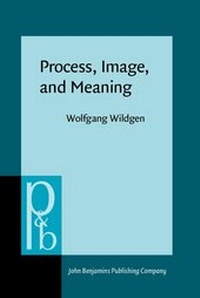
Process, Image, and Meaning
A realistic model of the meaning of sentences and narrative texts
1st Edition
Published on 17. November 1994
XII, 281 pages
978-90-272-8272-9 (ISBN)
Description

The general topic of this book is the development of a "realistic" model of meaning; it has to account for the ecological basis of meaning in perception, action, and interaction, and is realistic in the sense of "scientific realism", i.e. it is based on the most successful paradigm of modern science: dynamical systems theory.
In Part One a model of sentences is put forward. The first chapter outlines the philosophical background of a theory of meaning. Chapter 2 gives a very short summary of recent proposals for a semantic model which considers image-like schemata. In Chapter 3 a realistic model of valence and basic predication is developed in detail. Chapter 4 treats multistability in meaning and the application of chaos theory and dissipative structures in semantics. Chapter 5 outlines the global framework of a stratified universe of meanings, and Chapter 6 prepares the way for Part Two: the analysis of narrative texts. Oral narratives of personal experience are the prototypical form in which experienced events are organized with the aim of remaking a piece of reality. In Chapter 7 a discrete grammar based on vectorial schemata is developed. Chapters 8 and 9 elaborate the "syntax of narratives" in Chapter 7. Chapter 10 progress to conversational dynamics.
In Part One a model of sentences is put forward. The first chapter outlines the philosophical background of a theory of meaning. Chapter 2 gives a very short summary of recent proposals for a semantic model which considers image-like schemata. In Chapter 3 a realistic model of valence and basic predication is developed in detail. Chapter 4 treats multistability in meaning and the application of chaos theory and dissipative structures in semantics. Chapter 5 outlines the global framework of a stratified universe of meanings, and Chapter 6 prepares the way for Part Two: the analysis of narrative texts. Oral narratives of personal experience are the prototypical form in which experienced events are organized with the aim of remaking a piece of reality. In Chapter 7 a discrete grammar based on vectorial schemata is developed. Chapters 8 and 9 elaborate the "syntax of narratives" in Chapter 7. Chapter 10 progress to conversational dynamics.
More details
Other editions
Additional editions
Wolfgang Wildgen
Process, Image, and Meaning
A realistic model of the meaning of sentences and narrative texts
Book
11/1994
John Benjamins Publishing Co
€116.60
Shipment within 10-15 days
Person
Content
- PROCESS, IMAGE, AND MEANING
- Editorial page
- Title page
- Copyright page
- 1. ACKNOWLEDGEMENTS
- Dedication
- Table of contents
- PROLOGUE
- PART ONE. THE MEANING OF SENTENCES
- CHAPTER 1. MEANING AND REALITY
- 1 Concepts of meaning
- 1.1 Historical background
- 1.2 Modern theories of meaning
- 2 Meaning and imagination
- 3 Meaning and the impact of dynamical systems theory for semantics
- 4 Ecological realism and cognitive meaning
- 4.1 Ecological realism and Fodor's critique
- 4.2 The philosophical position of situation semantics
- 4.3 The experiential realism of cognitive semantics
- 4.4 The programme of realistic semantics
- 5 Levels of analysis in a realistic semantics
- 5.1 The methodological separation of syntax and semantics
- 5.2 The separation of form and substance
- 5.3 The level of pragmatics in a realistic model of meaning
- 6 The relevance of Einstein's relativity principle and quantum dynamics for a theory of meaning
- 6.1 Relativistic principles in the study of mind and language
- 6.2 Quantum dynamics in mind and language
- CHAPTER 2. A CRITICAL REVIEW OF SOME PROPOSALS FOR A SEMANTICS USING IMAGE- AND PROCESS-SCHEMATA
- 1 Talmy's imaging systems and his "force dynamics
- 2 The image schemata proposed by George Lakoff
- 3 Techniques of imaginistic representation by Langacker
- 4 Spatial domains and matrices (proposals by Langacker and Talmy)
- 5 A criticism of imaginistic representations in the style of Talmy, Lakoff and Langacker
- 6 The representation of motion verbs in situation semantics
- CHAPTER 3. PROCESS AND IMAGE SCHEMATA IN THE LEXICON AND IN BASIC SYNTAX
- 1 Order phenomena in the ecology of man
- 2 Transitions between equilibrium phases and semantic schemata
- 3 The meaning of verbs
- 3.1 What is the meaning of verbs?
- 3.2 A cognitive behavioural framework for the analysis of verbs
- 3.3 Process semantics of the verbs of bodily motion
- 3.4 Process semantics of the verbs of action by one agent
- 3.4.1 The creation, the destruction and the regeneration of entities
- 3.4.2 The effect of an agent on the state of entities in its environment.
- 3.5 Process semantics of the verbs referring to the interaction of agents
- 3.5.1 The configurational structure of "giving
- 3.5.2 The energetic (intentional) structure of "giving
- 3.6 Elaboration of the basic ecological patterns in the semantics of verbs
- 3.6.1 Multi-modularity
- 3.6.2 Evaluation
- 3.6.3 Onomatopoeic "meaning" of verbs
- 4 Predication and basic syntax
- 4.1 Strong coupling in predication
- 4.2 Weak coupling in predication
- 5. Syntactic constituency and stable dynamic schemata
- CHAPTER 4. MULTISTABILITY, CHAOS AND DISSIPATIVE STRUCTURES IN MEANING
- 1 Ambiguity and multistability in linguistic meaning (in relation to perceptual multistability)
- 1.1 A rough Classification of perceptual multistability
- 1.1.1 Immediate bistabilities in perception
- 1.1.2 The perception of textures
- 1.1.3 The spatial rotation in mental imagination
- 1.2 Ambiguities in the lexicon: some basic aspects
- 1.3 Perceptual scales underlying lexical ambiguity
- 1.4 Lexical ambiguity based on an emotional scale
- 1.5 Morphological and syntactic ambiguities
- 1.6 Semantic scales underlying syntactic ambiguity
- 1.7 Control-shift as an ambiguity of complex syntax
- 1.8 Textual ambiguities
- 2 Chaotic dynamics in the syntax and semantics of nominal structures
- 2.1 A linear network analysis and the indeterminacy of recursiveness in the noun phrase
- 2.1.1 Recursive application of the same modifier
- 2.1.2 Recursive application of different modifiers of the same category
- 2.1.3 Recursive application of different modifiers of different categories.
- 2.2 General feedback machines and recursiveness in the noun phrase
- 2.3 Indeterminacy and order in Noun + Noun compositions
- 3 Dissipative processes and vagueness in meaning
- 3.1 Semantic vagueness and variability
- 3.2 Metaphors and. metonymies as diffusive processes of meaning
- 4 Collective images and cultural symbols: speculations about archetypes
- CHAPTER 5. GLOBAL REPRESENTATIONAL SPACES
- 1 Two basic principles
- 2 A short description of the principal domains
- 2.1 A basic set of semantic roles
- 2.2 The domain: locomotion in space-time
- 2.3 The domain: change in a quality space
- 2.4 The domain: action and interaction
- 2.5 The domain: communicative and perceptual action
- 2.6 The domain: mental action
- 2.7 The special domain of speech acts
- 3 The impact of modality and propositional attitudes
- CHAPTER 6. BETWEEN SENTENCES AND NARRATIVE TEXTS
- 1 Negation
- 1.1 Strong negation
- 1.2 Weak negation with a vague predicate
- 1.3 Weak negation in the context of a category mistake
- 2 Conjunction and quantification
- 3 Dynamic consequence and implication
- PART TWO. THE MEANING OF ORAL NARRATIVES
- CHAPTER 7. NARRATIVE ANALYSIS AND AN IMAGINISTIC SYNTAX OF TEXTS
- 1 How to account for the "reality patterns" in oral narratives
- 2 Some notions from discrete dynamics
- 2.1 The notion of a discrete vector as a representation of motion and change
- 2.2 Cellular automata and dynamical systems
- 3 The basic vocabulary of imaginistic units
- 3.1 The space of imaginistic units and the notion of a unit vector
- 3.2 The set of basic monovalent imaginistic units
- 3.3 The set of bivalent imaginistic units.
- 3.4 The set of trivalent imaginistic units
- 4 The basic syntax of imaginistic units
- 4.1 The local syntax of imaginistic units
- 4.2 The global syntax of imaginistic units and some typical sequential patterns found in narratives
- 4.2.1 Parallel developments of protagonistic and antagonistic forces
- 4.2.2 Characteristic patterns of bivalent units
- 4.2.3 Trivalent units and the game of transfer/interaction
- 4.3 A relativistic frame for textual dynamics
- 5 Three types of narratives and their imaginistic structure
- 5.1 Empirical criteria for the classification of narrative units
- 5.2 Oral narratives of personal experience: a rich analysis at the local level
- 5.3 The textual structures in the oral narrative
- 5.4 Retelling in a textual experiment
- 5.5 The dynamic organization of a fairy tale
- 6 The imaginistic representation of negation, conjunction and anaphors
- 6.1 Negation in an imaginistic grammar of narratives
- 6.2 Conjunction of units and conjunction of several basic units in one unit
- 6.3 Anaphoric processes in imaginistic syntax
- CHAPTER 8. THE SEMANTIC INTERPRETATION OF IMAGINISTIC SYNTAX
- 1 A semantic interpretation of the basic vector space
- 1.1 The dimension t (text progression) of the vector space
- 1.2 The dimension r (referential space) of the vector space
- 2 The semantic interpretation of the imaginistic units (1-20)
- 2.1. Units without referential instability
- 2.2 Monovalent units with one referential instability (type: "fold", A2)
- 2.3 Monovalent units with one referential instability (type: "cusp", A3)
- 2.4 Bivalent units with one referential instability (type: "cusp", A3)
- 2.5 Trivalent units with two referential instabilities (type: "butterfly", A5)
- 3 The interpretation of syntactic principles in a semantic component
- 3.1 The principle of broken symmetry
- 3.2 The principle of dynamic coherence
- 3.3 The principle of temporal uniqueness
- CHAPTER 9. INFORMATION BASED ANALYSIS OF TEXTUAL DYNAMICS
- 1 Language and the flow of information
- 2 The encoding of imaginistic information in an attribute-valuenotation
- 3 Textual dynamics beyond imaginistic syntax
- 3.1 Analysis of the syntactic projection of semantic roles in a short narrative
- 3.2 The thematic coherence and dynamics in a short narrative
- 3.3 Imaginistic dynamics and ?maginistic coherence
- 3.4 The analysis of semantic complexity in a longer narrative
- CHAPTER 10. CONVERSATIONAL DYNAMICS AND THE PRAGMATICS OF NARRATIVES
- 1 Conversational dynamics and the place of narratives in theconversational frame
- 2 The internal pragmatics of oral narratives
- EPILOGUE
- NOTES
- BIBLIOGRAPHY
- NAMES INDEX
- SUBJECT INDEX
