

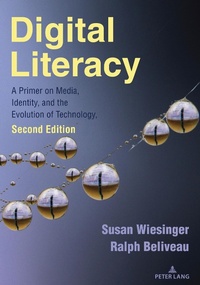
Digital Literacy
Description

The second edition of Digital Literacy provides a highly focused exploration of key critical concepts in understanding digital media in a clear, engaging, and accessible way for an introductory audience.
This updated edition explores a variety of approaches to digital literacy, including prescient work by media theorists, the historical influences of legacy media, the contemporary transformations of the digital environment, and the way our communication ecology is constructed. The book argues for an understanding of the changes in traditional media, the rise of Big Tech, and the challenges these pose to privacy and to democratic ideals.
Important themes explored in chapters across the book include digital identity, the internet as infrastructure, the web as a collaborative tool, and domestic and global digital divides. The new edition also explores digital literacy and the pandemic, as well as the growing body of research around the effects and impact of the digital technologies we use every day. Also included are useful Applied Skills Appendices outlining core areas of digital practice.
The text is an ideal resource for students and scholars of mass communication, media literacy, digital information literacy, and digital technology courses, as well as for all those wanting to know more about the deep on-going impact of communication technologies on our lives.
More details
Other editions
Additional editions
Persons
Susan Wiesinger is Professor of Journalism and Public Relations at California State University, Chico. She holds a Ph.D. from Purdue University.
Ralph Beliveau is Professor in The Gaylord College of Journalism and Mass Communication at The University of Oklahoma. He holds a Ph.D. from the University of Iowa and a bachelor's degree from Northwestern University.
Content
Acknowledgements - What's New in the Second Edition - Introduction: The Book Starts Here - The Evolution of Contemporary Media: Recalling a Collective Past, Sharing a Fragmented Present - Corporate Colonialism: Why Ownership Matters - The Medium Is the Mass-Age: Revisiting Marshall McLuhan - We're Not Here: The Cultural Consequences of All Me, All the Time - Digital Identity: Options, Opportunities, Oppressions, Impressions - A Social Experiment: Digital Tech at Its Best & Worst - Much to Lose: The Symbiotic Relationship Among Journalism, Technology, & Democracy - It Really Is a Thing: The Internet as Infrastructure - If It's Not the Internet, What Is It? The Web as a Collaborative Tool - From Neighbors to Followers: Rethinking What It Means to Be Part of a Community - Haves, Almost Haves, & Have Nots: The Domestic Digital Divide - Connectivity & Digital Disruption: The Global Digital Divide - Remixes & Mashups: Appropriation of Cultural Goes Digital - Yours, Not Yours: Digital Surveillance & the Privacy Paradox - Can't Put the Genie Back in the Bottle: Now What? - Digital Communication Etiquette - Professional Use of Social Media - Writing for Digital Media & Content Credibility Cues - The Care and Reading of a URL - File Management - Key Concepts - Index.
