

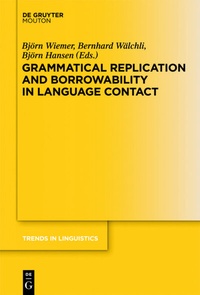
Grammatical Replication and Borrowability in Language Contact
Description

The volume presents new insights into two basic theoretical issues hotly debated in recent work on grammaticalization and language contact: grammatical replication and grammatical borrowability. The key issues are: How can grammatical replication be distinguished from other, superficially similar processes of contact-induced linguistic change, and under what conditions does it take place? Are there grammatical morphemes or constructions that are more easily borrowed than others, and how can language contact account for areal biases in the borrowing (vs. calquing) of grammatical formatives? The book is a major contribution to the ongoing theoretical discussion concerning the relationship between grammaticalization and language contact on a broad empirical basis.
More details
Other editions
Additional editions
Persons
Content
2 - Addresses of contributors???????????????????????????????????????????????????????????????? [Seite 11]
3 - A. Introduction???????????????????????????????????????????? [Seite 15]
3.1 - 1. Contact-induced grammatical change: Diverse phenomena, diverse perspectives?????????????????????????????????????????????????????????????????????????????????????????????????????????????????????????????????????????????????????????????????????????? [Seite 17]
4 - B. Survey on grammaticalization and language contact in Slavic languages?????????????????????????????????????????????????????????????????????????????????????????????????????????????????????????????????????????????????????????????? [Seite 79]
4.1 - 2. Assessing the range of contact-induced grammaticalization in Slavonic?????????????????????????????????????????????????????????????????????????????????????????????????????????????????????????????????????????????????????????????? [Seite 81]
5 - C. General issues???????????????????????????????????????????????? [Seite 171]
5.1 - 3. An integrative model of grammaticalization???????????????????????????????????????????????????????????????????????????????????????????????????????? [Seite 173]
5.2 - 4. Processes of grammaticalisation and 'borrowing the unborrowable': Contact-induced change and the integration and grammaticalisation of borrowed terms for some core grammatical construction types???????????????????????????????????????????????????????????????????????????????????????????????????????????????????????????????????????????????????????????????????????????????????????????????????????????????????????????????????????????????????????????????????????????????????????????????????????????????????????????????????????????????????????????????????????????????????????????????????????????????????????? [Seite 205]
5.3 - 5. Grammaticalization clines in space: Zooming in on synchronic traces of diffusion processes???????????????????????????????????????????????????????????????????????????????????????????????????????????????????????????????????????????????????????????????????????????????????????????????????????? [Seite 247]
6 - D. Noun phrase?????????????????????????????????????????? [Seite 287]
6.1 - 6. The grammaticalization of an indefinite article in Slavic micro-languages?????????????????????????????????????????????????????????????????????????????????????????????????????????????????????????????????????????????????????????????????????? [Seite 289]
6.2 - 7. On the grammaticalization of the definite article in Colloquial Upper Sorbian (CUS)?????????????????????????????????????????????????????????????????????????????????????????????????????????????????????????????????????????????????????????????????????????????????????????? [Seite 337]
7 - E. Modality and evidentially?????????????????????????????????????????????????????????????????????? [Seite 369]
7.1 - 8. The grammaticalization of evidential markers in Garifuna???????????????????????????????????????????????????????????????????????????????????????????????????????????????????????????????????? [Seite 371]
7.2 - 9. What is 'contact-induced grammaticalization'? Examples from Mayan and Mixe-Zoquean languages???????????????????????????????????????????????????????????????????????????????????????????????????????????????????????????????????????????????????????????????????????????????????????????????????????????? [Seite 395]
7.3 - 10. The Yiddish modal system between Germanic and Slavonic. A case study on the limits of contact induced grammaticalization?????????????????????????????????????????????????????????????????????????????????????????????????????????????????????????????????????????????????????????????????????????????????????????????????????????????????????????????????????????????????????????????????????? [Seite 441]
7.4 - 11. Modality in an areal context: The case of a Latgalian dialect???????????????????????????????????????????????????????????????????????????????????????????????????????????????????????????????????????????????? [Seite 479]
8 - F. Tense-aspect and voice???????????????????????????????????????????????????????????????? [Seite 523]
8.1 - 12. The Balkan perfects: Grammaticalization and contact???????????????????????????????????????????????????????????????????????????????????????????????????????????????????????????? [Seite 525]
8.2 - 13. The "recipient passive" in West Slavic: A caique from German and its grammaticalization???????????????????????????????????????????????????????????????????????????????????????????????????????????????????????????????????????????????????????????????????????????????????????????????????? [Seite 573]
9 - G. Clause linking and predication???????????????????????????????????????????????????????????????????????????????? [Seite 603]
9.1 - 14. Conditional and reason clauses in Sierra Popoluca: The influence of Náhuatl and Spanish???????????????????????????????????????????????????????????????????????????????????????????????????????????????????????????????????????????????????????????????????????????????????????????????????? [Seite 605]
9.2 - 15. Verb serialization in northeast Europe: The case of Russian and its Finno-Ugric neighbours?????????????????????????????????????????????????????????????????????????????????????????????????????????????????????????????????????????????????????????????????????????????????????????????????????????? [Seite 625]
10 - Subject index???????????????????????????????????????? [Seite 661]
11 - Language index?????????????????????????????????????????? [Seite 669]
12 - Author index?????????????????????????????????????? [Seite 677]
