

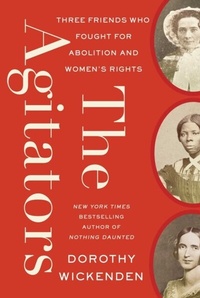
The Agitators
Three Friends Who Fought for Abolition and Women's Rights
1st Edition
Published on 30. March 2021
400 pages
978-1-4767-6076-6 (ISBN)
Description

An Los Angeles Times Best Book of the Year, Christopher Award Winner, and Chautauqua Prize Finalist!
"Engrossing... examines the major events of the mid 19th century through the lives of three key figures in the abolitionist and women's rights movements." ?Smithsonian
From the executive editor of The New Yorker, a riveting, provocative, and revelatory history told through the story of three women?Harriet Tubman, Frances Seward, and Martha Wright?in the years before, during and after the Civil War.
In the 1850s, Harriet Tubman, strategically brilliant and uncannily prescient, rescued some seventy enslaved people from Maryland's Eastern Shore and shepherded them north along the underground railroad. One of her regular stops was Auburn, New York, where she entrusted passengers to Martha Coffin Wright, a Quaker mother of seven, and Frances A. Seward, the wife of William H. Seward, who served over the years as governor, senator, and secretary of state under Abraham Lincoln. During the Civil War, Tubman worked for the Union Army in South Carolina as a nurse and spy, and took part in a spectacular river raid in which she helped to liberate 750 slaves from several rice plantations.
Wright, a "dangerous woman" in the eyes of her neighbors, worked side by side with Elizabeth Cady Stanton and Susan B. Anthony to organize women's rights and anti-slavery conventions across New York State, braving hecklers and mobs when she spoke. Frances Seward, the most conventional of the three friends, hid her radicalism in public, while privately acting as a political adviser to her husband, pressing him to persuade President Lincoln to move immediately on emancipation.
The Agitators opens in the 1820s, when Tubman is enslaved and Wright and Seward are young homemakers bound by law and tradition, and ends after the war. Many of the most prominent figures of the era?Lincoln, William H. Seward, Frederick Douglass, Daniel Webster, Charles Sumner, John Brown, William Lloyd Garrison?are seen through the discerning eyes of the protagonists. So are the most explosive political debates: about the civil rights of African Americans and women, about the enlistment of Black troops, and about opposing interpretations of the Constitution.
Through richly detailed letters from the time and exhaustive research, Wickenden traces the second American revolution these women fought to bring about, the toll it took on their families, and its lasting effects on the country. Riveting and profoundly relevant to our own time, The Agitators brings a vibrant, original voice to this transformative period in our history.
"Engrossing... examines the major events of the mid 19th century through the lives of three key figures in the abolitionist and women's rights movements." ?Smithsonian
From the executive editor of The New Yorker, a riveting, provocative, and revelatory history told through the story of three women?Harriet Tubman, Frances Seward, and Martha Wright?in the years before, during and after the Civil War.
In the 1850s, Harriet Tubman, strategically brilliant and uncannily prescient, rescued some seventy enslaved people from Maryland's Eastern Shore and shepherded them north along the underground railroad. One of her regular stops was Auburn, New York, where she entrusted passengers to Martha Coffin Wright, a Quaker mother of seven, and Frances A. Seward, the wife of William H. Seward, who served over the years as governor, senator, and secretary of state under Abraham Lincoln. During the Civil War, Tubman worked for the Union Army in South Carolina as a nurse and spy, and took part in a spectacular river raid in which she helped to liberate 750 slaves from several rice plantations.
Wright, a "dangerous woman" in the eyes of her neighbors, worked side by side with Elizabeth Cady Stanton and Susan B. Anthony to organize women's rights and anti-slavery conventions across New York State, braving hecklers and mobs when she spoke. Frances Seward, the most conventional of the three friends, hid her radicalism in public, while privately acting as a political adviser to her husband, pressing him to persuade President Lincoln to move immediately on emancipation.
The Agitators opens in the 1820s, when Tubman is enslaved and Wright and Seward are young homemakers bound by law and tradition, and ends after the war. Many of the most prominent figures of the era?Lincoln, William H. Seward, Frederick Douglass, Daniel Webster, Charles Sumner, John Brown, William Lloyd Garrison?are seen through the discerning eyes of the protagonists. So are the most explosive political debates: about the civil rights of African Americans and women, about the enlistment of Black troops, and about opposing interpretations of the Constitution.
Through richly detailed letters from the time and exhaustive research, Wickenden traces the second American revolution these women fought to bring about, the toll it took on their families, and its lasting effects on the country. Riveting and profoundly relevant to our own time, The Agitators brings a vibrant, original voice to this transformative period in our history.
More details
Other editions
Additional editions
Book
06/2023
Scribner
€20.00
Shipment within 10-20 days
Book
05/2021
Scribner
€38.56
Article exhausted; check different version
Person
Dorothy Wickenden is the author of Nothing Daunted and The Agitators and has been the executive editor of The New Yorker since January 1996. She also writes for the magazine and is the moderator of its weekly podcast The Political Scene. A former Nieman Fellow at Harvard, Wickenden was national affairs editor at Newsweek from 1993-1995, and before that was the longtime executive editor at The New Republic. She lives with her husband in Westchester, New York.
Content
- Intro
- Title Page
- Dedication
- Epigraph
- Prologue
- Part One: Provocations (1821-1852)
- Chapter 1: A Nantucket Inheritance (1833-1843)
- Chapter 2: A Young Lady of Means (1824-1837)
- Chapter 3: Escape from Maryland (1822-1849)
- Chapter 4: The Freeman Trial (1846)
- Chapter 5: Dangerous Women (1848-1849)
- Chapter 6: Frances Goes to Washington (1848-1850)
- Chapter 7: Martha Speaks (1850-1852)
- Part Two: Uprisings (1851-1860)
- Chapter 8: Frances Joins the Railroad (1851-1852)
- Chapter 9: Reading Uncle Tom's Cabin (1852-1853)
- Chapter 10: Harriet Tubman's Maryland Crusade (1851-1857)
- Chapter 11: The Race to the Territory (1854)
- Chapter 12: Bleeding Kansas, Bleeding Sumner (1854-1856)
- Chapter 13: Frances Sells Harriet a House (1857-1859)
- Chapter 14: Martha Leads (1854-1860)
- Chapter 15: General Tubman Goes to Boston (1858-1860)
- Chapter 16: The Agitators (1860)
- Part Three: War (1861-1864)
- Chapter 17: "No Compromise" (1861)
- Chapter 18: A Nation on Fire (1861-1862)
- Chapter 19: "God's Ahead of Master Lincoln" (1862)
- Chapter 20: Battle Hymns (1862)
- Chapter 21: Harriet's War (1863)
- Chapter 22: Willy Wright at Gettysburg (March-July 1863)
- Chapter 23: A Mighty Army of Women (1863-1864)
- Chapter 24: Daughters and Sons (1864)
- Part Four: Rights (1864-1875)
- Chapter 25: E Pluribus Unum (1864-1865)
- Chapter 26: Retribution (1865)
- Chapter 27: Civil Disobedience (1865)
- Chapter 28: Wrongs and Rights (1865-1875)
- Epilogue
- Acknowledgments
- About the Author
- Notes
- Selected Bibliography
- Index
- Image Credits
- Copyright
