

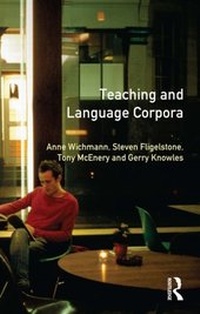
Teaching and Language Corpora
1st Edition
Published on 11. June 2014
362 pages
978-1-317-88958-8 (ISBN)
Description

Corpora are well-established as a resource for language research; they are now also increasingly being used for teaching purposes. This book is the first of its kind to deal explicitly and in a wide-ranging way with the use of corpora in teaching. It contains an extensive collection of articles by corpus linguists and practising teachers, covering not only the use of data to inform and create teaching materials but also the direct exploitation of corpora by students, both in the study of linguistics in general and in the acquisition of proficiency in individual languages, including English, Welsh, German, French and Italian. In addition, the book offers practical information on the sources of corpora and concordances, including those suitable for work on non-roman scripts such as Greek and Cyrillic.
More details
Series
Language
English
Place of publication
London
United Kingdom
Publishing group
Taylor & Francis Ltd
Target group
College/higher education
File size
15,79 MB
ISBN-13
978-1-317-88958-8 (9781317889588)
Copyright in bibliographic data and cover images is held by Nielsen Book Services Limited or by the publishers or by their respective licensors: all rights reserved.
Schweitzer Classification
Other editions
Additional editions
Anne Wichmann | Steven Fligelstone
Teaching and Language Corpora
Book
02/2017
1st Edition
Routledge
€252.30
Shipment within 10-20 days
Anne Wichmann | Steven Fligelstone
Teaching and Language Corpora
Book
10/1997
1st Edition
Longman
€112.20
Shipment within 10-20 days
Persons
Anne Wichmann
Steven Fligelstone
Steven Fligelstone
Content
Preface
Foreward
Acknowledgements
List of Contributors
General Introduction
1. Teaching and Language Corpora: a Convergence, G.Leech
Section A Why use corpora?
2. Corpus Evidence in Language Description, J.M. Sinclair
3. Corpora and the Design of Teaching Materials, D. Mindt
4. Enriching the Learning Environment: Corpora in ELT, G. Aston
Section B Teaching Languages
5. All the Languge That's Fit to Print: Using British and American Newspaper CD-ROMs as Corpora,
D. Minugh
6. Exporing Texts through the Concordancer: Guiding the Learner, L. Gavioli
7. Contexts: the Backgroud, Development and Trialling of a Concordance-based CALL Program, T. Johns
8. The Automatic Generation of CALL Exercises from General Corpora, E. Wilson
9. Exploiting a Corpus of Written German for Advanced Language Learning, W. Dodd
10. Creating and Using a Corpus of Spoken German, R. Jones
11. The Role of Coropra in Studying and Promoting Welsh,K. Ahmad & A. Davies
Section C Teaching Linguistics
12. Micro- and Macro-linguistics for Natural Language Processing,P. Peters
13. Using a Corpus to Evaluate Theories of Child Language Acquisition, B. Ketteman
14. Using Corpora for the Diachronic Study of English, G. Knowles
15. The Use of an Annotated Speech Corpus in the Teaching of Prosody, A. Wichmann
16. Corpus and Concordance: Finding out about Style, H. Jackson
17. The Role of Corpora in Critical Literary Appreciation, B. Louw
18. Teaching Corpus Linguistics to Teachers of English,A. Renouf
Section D Practical Perspectives
19. First Catch your Corpus: Building an Undergraduate Corpus of French from Freely Available Textual Resources,G. Inkster
20. Creating and Processing Corpora in Greek and Cyrillic Alphabets on the Personal Computer, P. King
21. Developing a Computing Infrastructure for Corpus-based Teaching,G. Hughes
Appendices
References
Index
Foreward
Acknowledgements
List of Contributors
General Introduction
1. Teaching and Language Corpora: a Convergence, G.Leech
Section A Why use corpora?
2. Corpus Evidence in Language Description, J.M. Sinclair
3. Corpora and the Design of Teaching Materials, D. Mindt
4. Enriching the Learning Environment: Corpora in ELT, G. Aston
Section B Teaching Languages
5. All the Languge That's Fit to Print: Using British and American Newspaper CD-ROMs as Corpora,
D. Minugh
6. Exporing Texts through the Concordancer: Guiding the Learner, L. Gavioli
7. Contexts: the Backgroud, Development and Trialling of a Concordance-based CALL Program, T. Johns
8. The Automatic Generation of CALL Exercises from General Corpora, E. Wilson
9. Exploiting a Corpus of Written German for Advanced Language Learning, W. Dodd
10. Creating and Using a Corpus of Spoken German, R. Jones
11. The Role of Coropra in Studying and Promoting Welsh,K. Ahmad & A. Davies
Section C Teaching Linguistics
12. Micro- and Macro-linguistics for Natural Language Processing,P. Peters
13. Using a Corpus to Evaluate Theories of Child Language Acquisition, B. Ketteman
14. Using Corpora for the Diachronic Study of English, G. Knowles
15. The Use of an Annotated Speech Corpus in the Teaching of Prosody, A. Wichmann
16. Corpus and Concordance: Finding out about Style, H. Jackson
17. The Role of Corpora in Critical Literary Appreciation, B. Louw
18. Teaching Corpus Linguistics to Teachers of English,A. Renouf
Section D Practical Perspectives
19. First Catch your Corpus: Building an Undergraduate Corpus of French from Freely Available Textual Resources,G. Inkster
20. Creating and Processing Corpora in Greek and Cyrillic Alphabets on the Personal Computer, P. King
21. Developing a Computing Infrastructure for Corpus-based Teaching,G. Hughes
Appendices
References
Index
