

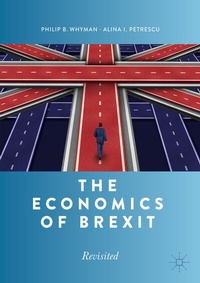
The Economics of Brexit
Description

Philip B. Whyman
is Professor of Economics and Co-Director of the UCLan Research Centre for Business, Management and Enterprise (URCBME), at the Lancashire School of Business and Enterprise, University of Central Lancashire, UK. Philip has authored, co-authored or co-edited twenty books and more than 50 articles in learned journals. His areas of research include European economics and the economics of Brexit, economic policy and labour economics.
Alina I. Petrescu
is Research Fellow in Labour Economics at the University of Central Lancashire, UK. Alina's research covers aspects of the economics of European integration and labour economics, in particular workplace flexibility practices and their ability to improve company and employee performance.
More details
Other editions
Additional editions
Persons
Philip B. Whyman is Professor of Economics and Co-Director of the UCLan Research Centre for Business, Management and Enterprise (URCBME), at the Lancashire School of Business and Enterprise, University of Central Lancashire, UK. Philip has authored, co-authored or co-edited twenty books and more than 50 articles in learned journals. His areas of research include European economics and the economics of Brexit, economic policy and labour economics.
Alina I. Petrescu is Research Fellow in Labour Economics at the University of Central Lancashire, UK. Alina's research covers aspects of the economics of European integration and labour economics, in particular workplace flexibility practices and their ability to improve company and employee performance.
Content
Chapter One. The Elusive Economic Consensus over Brexit.- Chapter Two. The Fiscal Impact of Brexit.- Chapter Three. Brexit and Trade.- Chapter Four. Foreign Direct Investment.- Chapter Five. Regulation.- Chapter Six. Migration and the Labour Force.- Chapter Seven. Economic Growth and Productivity.- Chapter Eight. Economic Policy Considerations.- Chapter Nine. Alternative Trading Models After Brexit.
