

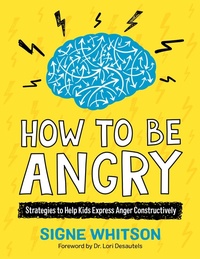
How to Be Angry
Strategies to Help Kids Express Anger Constructively
Published on 21. March 2022
256 pages
978-1-83997-131-0 (ISBN)
Description

Children and teenagers often struggle to cope with anger, and angry feelings can boil over into aggression and destructive behaviour. This updated and extended resource takes a different approach to anger, teaching children how to be angry effectively, rather than telling them not to be angry at all.
Encouraging appropriate anger management through group work and tailored lessons, the book is also accompanied by downloadable additional resources demonstrating the activities and offering adaptations for parents. Suitable for use with children and teenagers aged 5 - 18, this engaging resource will help children to overcome self-destructive patterns of passive, aggressive, and passive aggressive behaviour.
Encouraging appropriate anger management through group work and tailored lessons, the book is also accompanied by downloadable additional resources demonstrating the activities and offering adaptations for parents. Suitable for use with children and teenagers aged 5 - 18, this engaging resource will help children to overcome self-destructive patterns of passive, aggressive, and passive aggressive behaviour.
More details
Edition
Digital original
Language
English
Place of publication
London
United Kingdom
Target group
Professional and scholarly
Edition type
Digital original
Illustrations
9 black and white line drawings
ISBN-13
978-1-83997-131-0 (9781839971310)
Copyright in bibliographic data and cover images is held by Nielsen Book Services Limited or by the publishers or by their respective licensors: all rights reserved.
Schweitzer Classification
Other editions
Additional editions
Book
04/2022
Jessica Kingsley Publishers
€42.50
Shipment within 3-4 weeks
Persons
Signe Whitson is an author and educator on bullying, crisis intervention, and child and adolescent emotional and behavioral health. In her articles, books, and training workshops, Signe provides down-to-earth, practical advice for professionals and parents on navigating the daily challenges of living and working with children, tweens and teens.
Content
- Cover
- Of related interest
- Title page
- Copright
- Contents
- Foreword by Dr. Lori Desautels
- Introduction
- About this Book
- Who is How to Be Angry for?
- Facilitator Qualifications
- Creating a Positive Group Environment
- Using the Curriculum
- Feedback
- Part I: What is Anger? Exploring Anger's Impact on the Brain and Body
- Session 1: That Makes Me So Mad!
- Identifying Anger Triggers
- Session Objectives
- Materials Needed
- Before Beginning
- Welcome to the Group
- Icebreaker Activity: The Joker
- Group Agreements
- Anger Defined
- Anger Triggers
- Session Conclusion
- Suggestions for Customizing the Curriculum
- Icebreaker Activity: The Joker
- Handout: What is Anger?
- Weekly Journal
- Session 2: A Pain in the Brain
- What Happens in Our Brain When We Experience Anger?
- Session Objectives
- Materials Needed
- Before Beginning
- Welcome Back
- Icebreaker Activity: Journal Sharing
- Brain Science 101: The Hand Brain Model
- Labeling the Brain
- Which Part of the Brain is in Charge?
- Session Conclusion
- Suggestions for Customizing the Curriculum
- Label your Brain
- Which Part of the Brain is in Charge?
- Weekly Journal
- Session 3: Becoming an Anger Detective
- How to Recognize Anger Clues in the Body
- Session Objectives
- Materials Needed
- Before Beginning
- Welcome Back
- Icebreaker Activity: Brain Sculpting
- Becoming an Anger Detective
- Session conclusion
- Suggestions for Customizing the Curriculum
- Anger Clues Map
- Anger Clues Journal
- Session 4: Calming an Angry Brain
- Mindfulness and Mindful Breathing
- Session Objectives
- Materials Needed
- Before Beginning
- Welcome Back
- Icebreaker Activity: 4-7-8 Feather Breathing
- What is Mindfulness?
- Mindful Breathing
- Session Conclusion
- Suggestions for Customizing the Curriculum
- Mindful Breathing Beads
- Mindful Breathing Tracker
- Session 5: Sensory Strategies to Calm an Angry Brain
- Part I: Mindful Listening and Noticing
- Session Objectives
- Materials Needed
- Before Beginning
- Welcome Back
- Icebreaker Activity: Mindful Breathing Menu
- Mindful Listening
- Mindful Noticing
- Bonus Activity: Mindfulness Walk
- Session Conclusion
- Suggestions for Customizing the Curriculum
- Weekly Journal
- Mindful Breathing Menu
- Figure 8 Breathing
- Session 6: Sensory Strategies to Calm an Angry Brain
- Part II: Mindful Smelling, Tasting, and Touching
- Session Objectives
- Materials Needed
- Before Beginning
- Welcome Back
- Icebreaker Activity: The 5-Senses Grounding Technique
- Activity: Mindfulness Centers
- Session Conclusion
- Suggestions for Customizing the Curriculum
- The 5-Senses Grounding Technique
- Mindfulness Centers
- Weekly Journal
- Part II: What is Assertiveness? Identifying Choices in Anger Expression
- Session 7: Tiger, Turtle, Fox or Giraffe
- Whose Anger Style Do You Match?
- Session Objectives
- Materials Needed
- Before Beginning
- Welcome Back
- Icebreaker Activity: Mindful Breathing Practice
- What's My Anger Style?
- Anger Styles: Avery and Raya
- Session Conclusion
- Suggestions for Customizing the Curriculum
- Animal Anger Styles
- Typical Behaviors for Each Anger Style
- Anger Styles
- Weekly Journal
- Session 8: Decisions, Decisions!
- Four Choices in Anger Expression
- Session Objectives
- Materials Needed
- Before Beginning
- Welcome Back
- Icebreaker Activity: Mindful Breathing Practice
- What's Your Style?
- Four Choices in Anger Expression Scenarios
- Session Conclusion
- Suggestions for Customizing the Curriculum
- Anger Expression Styles
- Four Choices in Anger Expression
- Four Choices in Anger Expression
- Weekly Journal
- Session 9: Sugarcoated Hostility
- The Five Levels of Passive-Aggressive Behavior
- Session Objectives
- Materials Needed
- Before Beginning
- Welcome Back
- Icebreaker Activity: Name that Style
- The Five Levels of Passive-Aggressive Behavior
- Session Conclusion
- Suggestions for Customizing the Curriculum
- Handout: The Five Levels of Passive-Aggressive Behavior
- Activity: Do I Do This? The Five Levels of Passive-Aggressive Behavior
- Weekly Journal
- Session 10: Behind the Mask
- Exploring Public Faces and Private Realities
- Session Objectives
- Materials Needed
- Before Beginning
- Welcome Back
- Icebreaker Activity: Pick and Mix
- Mask-Making
- Session Conclusion
- Suggestions for Customizing the Curriculum
- Weekly Journal
- Session 11: More than Words Can Express
- How Body Language and Tone of Voice Can Say It All
- Session Objectives
- Materials Needed
- Before Beginning
- Welcome Back
- Icebreaker Activity: Birthday Order
- More than Words Can Express
- It's Not the Words You Use but the Tone You Choose
- Session Conclusion
- Suggestions for Customizing the Curriculum
- Activity: More than Words Can Express
- Handout: It's Not the Words You Use but the Tone You Choose
- Weekly Journal
- Part III: Developing Assertive Anger Expression Skills
- Session 12: I Feel Angry!
- Using I-Messages to Express Anger Assertively
- Session Objectives
- Materials Needed
- Before Beginning
- Welcome Back
- Icebreaker Activity: I-Style
- I-Messages
- You-Messages vs. I-Messages
- Session Conclusion
- Suggestions for Customizing the Curriculum
- Activity: I-Style
- Handout: I-Messages
- Handout: You-Messages vs. I-Messages
- Handout: Sample I-Messages
- Weekly Journal
- Session 13: Yes, No, or Maybe So
- Assertive Skills for Disagreeing Without Arguing
- Session Objectives
- Materials Needed
- Before Beginning
- Welcome Back
- Yes, No, or Maybe So
- Arguing vs. Disagreeing
- Session Conclusion
- Suggestions for Customizing the Curriculum
- Handout: Change it!
- Weekly Journal
- Session 14: Four "Be" Rules
- Using Assertive Communication to Stand Up for Yourself and Others
- Session Objectives
- Materials Needed
- Before Beginning
- Welcome Back
- Icebreaker Activity: Two Truths and a Lie
- "Be" Rules for Standing Up for Ourselves and Others
- Putting It All Together: Role-Playing
- Session Conclusion
- Suggestions for Customizing the Curriculum
- "Be" Rules
- Role Plays for Practicing Assertive Communication
- Weekly Journal
- Session 15: "May I Please" and "No Can Do"
- Guidelines for Assertively Making and Refusing Requests
- Session Objectives
- Materials Needed
- Before Beginning
- Welcome Back
- Icebreaker Activity: Say the Alphabet
- Making Requests
- Refusing Requests
- Session Conclusion
- Suggestions for Customizing the Curriculum
- Handout: May I Please-Two Simple Rules for Making Assertive Requests
- Activity: Write a Request
- Handout: No Can Do-Four Rules for Refusing Requests Assertively
- Activity: Passive, Aggressive, or Assertive?
- Handout: Assertive Dos and Don'ts of Saying "No"
- Weekly Journal
- Session 16: "That's So Nice of You to Say"
- Assertive Strategies for Giving and Receiving Compliments
- Session Objectives
- Materials Needed
- Before Beginning
- Welcome Back
- Putting It All Together: Making and Refusing Requests
- Giving Compliments
- Receiving Compliments
- Session Conclusion
- Suggestions for Customizing the Curriculum
- Handout: Dos and Don'ts of Receiving Compliments Assertively
- Weekly Journal
- Session 17: On the Receiving End
- Three Steps for Responding Assertively to Anger
- Session Objectives
- Materials Needed
- Before Beginning
- Welcome Back
- Putting It All Together: Compliments
- Responding to Anger
- Plays for Practicing the Skill of Responding to Anger Assertively
- Session Conclusion
- Suggestions for Customizing the Curriculum
- Handout: Four Rules for Responding to Anger Assertively
- Weekly Journal
- Part IV: Committing to Assertive Anger Expression
- Session 18: Four-Square Problem-Solving
- Finding Win-Win Solutions
- Session Objectives
- Materials Needed
- Before Beginning
- Welcome Back
- Four-Square Problem-Solving
- Putting It All Together
- Session Conclusion
- Suggestions for Customizing the Curriculum
- Handout: Four-Square Problem-Solving
- Weekly Journal
- Session 19: What's the Plan?
- Replacing Self-Defeating Patterns and Committing to Assertive Behaviors
- Session Objectives
- Materials Needed
- Before Beginning
- Welcome Back
- Icebreaker Activity: Complete the Sentence
- Choices in Anger Expression
- Step 1
- Step 2
- Step 3
- Step 4
- Session Conclusion
- Suggestions for Customizing the Curriculum
- Activity: Complete the Sentence
- Handout: My Plan-Replacing Self-Defeating Patterns and Committing to Assertive Behaviors
- Letter template: How Is It Going? Replacing Self-Defeating Patterns and Committing to Assertive Behaviors
- Weekly Journal
- Session 20: Putting It All Together
- Choosing to Use Assertive Behaviors to Express Anger
- Session Objectives
- Materials Needed
- Before Beginning
- Welcome Back
- Icebreaker Activity: Assertive Anger Expression
- Group Puzzle
- Feedback
- Conclusion
- Suggestions for Customizing the Curriculum
- Handout: Assertive Anger Expression
- Handout: Participant Evaluation Form
- Handout: Certificate of Completion
- References
