

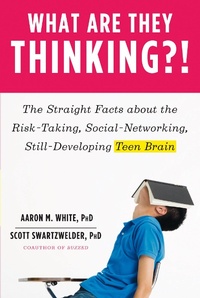
What Are They Thinking?!
The Straight Facts about the Risk-Taking, Social-Networking, Still-Developing Teen Brain
Published on 22. April 2013
288 pages
978-0-393-08995-0 (ISBN)
Description

Groundbreaking developments in adolescent brain research underpin this straightforward guide to understanding—and dealing with—teen behavior.
Adolescence has long been characterized as the "storm and stress” years, and with recent developments in digital communication, it seems today's teens are in for a more complicated journey than ever before. Even the most sympathetic, "in-touch” parents might throw their hands up in frustration at their teen's unpredictable and risky behavior and ask: what are they thinking?! It turns out that teens' thrill-seeking activities and quests for independence aren't just the result of raging hormones, but rather typical effects of the unique structure and development of the adolescent brain. In easily navigable chapters full of practical anecdotes and examples, acclaimed scientists Aaron White and Scott Swartzwelder draw from the most recent studies on the teen brain to illuminate the complexities of issues such as school, driving, social networking, video games, and mental health in kids whose crucial brain connections are just coming online.More details
Language
English
Place of publication
United States
Product notice
Windows
Illustrations
10 illustrations
ISBN-13
978-0-393-08995-0 (9780393089950)
Copyright in bibliographic data and cover images is held by Nielsen Book Services Limited or by the publishers or by their respective licensors: all rights reserved.
Schweitzer Classification
Other editions
Additional editions
Aaron M. White | Scott Swartzwelder
What Are They Thinking?!
The Straight Facts about the Risk-Taking, Social-Networking, Still-Developing Teen Brain
Book
05/2013
WW Norton & Co
€15.50
Shipment within 15-20 days
Person
Aaron M. White holds a PhD in biological psychology and speaks internationally about adolescent brain development. Before joining the National Institutes of Health, he served as an assistant professor of psychiatry at Duke University Medical Center.
Content
- Intro
- Title Page
- Dedication
- Contents
- Preface
- Chapter 1: TEENS AND THEIR BRAINS
- A Work in Progress
- The Frontal Lobes: Captains of the Ship
- Beyond the Frontal Lobes
- White Matter Matters
- Show Some Emotion
- The Reward System and the Pursuit of Pleasure
- To Stress or Not to Stress
- The Straight Dope on the Dopamine Connection
- Chapter 2: MENTAL HEALTH
- Stress
- From Stress to Anxiety
- Attention Deficit Hyperactivity Disorder
- Depression
- Suicide
- Anorexia Nervosa
- Bulimia Nervosa
- Schizophrenia
- Chapter 3: FOOD
- Food for Thought
- The Trouble with Sugar
- The Trouble with Caffeine
- How Many Calories Do Adolescents Need?
- When Does Overweight Become Obese?
- Anorexia and Bulimia
- What Should Teens Eat?
- Chapter 4: SLEEP
- This Is Your Brain on Sleep
- Setting the Brain's Clock
- How Much Sleep Do Teens Need?
- The Importance of Bedtime
- Tips for Improving Teen Sleep
- Chapter 5: DRIVING
- Driving: A Whole Brain Exercise
- Driving on the Wrong Side of the Brain
- Why Bad Accidents Happen to Good Teens
- Graduated Licensing
- Keeping Teen Drivers Safe
- Chapter 6: THE DIGITAL WORLD
- This is Your Brain on Social Media
- Social Animals and Cyber Peeps
- Lost and Found in the Land of Games
- The Terrible Power of Viral Humiliation
- I Heart You
- The Pornographication of the Teenage Brain
- Computing Time on the Computer
- Chapter 7: SEX AND SEXUALITY
- The Battle of the Teenage Sexes
- The Real Story on Hormones
- I Don't Like That Attitude!
- The Word of the Day Is: Sex
- Abstinence or Contraception
- Pornography
- Talking to Teens About Sex
- Chapter 8: DRUGS
- The Power of Reward
- The Addictable Teen Brain
- From Stimulants to Opiates: The 411 on Individual Drugs
- ALCOHOL
- MARIJUANA
- NICOTINE
- NARCOTIC PAIN MEDICATIONS
- COLD MEDICINES
- RITALIN AND ADDERALL
- SALVIA
- MDMA (ECSTASY)
- METHAMPHETAMINE
- COCAINE
- Keeping Your Teen Off Drugs
- Chapter 9: VIOLENCE
- Bang! Pow! Pop!
- Violence Short-Circuits Brains and Lives
- The Dangers of Desensitization
- Bullying
- Television Violence
- Video Game Violence
- Minimizing Violence
- AFTERWORD
- Helping Teens Take Healthy Risks
- What More Can We Do?
- Acknowledgments
- Further Resources
- Index
- About the Authors
- Copyright
