

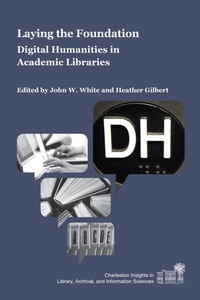
Laying the Foundation
Digital Humanities in Academic Libraries
Published on 15. March 2016
244 pages
978-1-61249-449-4 (ISBN)
Description

Laying the Foundation: Digital Humanities in Academic Libraries examines the library's role in the development, implementation, and instruction of successful digital humanities projects. It pays special attention to the critical role of librarians in building sustainable programs. It also examines how libraries can support the use of digital scholarship tools and techniques in undergraduate education. Academic libraries are nexuses of research and technology; as such, they provide fertile ground for cultivating and curating digital scholarship. However, adding digital humanities to library service models requires a clear understanding of the resources and skills required. Integrating digital scholarship into existing models calls for a reimagining of the roles of libraries and librarians. In many cases, these reimagined roles call for expanded responsibilities, often in the areas of collaborative instruction and digital asset management, and in turn these expanded responsibilities can strain already stretched resources.Laying the Foundation provides practical solutions to the challenges of successfully incorporating digital humanities programs into existing library services. Collectively, its authors argue that librarians are critical resources for teaching digital humanities to undergraduate students and that libraries are essential for publishing, preserving, and making accessible digital scholarship.
More details
Other editions
Additional editions
Book
03/2016
Purdue University Press
€38.10
Shipment within 3-4 weeks
Persons
John W. White is the dean of Libraries at the College of Charleston, South Carolina. He earned his PhD in history at the University of Florida and is the author of a number of works on southern history and politics. He currently serves on the editorial board of the South Carolina Historical Magazine and is the co-director of the Lowcountry Digital History Initiative. Heather Gilbert is the head of Digital Scholarship and Services for the College of Charleston Libraries and the project director for the Lowcountry Digital Library. She received her MLIS from the University of South Carolina and her MFA from the Pennsylvania Academy of Fine Arts. She currently serves as an associate director of the South Carolina Digital Library.
Content
Preface, by John W. White
PART 1: WHY DIGITAL HUMANITIES IN THE LIBRARY?
1 Recovering a Humanist Librarianship through Digital Humanities, by Trevor Muñoz
2 A History of History through the Lens of Our Digital Present, the Traditions That Shape and Constrain Data-Driven Historical Research, and What Librarians Can Do About It, by James Baker
PART 2: THE PRACTICE OF DIGITAL HUMANITIES IN THE LIBRARY
3 Digital Public History in the Library: Developing the Lowcountry Digital History Initiative at the College of Charleston, by Mary Battle, Tyler Mobley, and Heather Gilbert
4 Curating Menus: Digesting Data for Critical Humanistic Inquiry, by Katherine Rawson
5 Many Voices, One Experiment: Building Toward Generous Interfaces for Oral History Collections with Mapping the Long Women's Movement, by Seth Kotch
PART 3: BUILDING DIGITAL HUMANITIES INFRASTRUCTURE AND PARTNERSHIPS
6 The Center That Holds: Developing Digital Publishing Initiatives at the Emory Center for Digital Scholarship, by Sarah Melton
7 Copiloting a Digital Humanities Center: A Critical Reflection on a Libraries-Academic Partnership, by Brian Rosenblum and Arienne Dwyer
8 Advancing Digital Humanities at CU-Boulder through Evidence-Based Service Design, by Thea Lindquist, Holley Long, and Alexander Watkins
PART 4: PEDAGOGY AND INSTRUCTION
9 A Collaborative Approach to Urban Cultural Studies and Digital Humanities, by Benjamin Fraser and Jolanda-Pieta van Arnhem
10 Fostering Assessment Strategies for Digital Pedagogy through Faculty-Librarian Collaborations: An Analysis of Student-Generated Multimodal Digital Scholarship, by Harriett E. Green
11 Library Instruction for Digital Humanities Pedagogy in Undergraduate Classes, by Stewart Varner
Index
PART 1: WHY DIGITAL HUMANITIES IN THE LIBRARY?
1 Recovering a Humanist Librarianship through Digital Humanities, by Trevor Muñoz
2 A History of History through the Lens of Our Digital Present, the Traditions That Shape and Constrain Data-Driven Historical Research, and What Librarians Can Do About It, by James Baker
PART 2: THE PRACTICE OF DIGITAL HUMANITIES IN THE LIBRARY
3 Digital Public History in the Library: Developing the Lowcountry Digital History Initiative at the College of Charleston, by Mary Battle, Tyler Mobley, and Heather Gilbert
4 Curating Menus: Digesting Data for Critical Humanistic Inquiry, by Katherine Rawson
5 Many Voices, One Experiment: Building Toward Generous Interfaces for Oral History Collections with Mapping the Long Women's Movement, by Seth Kotch
PART 3: BUILDING DIGITAL HUMANITIES INFRASTRUCTURE AND PARTNERSHIPS
6 The Center That Holds: Developing Digital Publishing Initiatives at the Emory Center for Digital Scholarship, by Sarah Melton
7 Copiloting a Digital Humanities Center: A Critical Reflection on a Libraries-Academic Partnership, by Brian Rosenblum and Arienne Dwyer
8 Advancing Digital Humanities at CU-Boulder through Evidence-Based Service Design, by Thea Lindquist, Holley Long, and Alexander Watkins
PART 4: PEDAGOGY AND INSTRUCTION
9 A Collaborative Approach to Urban Cultural Studies and Digital Humanities, by Benjamin Fraser and Jolanda-Pieta van Arnhem
10 Fostering Assessment Strategies for Digital Pedagogy through Faculty-Librarian Collaborations: An Analysis of Student-Generated Multimodal Digital Scholarship, by Harriett E. Green
11 Library Instruction for Digital Humanities Pedagogy in Undergraduate Classes, by Stewart Varner
Index
