

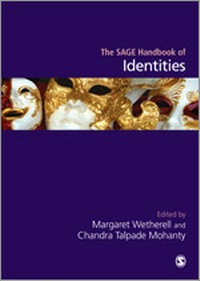
The SAGE Handbook of Identities
1st Edition
Published on 23. March 2010
560 pages
978-1-4462-4837-9 (ISBN)
Description

Overall, its breaking of disciplinary isolation, enhancing of mutual understanding, and laying out of a transdisciplinary platform makes this Handbook a milestone in identity studies.
- Sociology
Increasingly, identities are the site for interdisciplinary initiatives and identity research is at the heart of many transdisciplinary research centres around the world. No single social science discipline 'owns' identity research which makes it a difficult topic to categorize.
The SAGE Handbook of Identities systematizes this complex field by incorporating its interdisciplinary character to provide a comprehensive overview of its themes in contemporary research while still acknowledging the historical and philosophical significance of the concept of identity. Drawing on a global scholarship the Handbook has four parts:
Frameworks: presents the main theoretical and methodological perspectives in identities research.
Formations: covers the major formative forces for identities such as culture, globalisation, migratory patterns, biology and so on.
Categories: reviews research on the core social categories central to identity such as ethnicity, gender, sexuality, disability and intersections between these.
Sites and Context: develops a series of case studies of crucial sites and contexts where identity is at stake such as social movements, relationships, work-places and citizenship.
- Sociology
Increasingly, identities are the site for interdisciplinary initiatives and identity research is at the heart of many transdisciplinary research centres around the world. No single social science discipline 'owns' identity research which makes it a difficult topic to categorize.
The SAGE Handbook of Identities systematizes this complex field by incorporating its interdisciplinary character to provide a comprehensive overview of its themes in contemporary research while still acknowledging the historical and philosophical significance of the concept of identity. Drawing on a global scholarship the Handbook has four parts:
Frameworks: presents the main theoretical and methodological perspectives in identities research.
Formations: covers the major formative forces for identities such as culture, globalisation, migratory patterns, biology and so on.
Categories: reviews research on the core social categories central to identity such as ethnicity, gender, sexuality, disability and intersections between these.
Sites and Context: develops a series of case studies of crucial sites and contexts where identity is at stake such as social movements, relationships, work-places and citizenship.
Reviews / Votes
Overall, its breaking of disciplinary isolation, enhancing of mutual understanding, and laying out of a transdisciplinary platform makes this Handbook a milestone in identity studies. -- Mi Zhao, London School of EconomicsAll prices
More details
Language
English
Place of publication
London
United Kingdom
Target group
Professional and scholarly
ISBN-13
978-1-4462-4837-9 (9781446248379)
Copyright in bibliographic data and cover images is held by Nielsen Book Services Limited or by the publishers or by their respective licensors: all rights reserved.
Schweitzer Classification
Other editions
Additional editions
Margaret Wetherell | Chandra Talpade Mohanty
The SAGE Handbook of Identities
Book
03/2010
1st Edition
SAGE Publications Inc
€270.90
Shipment within 10-20 days
Persons
Margaret Wetherell is Professor of Social Psychology at the Open University, UK and Director of the Economic and Social Research Council Programme on Identities and Social Action.
Content
The Field of Identity Studies - Margaret Wetherell
PART ONE: FRAMEWORKS
Psychoanalytic Perspectives on Identity: From Ego to Ethics - Stephen Frosh
The Social-Identity Approach in Social Psychology - Stephen Reicher, Russell Spears & S Alexander Haslam
Anthropological Perspectives on Identity: From Sameness to Difference - Toon van Meijl
Analyzing Identity in Interaction: Contrasting Discourse, Genealogical, Narrative and Conversation Analysis - Bethan Benwell & Elizabeth Stokoe
Performative Identities: From Identity Politics to Queer Theory - Sarah E Chinn
Critical Crossovers: Post-Colonial Perspectives, Subaltern Studies and Cultural Identities - Saurabh Dube
New Epistemologies: Post-Positivist Accounts of Identity - Linda Martin Alcoff
PART TWO: FORMATIONS
Biology and Identity - Anne Fausto-Sterling
Race and Racial Formations - Harry J Elam Jr & Michele Elam
Identity: Culture and Technology - Rolland Munro
Relationality: The Intersubjective Foundations of Identity - Wendy Hollway
Religious Identity - Pnina Werbner
From Media and Identity to Mediated Identity - Helen Wood
Identity-Making in Schools and Classrooms - Diane Reay
PART THREE: CATEGORIES
Ethnicities - Ann Phoenix
Genders: Deconstructed, Reconstructed, Still on the Move - Lynne Segal
Class, Culture and Morality: Legacies and Logics in the Space for Identification - Beverley Skeggs
Sexualities - Cindy Patton
Indigeneity as a Field of Power: Multiculturalism and Indigenous Identities in Political Struggles - R Aida Hernandez Castillo
Never Fixed: Modernity and Disability Identities - Rosemarie Garland-Thomson & Moya Bailey
PART FOUR: SITES AND CONTEXTS
From This Bridge Called My Back to This Bridge We Call Home: Collective Identities and Social Movements - Manisha Desai
Migrations, Diasporas, Nations: The Re-Making of Caribbean Identities - Carole Boyce Davies & Monica Jardine
Identities, Groups and Communities: The Case of Northern Ireland - Katharina Schmid et al
Families, Siblings and Identities - Helen Lucey
Neo-Liberalism, Work and Subjectivity: Towards a More Complex Account - Valerie Walkerdine & Peter Bansel
Legislating Identity: Colonialism, Land and Indigenous Legacies - Bonita Lawrence
PART FIVE: REFLECTIONS
Social Justice and the Politics of Identity - Chandra Talpade Mohanty
PART ONE: FRAMEWORKS
Psychoanalytic Perspectives on Identity: From Ego to Ethics - Stephen Frosh
The Social-Identity Approach in Social Psychology - Stephen Reicher, Russell Spears & S Alexander Haslam
Anthropological Perspectives on Identity: From Sameness to Difference - Toon van Meijl
Analyzing Identity in Interaction: Contrasting Discourse, Genealogical, Narrative and Conversation Analysis - Bethan Benwell & Elizabeth Stokoe
Performative Identities: From Identity Politics to Queer Theory - Sarah E Chinn
Critical Crossovers: Post-Colonial Perspectives, Subaltern Studies and Cultural Identities - Saurabh Dube
New Epistemologies: Post-Positivist Accounts of Identity - Linda Martin Alcoff
PART TWO: FORMATIONS
Biology and Identity - Anne Fausto-Sterling
Race and Racial Formations - Harry J Elam Jr & Michele Elam
Identity: Culture and Technology - Rolland Munro
Relationality: The Intersubjective Foundations of Identity - Wendy Hollway
Religious Identity - Pnina Werbner
From Media and Identity to Mediated Identity - Helen Wood
Identity-Making in Schools and Classrooms - Diane Reay
PART THREE: CATEGORIES
Ethnicities - Ann Phoenix
Genders: Deconstructed, Reconstructed, Still on the Move - Lynne Segal
Class, Culture and Morality: Legacies and Logics in the Space for Identification - Beverley Skeggs
Sexualities - Cindy Patton
Indigeneity as a Field of Power: Multiculturalism and Indigenous Identities in Political Struggles - R Aida Hernandez Castillo
Never Fixed: Modernity and Disability Identities - Rosemarie Garland-Thomson & Moya Bailey
PART FOUR: SITES AND CONTEXTS
From This Bridge Called My Back to This Bridge We Call Home: Collective Identities and Social Movements - Manisha Desai
Migrations, Diasporas, Nations: The Re-Making of Caribbean Identities - Carole Boyce Davies & Monica Jardine
Identities, Groups and Communities: The Case of Northern Ireland - Katharina Schmid et al
Families, Siblings and Identities - Helen Lucey
Neo-Liberalism, Work and Subjectivity: Towards a More Complex Account - Valerie Walkerdine & Peter Bansel
Legislating Identity: Colonialism, Land and Indigenous Legacies - Bonita Lawrence
PART FIVE: REFLECTIONS
Social Justice and the Politics of Identity - Chandra Talpade Mohanty
