

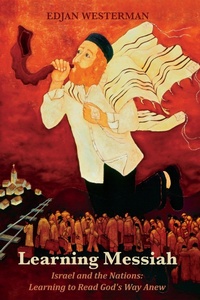
Learning Messiah
Israel and the Nations: Learning to Read God's Way Anew
Published on 27. September 2018
432 pages
978-1-5326-5427-5 (ISBN)
Description

Israel's election, calling, and history make up a big part of Scripture. It could be said that they belong to the "DNA of the Bible." But why is it then that the Christian narrative about the Messiah, Israel, and the nations, often seemed to have and sometimes even still has a different "genetic structure"?
Does Israel--together with its election and promises--leave God's stage through a side door, when Jesus appears on stage? Does a changing of roles take place, within a different story? Does the Messiah function within it as some kind of "black hole" in which the eternal election and calling of Israel disappear?
How do we read God's way?
The Holocaust made us realize that our de-Jew-ized reading and preaching of Scripture contributed in various ways to this catastrophe.
And we find ourselves confronted by the question: How does the narrative of the Bible then look when the whole of Scripture plays a decisive role, and the faithfulness of God toward Israel stays in the center?
This book presents an answer to these questions, calling us to learn to read God's way anew, and to walk in it.
More details
Other editions
Additional editions
Book
09/2018
Wipf & Stock Publishers
€48.50
Shipment within 3-4 weeks
Book
09/2018
Wipf & Stock Publishers
€72.20
Shipment within 3-4 weeks
Person
Edjan Westerman studied at the Theological Faculty of the Free University, Amsterdam (Old and New Testament). Following a period as a staff worker for the Dutch branch of the International Fellowship of Evangelical Students, he served as a pastor within the Protestant Church in the Netherlands. The Dutch edition of Learning Messiah appeared in 2015, and was welcomed by a broad readership from all denominations. To find out more, also visit www.learningmessiah.com.
Content
- Intro
- Title Page
- Preface to the English Edition
- Preface: Understanding My Calling
- Abbreviations
- Introduction
- Part I: The Canonical Narrative: The Tanakh
- Chapter 1: Creation and Waiting for Both the God of Israel and the Israel of God
- 1.1 Permanent Co-reading with Israel
- 1.2 Genesis 1:1
- 1.3 The Beginning of the Canonical Narrative
- 1.4 Further Instruction Needed
- 1.5 Humility
- 1.6 Learning Tora
- 1.7 An Unrelinquishable Position
- 1.8 Waiting
- 1.9 "The fear of the LORD is the beginning of wisdom"
- 1.10 Israel as the Place of God's Self-Revelation
- Chapter 2: Creation Awaits the Blessing of God
- 2.1 Blessing
- 2.2 Blessed by God
- 2.3 Earth Being Filled . . .
- 2.4 And Yet Blessed Again
- 2.5 Disobedience
- 2.6 Blessing Out of Israel
- 2.7 Mutual Blessing
- 2.8 In the End
- Chapter 3: The Creation of the Camp of Israel and the Priestly Nation
- 3.1 Creation of "The Camp of Israel"
- 3.2 Creation of the People
- 3.3 Abram the Blessing
- 3.4 Dichotomy
- 3.5 Contours of Priesthood
- 3.6 Abram Waits
- 3.7 Covenant
- 3.8 The Binding of Isaac
- 3.9 Blessing and Darkness
- Chapter 4: The Creation of the Camp of Israel and the Priestly Nation
- 4.1 Resistance against the Election
- 4.2 Inheriting the Land Devoid of Human Strength
- 4.3 To See from a Distance
- Chapter 5: The Creation of the Camp of Israel and of the Priestly Nation
- 5.1 Tora in the Camp of Israel
- 5.2 Instruction
- 5.3 Expansion
- 5.4 Tora and Tikkun Olam
- 5.5 Interpretation Key
- Chapter 6: Liberated and Called
- 6.1 Imprisoned unto Death
- 6.2 The Beginning of Redemption
- 6.3 Resistance
- 6.4 Night of Judgment and Deliverance
- 6.5 Opposition Against the Exodus
- 6.6 Exodus and Destination
- 6.7 Prepared through Testing
- 6.8 The Calling
- Chapter 7: Israel's Calling
- 7.1 The Love of God
- 7.2 Two-sidedness
- 7.3 Treasured Possession
- 7.4 Kingdom of Priests
- 7.5 A Holy Nation
- 7.6 The Calling as a Possibility Today and in the Future
- 7.7 Once More: Two-sidedness
- 7.8 Priesthood as Model of Interpretation
- 7.9 Once More: Model of Interpretation
- 7.10 Waiting for . . .
- Chapter 8: The Consecration of Priests and of Israel as a Priestly Nation
- 8.1 The Words and Covenant of God
- 8.2 I Will Dwell in their Midst
- 8.3 The Consecration of the Priests
- 8.4 Waiting for the Eighth Day
- 8.5 The Consecration of Priests: A Model of Instruction for the Consecration of the People as a Whole
- 8.6 Toward the One Place of Worship and Toward the Eighth Day
- Chapter 9: Priestly Nation around the One Sanctuary
- 9.1 Different Perspectives
- 9.2 Pure Service
- 9.3 A Holy Service Needs a Holy Fire
- 9.4 Priestly Distinctions and Priestly Separation
- 9.5 Be Holy
- 9.6 Structuring the Camp of Israel
- 9.7 The One Sanctuary
- 9.8 Toward God's Structuring of the Land
- 9.9 Toward the Indwelling in the Midst of the People and the Earth
- 9.10 Dwelling and Kingship of God
- Chapter 10: Kingdom and Kingship of the People around the Dwelling of God
- 10.1 The Royal Perspective
- 10.2 Kings
- 10.3 Kingdom of Priests
- 10.4 Jewish Interpretation of the Call to be a Kingdom of Priests
- 10.5 Kingship as Model of Learning for Israel
- 10.6 The Royal Calling: Promise and Obedience
- 10.7 From Sinai Toward the Kingdom
- 10.8 Learning and Waiting for the Eighth Son
- 10.9 Paradigm of Suffering on the Road to the Throne
- Chapter 11: The Calling Impeded by Israel's Disobedience and the Opposition of the Nations
- 11.1 A Dark Perspective
- 11.2 Obstacles
- 11.3 Two-sidedness of the Covenant
- 11.4 Adulterous Segula-People
- 11.5 Unholy (in the) Midst of the Nations
- 11.6 Priestly Desecration
- 11. 7 Royal Desecration
- 11.8 Unholy Servant of God
- 11.9 Unholiness and the Indwelling of God
- 11.10 Divine Lamentation
- 11.11 Toward the Day of the LORD and Waiting for the Eighth Day
- Chapter 12: Learning about the Eighth Day
- 12.1 The End of the Canonical Narrative of the Tanakh
- 12.2 Hopeful Prophetic Words: Puzzle Pieces of Blessing
- 12.3 For the Sake of the Name
- 12.4 Fulfillment of the Two-sidedness of the Covenant
- 12.5 The Purification of the Avoda and the Servant of the LORD
- 12.6 The Purification of the Avoda and the Servant as "Covenant for the People"
- 12.7 The Messiah and the Calling of Israel
- 12.8 God's Plans with Israel Realized
- 12.9 The Gift of the Return of the People
- 12.10 The Gift of the Unity of the People
- 12.11 The Election of the Land and the City Confirmed
- 12.12 The Indwelling of God in the Midst of the Holy Camp
- 12.13 Around the Indwelling: A Kingdom of Priests
- 12.14 The Blessing for the Nations and the Service of the Nations
- 12.15 God's Intentions for All Creation Realized
- 12.16 The Tora and the Messianic Time
- 12.17 Finally, a Great Sukkot: A Thanksgiving Celebration of All Creation
- 12.18 The Canonical Narrative of the Tanakh
- Part II: The Canonical Narrative: The Scriptures of the New Covenant-the New Testament
- Chapter 13: Two-Part Canon, One Narrative?
- 13.1 One Canonical Narrative?
- 13.2 New Testament: New Covenant
- 13.3 Two-part Canon: One God?
- 13.4 The Same God: A Different Story?
- 13.5 Replacement and Replacement Theology
- 13.6 Replacement of Israel and the Faithfulness of God
- 13.7 Structural Supersessionism/Replacement Thinking
- 13.8 Growing Chasm between Israel and "the Church"
- 13.9 The Traditional Canonical Narrative and its Conduciveness to the Shoa
- 13.10 Reconsideration Leading to a Confession of Guilt and Different Relations
- 13.11 A Jewish Reconsideration of the Chasm
- 13.12 Christian Reconsideration of the Interpretation of Scripture
- 13.13 Attention for the Jewish Context of the New Testament
- 13.14 Still Present: Structural Replacement Thinking/Supersessionism
- 13.15 Again: The Necessity for an Alternative to the Traditional Canonical Narrative
- 13.16 One-Canonical Narrative about Israel's Calling to be a Kingdom of Priests
- 13.17 Part II and Part III
- Chapter 14: In the Camp of Israel
- 14.1 Fourteen
- 14.2 Israel in the Center of the Earth
- 14.3 Israel Witnesses the Dawning of the Eighth Day
- 14.4 Celebrations of God's Deeds in the Camp of the People
- 14.5 Two-sided Character of the Eighth Day
- 14.6 The Eighth Day: The Compassion of God and Anointment of the Spirit
- 14.7 The Eighth Day: The Fire of Judgment
- 14.8 The Eighth Day: Salvation also for the Nations
- Chapter 15: In the Camp of Israel
- 15.1 God with Us
- 15.2 Incarnation in Israel: "Enfleshment" within the People of God
- 15.3 The LORD Is There
- 15.4 God Chooses His Own High Ways
- 15.5 "Who is This?"-Meeting the Presence of God in Jesus
- 15.6 The Messiah and the Shekhina of God
- 15.7 The Tanakh: Occasions that God Came Near and Revealed Himself
- 15.8 "One Is the LORD" and Immanuel
- 15.9 The Indwelling and the Deeds of God
- 15.10 The Scriptures of the New Covenant about this One
- 15.11 The Bodily Indwelling: A Desire Fulfilled
- 15.12 The Holy God Himself Performs the Avoda
- Chapter 16: In the Camp of Israel
- 16.1 Avoda
- 16.2 The Enduring Two-sidedness of God's Covenants
- 16.3 God Provides: Covenantal Obedience and the New Covenant
- 16.4 Avoda Granted
- 16.5 The Messiah as Brit Am: Covenant for the People
- 16.6 The Avoda of Yeshua/Jesus: The Fulfillment of Israel's Avoda
- 16.7 Priest for Israel, Priest for the Nations: Adam in Israel
- 16.8 The Eighth Day: The Obedient One Enters Judgment
- 16.9 The Eighth Day: The Obedient One Enters Salvation
- 16.10 Preparation and Foretaste
- 16.11 The New Covenant: Inaugurated and Underway
- 16.12 The Blessings of the New Covenant and the Focus of the New Testament
- 16.13 In the Camp of Israel: The Avoda Fully Lived and Perfectly Accomplished
- Chapter 17: In the Camp of Israel
- 17.1 Israel's Calling: The Eighth Day Dawns
- 17.2 The Essence of the Priestly Calling: The Tasks of the Priestly Nation
- 17.3 The Priestly Consecration of Yeshua/Jesus: The First One of the People
- 17.4 The Priestly Service of Yeshua/Jesus: The First One of the People
- 17.5 The Sacrifice Outside the City: Sacrifice of Israel, by Israel, and for Israel
- 17.6 The Sacrifice Outside the City: Also a Sacrifice of the World and for the World
- 17.7 Israel's Sacrifice Accepted: The Dawning of the Olam Haba
- 17.8 Israel's Priestly Service Sanctified: The Task Underway Toward the Tikkun Olam
- 17.9 The Priesthood of the Messiah Underway Toward the Tikkun Olam
- 17.10 God will not Rest until His Whole People are Priests
- Chapter 18: In the Camp of Israel
- 18.1 Kingship and Paradigms
- 18.2 Called to be a Kingdom of Priests: The Streambed of the Tanakh
- 18.3 Anointed to be a Priestly King
- 18.4 The Kingship of the Messiah: Preparation and Reminder
- 18.5 Royal Instruction
- 18.6 Royal Glory of the Messiah
- 18.7 The King of the Jews Guarantees the Kingship for Israel
- 18.8 The Hebron-Kingship and the Jerusalem-Kingship of the Messiah
- 18.9 A King in Exile
- 18.10 Kingship Understood from the Streambed of the Tanakh
- 18.11 Toward the Jerusalem-Kingship
- Chapter 19: In the Camp of Israel
- 19.1 The Day of the LORD Breaks over the Holy Nation-the Eighth Day Dawns
- 19.2 Once More: Israel's Election and Calling to be a Holy Nation.
- 19.3 The Consecration of the Priests as a Model for the Messianic Sanctification of the People
- 19.4 Messianic Instruction
- 19.5 The Priestly Nation and Messiah "Unclothed": Entering the Day of the LORD and the Exile
- 19.6 The Priestly Nation and Messiah Anointed: Entering the Holy Life of the Olam Haba
- 19.7 Am Kadosh in the Messiah
- 19.8 Partial Sanctification: The Camp of Israel Enters the Judgment
- 19.9 The Darkness of the Day of the LORD Expands: Exile for the People, the Holy King, and the Shekhina
- 19.10 The Light of the Olam Haba Enters the World: The Calling of the Am Kadosh for the World Becomes Visible
- 19.11 Waiting for the Second Pessa? and the Unity and Return of the People
- 19.12 Kedusha in the Midst of the World: Blessing for the Whole Earth
- Chapter 20: In the Camp of Israel
- 20.1 Salvation for the Nations in the Camp of Israel
- 20.2 Blessing for the Nations and the Election of Abraham's Mishpa?a
- 20.3 The King of the Jews in Search of the Nations: The Blessing of the Exile
- 20.4 A Great Surprise
- 20.5 The Mystery of Ages Revealed: Ephesians 2-3
- 20.6 The Nations Come Flooding in: Probing Questions
- 20.7 The Mystery: The Messiah as Place of Salvation
- 20.8 Acts 15: The Council in Jerusalem
- 20.9 The Decision of the Apostles: Two Forms of Messianic Obedience
- 20.10 Two Callings: One Royal Priesthood
- 20.11 Israel, the Tora, and the Nations in the Dawning of the Day of the LORD and the Olam Haba: The Letter to the Romans
- 20.12 "The Works of the Law": The Letter to the Galatians
- 20.13 "Ready to Disappear": The Letter to the Hebrews
- 20.14 Reading from within a Different Paradigm: Circumcision, Food and Celebration
- 20.15 Israel's Calling in the Messiah Shared by the Nations: Branches on the Olive Tree
- 20.16 Resistance of a Part of Israel: Blindness and Deepening of the Galut
- 20.17 The Love of God and Hosea: Underway Toward the Jerusalem-Kingship
- 20.18 The King of the Jews Leads the Nations into Service and Pilgrimage
- 20.19 Together Abraham's Mishpa?a and the Mishpa?ot of the Nations Grasp the Great Love of the Messiah
- Chapter 21: The Camp of Israel
- 21.1 One Continuing Story
- 21.2 Return to Zion: Outlines and Fragments
- 21.3 The Simultaneous Approach of the Kingdom and Day of the LORD
- 21.4 Abiding Centrality: The Camp of Israel, the City of Jerusalem, and the Indwelling of God in Order to Bless
- 21.5 From Exile Toward the Tikkun Olam
- 21.6 The Safekeeping and Fullness of Israel
- 21.7 The Surrender and Resistance of the Nations
- 21.8 The Messiah at the Throne: The Lamb Opens the Seals
- 21.9 Ultimate Pride: The Antichrist and the Prostitute
- 21.10 The Kingship of God and His Messiah
- 21.11 The Kingdom in the Olam Haze: The Millennium, Gog, and Magog
- 21.12 The King of the Jews: Judge of the World
- 21.13 The New Heaven and Earth, and the New Jerusalem
- 21.14 What Will Come is Already on the Way: Mutual Blessing Between Israel and the Nations
- 21.15 God's Eternal Indwelling in Zion
- 21.16 The Olam Haba: Kedusha for the Whole of Creation
- 21.17 The Eternal Shabbat and the Messianic New Day
- Part III: Returning and Rethinking: Living in a "New" Canonical Narrative
- Chapter 22: To Repent
- 22.1 "You Are the Man!"
- 22.2 A Shocking Discovery: The Tears of Joseph
- 22.3 Repenting of Our Role in the Ongoing Canonical Narrative
- 22.4 The Higher Thoughts and Ways of God
- 22.5 The Ways of God's Eternal Love for Israel: Contrition and Repentance
- 22.6 The Ways of the Messiah: Contrition and Repentance
- 22.7 The History and Future of the People, the City, and the Land: Contrition and Repentance
- 22.8 The Body of the Messiah: Contrition and Repentance
- 22.9 Reformation of Practice and Thought: Returning and Rethinking
- Chapter 23: Returning and Rethinking
- 23.1 The Holy One Chose to Be Defenseless
- 23.2 Called to Kedusha before God's Countenance
- 23.3 Called by the God of Israel Who Reveals Himself within the Camp of Israel
- 23.4 New Eyes Through the "Other" Canonical Narrative
- 23.5 A Lasting Central Place for Israel's Election and Covenantal Kedusha: The Messiah as the Obedient Firstling of Israel
- 23.6 An Identity that Remains Connected with Israel
- 23.7 Even "In The Messiah" All Israel Remains Connected to God
- 23.8 The Body of the Messiah: A Dual Structure from Israel and the Nations
- 23.9 The Mission of the Messiah among the Nations: Exaltation and Exile
- 23.10 Messianic Celebration with Israel
- 23.11 Underway Toward a Contested Zion: A Messianic Dispute Regarding the Land
- 23.12 The "Other" in the Canonical Narrative: Israel and "the Church" in the Jewish and Christian Canonical Narrative
- 23.13 New Eyes, New Words, New Actions
- 23.14 Ongoing Reformation of Thought and Practice
- Chapter 24: Accompanying the Holy God Underway Toward the Tikkun Olam
- 24.1 One Big Narrative
- 24.2 Toward the Completion of the Priestly People's Kedusha
- 24.3 The Fight Over God's Vine: Zion and the Tribulations of the Messiah
- 24.4 The Ways Toward Unity in the Time of the Hebron-Kingship
- 24.5 During the Hebron-Kingship: Israel Approaching the Second Pessa?
- 24.6 Underway Toward the Last Trumpet and the Fulfillment of Yom Kippur and Sukkot
- 24.7 Underway: The Body of the Messiah's Royal Prophetic Task
- 24.8 Temple Servants for the Olam Haba: The Avoda of All Israel-The Body of the Messiah Perfected-One Kehilla and the Twenty-four Elders
- 24.9 Threefold Reflection of the Self-Revelation of the Holy One of Israel
- 24.10 The Indwelling and the Shabbat of God
- Epilogue
- List of Hebrew Terms
- Bibliography
