

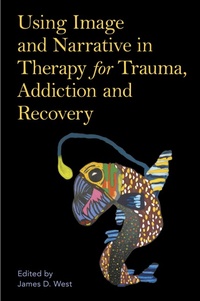
Using Image and Narrative in Therapy for Trauma, Addiction and Recovery
Published on 21. April 2021
352 pages
978-1-78775-052-4 (ISBN)
Description

With contributions from well-respected figures in the field, this book explores the use of narrative and image in the therapeutic treatment of trauma and addiction.
The book considers topics such as early trauma and its impacts, therapeutic methods based on images and narrative, and recovery and post-traumatic growth through community engagement.
Despite a close practical association between the two, trauma and addiction are often addressed or treated separately. By considering them together, this book offers a rare perspective and is an invaluable tool for art and narrative therapists, as well as professionals supporting those dealing with addiction or trauma.
The book considers topics such as early trauma and its impacts, therapeutic methods based on images and narrative, and recovery and post-traumatic growth through community engagement.
Despite a close practical association between the two, trauma and addiction are often addressed or treated separately. By considering them together, this book offers a rare perspective and is an invaluable tool for art and narrative therapists, as well as professionals supporting those dealing with addiction or trauma.
More details
Edition
Digital original
Language
English
Place of publication
London
United Kingdom
Target group
College/higher education
Professional and scholarly
Edition type
Digital original
Illustrations
8pp colour section
File size
5,28 MB
ISBN-13
978-1-78775-052-4 (9781787750524)
Copyright in bibliographic data and cover images is held by Nielsen Book Services Limited or by the publishers or by their respective licensors: all rights reserved.
Schweitzer Classification
Other editions
Additional editions
Book
04/2021
Jessica Kingsley Publishers
€45.50
Shipment within 15-20 days
Persons
James D. West completed his first degree in Fine Art and Art History and then trained as an art psychotherapist and has been self-employed and in private practice since 1994. He is a supervisor working with a wide variety of practice contexts and modalities including addiction rehab and is also a registered clinical hypnotherapist and a master practitioner of NLP. He is a longstanding peer reviewer for the International Journal of Art Therapy and other journals. He was both an author and the editor of 'Art Therapy in Private Practice' (2018, JKP). He is committed to the development of practitioner research.
Content
- Cover
- Title page
- Copyright
- Contents
- Foreword by Martin Weegmann
- Acknowledgements
- 1. Introduction
- James D. West
- 2. Getting Perspective: Points of View, Positions and the Metaphor of Visual Perspective in Therapy
- James D. West
- In the Beginning.Complex Trauma, Embodiment and the Supervisorial Holding of the Work
- 3. Attachment Narratives and Images in Dyadic Parent-Child Art Psychotherapy
- Anthea Hendry
- 4. The Development of Children's Accelerated Trauma Technique (CATT): A Human Rights and Child-centred Psychological Approach to Treating Post-traumatic Stress Disorder (PTSD) and Complex Post-traumatic Stress Disorder (C-PTSD)
- Carlotta Raby and Dominic T. Plant
- 5. The Story of the Body: Holistic Art Therapy and Neuroscience, Working with Complex Trauma Using Interoceptive Imagery and Embodied Approaches
- Nili Sigal
- 6. On Seeing What We Expect to See: Mentalizing Trauma and Narratives in Art Therapy Supervision
- Dominik Havsteen-Franklin
- Meeting Trauma and Addiction in Practice
- 7. Media and Culture: An Attachment-informed Search for Healing, Transformation and Repair Through the Treatment of Addiction
- Charles Brown
- 8. Tea at the Round Table: Trauma, Dissociation and Reintegration
- Richard Kidgell and Janice Lobban
- 9. Culturally Responsive Micro-formulation of Imagery in Trans-diagnostic Treatment of PTSD and Addiction
- Gillian Solomon
- 10. Accessing the Existential Narrative of Trauma Through Non-ordinary States of Consciousness
- Tom Barber and Sandra Westland
- Post-traumatic Growth, Recovery and Community
- 11. Image and Narrative Interventions in a Personality Disorder Specialist Service: Therapeutic Community Dynamics - Tracking the Trend Creatively in a Journey through Experiences'
- Sheila Butler
- 12. Frame by Frame: Stop-frame Animation with Trauma and Chaos Narratives
- Tony Gammidge
- 13. Mapping Addiction, Describing Trauma, Building Hope
- Martin Weegmann
- 14. How to Manage the Impossible?: Using Image and Narrative in a Psycho-anthropological Approach to Support a Parent of a Child with a Rare Chronic Disease
- Tania Korsak
- 15. Image, Narrative and Migration
- 'Najma', Tania Kaczynski and Jon Martyn and Emma Hollamby
- 16. Everybody Has a Story, and Everybody Can Learn to Tell Their Story
- Dan Milne and Jane Nash
- To Be Continued.The Wider Context and the Return
- 17. Image and Narrative in a Changing World
- Sarah Deco
- Postscript
- About the Contributors
- Subject Index
- Author Index
