

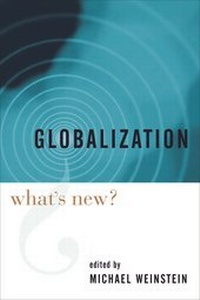
Globalization
What's New?
1st Edition
Published on 10. March 2005
296 pages
978-0-231-50885-8 (ISBN)
Description

From the streets of Seattle to corporate boardrooms to new factories in third-world nations, globalization is subject to very different and often explosively divergent interpretations. Where some see globalization as driving poor countries into further poverty, others see it as the path to economic salvation and democratic rule. With original contributions from ten eminent economists, Globalization: What's New cuts through the confusion and rhetoric to offer straightforward, incisive analysis of globalization and its future.
Coming from some of globalization's most prominent supporters (David Dollar), its most vocal critics (Joseph Stiglitz), and those in-between, this collection presents diverse and original perspectives on globalization's immense reach that dig to the core of many debates. The contributors analyze recent trends in trade, immigration, and capital flows; why some poor countries have grown while others have stagnated during the past two decades; future opportunities for low-wage workers; globalization's impact on jobs and wages in poor countries and in the United States; the surprising environmental benefits of globalization; the degree to which foreign aid helps developing countries; the failures of international institutions in governing the global economy and supporting democracy; and how foreign loans and investments can wreak havoc on a nation's economy.
Coming from some of globalization's most prominent supporters (David Dollar), its most vocal critics (Joseph Stiglitz), and those in-between, this collection presents diverse and original perspectives on globalization's immense reach that dig to the core of many debates. The contributors analyze recent trends in trade, immigration, and capital flows; why some poor countries have grown while others have stagnated during the past two decades; future opportunities for low-wage workers; globalization's impact on jobs and wages in poor countries and in the United States; the surprising environmental benefits of globalization; the degree to which foreign aid helps developing countries; the failures of international institutions in governing the global economy and supporting democracy; and how foreign loans and investments can wreak havoc on a nation's economy.
All prices
More details
Other editions
Additional editions
Book
03/2005
Columbia University Press
€34.66
Shipment within 10-20 days
Book
03/2005
Columbia University Press
€123.50
Article not available at the moment
Person
Michael M. Weinstein is director of programs for the Robin Hood Foundation and the New York Times Foundation. He provided analysis of economic issues for National Public Radio before joining the New York Times, becoming a member of its editorial board and its economics columnist during the 1990s.
Content
1. Introduction, by Michael M. Weinstein, Robin Hood Foundation and New York Times Company Foundation
2. Trade and Globalization, by Douglas A. Irwin, Dartmouth College
3. Capital Flows, Financial Crises, and Public Policy, by Charles W. Calomiris, Professor of Economics, Columbia University
4. Globalization and Immigration, by George J. Borjas, Robert W. Scrivner Professor of Economics and Social Policy at Kennedy School of Government, Harvard University
5. Globalization, Poverty, and Inequality, by David Dollar, Development Research Group, World Bank
6. The Environment and Economic Globalization, by Jeffrey A. Frankel, Harpel Professor, Kennedy School of Government, Harvard University
7. The Rich Have Markets, the Poor Have Bureaucrats, by William Easterly, New York University
8. Feasible Globalizations, by Dani Rodrik, Rafiq Hariri Professor of International Political Economy, Kennedy School of Government, Harvard University
9: Globalization and Patterns of Economic Growth, by Jeffrey D. Sachs, Director, Earth Institute, Columbia University
10. The Overselling of Globalization, by Joseph E. Stiglitz, University Professor, Columbia University
2. Trade and Globalization, by Douglas A. Irwin, Dartmouth College
3. Capital Flows, Financial Crises, and Public Policy, by Charles W. Calomiris, Professor of Economics, Columbia University
4. Globalization and Immigration, by George J. Borjas, Robert W. Scrivner Professor of Economics and Social Policy at Kennedy School of Government, Harvard University
5. Globalization, Poverty, and Inequality, by David Dollar, Development Research Group, World Bank
6. The Environment and Economic Globalization, by Jeffrey A. Frankel, Harpel Professor, Kennedy School of Government, Harvard University
7. The Rich Have Markets, the Poor Have Bureaucrats, by William Easterly, New York University
8. Feasible Globalizations, by Dani Rodrik, Rafiq Hariri Professor of International Political Economy, Kennedy School of Government, Harvard University
9: Globalization and Patterns of Economic Growth, by Jeffrey D. Sachs, Director, Earth Institute, Columbia University
10. The Overselling of Globalization, by Joseph E. Stiglitz, University Professor, Columbia University
