

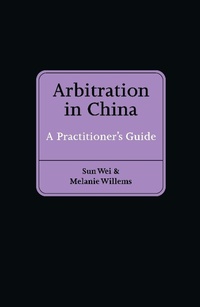
Arbitration in China
A Practitioner's Guide
Published on 24. September 2015
506 pages
978-90-411-6827-6 (ISBN)
Description

Arbitration in China has been aligned with international norms since the enactment of the Arbitration Law in 1994. The purpose of this book is to assist practitioners by describing the law governing arbitration in China as it is currently applied to practice, both domestically and internationally, taking into account the regime's numerous features. Among the details affecting arbitration practice and procedure in China covered are the following:
- arbitration agreement as a precondition for any arbitration proceedings;
- finality of arbitral awards without any right of appeal;
- procedure governing arbitral proceedings;
- the extent of permissible judicial review;
- arbitrations with a connection to Hong Kong, Macau, or Taiwan;
- persistent involvement of local governments in arbitration acceptance and proceedings;
- rules on the handling of cases with foreign elements;
- guidelines provided in the Supreme People's Court's judicial interpretations;
- fees;
- grounds for objecting to jurisdiction;
- mechanisms for multi-party arbitration;
- interim injunctions;
- formation of arbitral tribunals;
- use of expert witnesses;
- enforcement of arbitral awards; and
- use of mediation.
Although focusing predominantly on the practical effects of Arbitration Law provisions, the authors stress practice involving China's two commissions specifically addressing international matters, the China International Economic and Trade Arbitration Commission (CIETAC) and the Beijing Arbitration Commission (BAC). Among the numerous local commissions functioning under the Arbitration Law, special attention is paid to those in Beijing, Shanghai, and Guangzhou, which (along with CIETAC) accept the greatest number of cases with a foreign element. The book will be invaluable to corporate counsel and other practitioners dealing with Chinese companies. Scholars of comparative arbitration law will also find much here to interest them.
- arbitration agreement as a precondition for any arbitration proceedings;
- finality of arbitral awards without any right of appeal;
- procedure governing arbitral proceedings;
- the extent of permissible judicial review;
- arbitrations with a connection to Hong Kong, Macau, or Taiwan;
- persistent involvement of local governments in arbitration acceptance and proceedings;
- rules on the handling of cases with foreign elements;
- guidelines provided in the Supreme People's Court's judicial interpretations;
- fees;
- grounds for objecting to jurisdiction;
- mechanisms for multi-party arbitration;
- interim injunctions;
- formation of arbitral tribunals;
- use of expert witnesses;
- enforcement of arbitral awards; and
- use of mediation.
Although focusing predominantly on the practical effects of Arbitration Law provisions, the authors stress practice involving China's two commissions specifically addressing international matters, the China International Economic and Trade Arbitration Commission (CIETAC) and the Beijing Arbitration Commission (BAC). Among the numerous local commissions functioning under the Arbitration Law, special attention is paid to those in Beijing, Shanghai, and Guangzhou, which (along with CIETAC) accept the greatest number of cases with a foreign element. The book will be invaluable to corporate counsel and other practitioners dealing with Chinese companies. Scholars of comparative arbitration law will also find much here to interest them.
More details
Other editions
Additional editions
Book
09/2015
1st Edition
Kluwer Law International
€324.40
Shipment within 10-20 days
Content
- Intro
- Halftitle Page
- Title Page
- Copyright Page
- Copyright Notice: Institutional Rules of Arbitration and UK Legislation
- Table of Contents
- Foreword
- Preface
- Bilingual Table of Chinese Legislation and Precedents Cited
- CHAPTER 1 Introduction
- 1.1 A Brief History of Arbitration in China
- 1.1.1 Arbitration Prior to the Enactment of the Arbitration Law
- 1.1.2 The Advent of the Arbitration Law
- 1.1.3 The Journey Ahead: In Search of Greater Independence
- 1.2 Institutional and Ad Hoc Arbitration
- 1.2.1 Overview
- 1.2.2 No Ad Hoc Arbitration in Mainland China
- 1.2.3 Ad Hoc Arbitration Abroad May Be Allowed in Agreements with a Foreign Element
- 1.2.4 Ad Hoc Arbitration Award Made in Hong Kong, Macau or Taiwan
- 1.2.5 Ad Hoc Arbitral Awards Made in Contracting States of the New York Convention
- 1.2.6 Ad Hoc Arbitral Awards Made in Other Jurisdictions
- CHAPTER 2 The Arbitration Law, Relevant Judicial Interpretations and International Treaties
- 2.1 The Arbitration Law and Amendments
- 2.1.1 Arbitration Laws in the Broad and Narrow Sense
- 2.1.2 The Scope of the Arbitration Law
- 2.1.2.1 The Parties
- 2.1.2.2 The Subject Matter of the Dispute
- 2.1.2.3 The Effective Date
- 2.1.2.4 Territorial Scope
- 2.1.3 The Fundamental Principles of the Arbitration Law
- 2.1.3.1 Free Will (Party Autonomy)
- 2.1.3.2 Reliance on Facts
- 2.1.3.3 Arbitral Independence
- 2.1.4 Basic Mechanisms of the Arbitration Law
- 2.1.4.1 The Exclusive Nature of Arbitration
- 2.1.4.2 Private Oral Hearings
- 2.1.4.3 Withdrawal of Arbitrators
- 2.1.4.4 Finality of Arbitral Awards
- 2.1.5 Amendments to the Arbitration Law
- 2.1.5.1 The Nature of Arbitration Commissions
- 2.1.5.2 Institutional versus Ad Hoc Arbitration
- 2.1.5.3 Requirements for an Arbitration Agreement to Be Valid
- 2.1.5.4 A Two-Track Regime for Judicial Review of Arbitration Proceedings
- 2.2 The New York Convention
- 2.2.1 Objectives
- 2.2.2 The Main Provisions of the New York Convention
- 2.2.3 The New York Convention in China
- 2.3 The Arrangement concerning the Mutual Enforcement of Arbitral Awards between Mainland China and Hong Kong
- CHAPTER 3 Arbitration Agreements
- 3.1 The Requirement for Arbitration Agreements to Be in Writing
- 3.1.1 Valid Arbitration Agreements Need to Be in Writing
- 3.1.2 What Does 'In Writing' Mean in China?
- 3.1.3 The 'In Writing' Requirement in Other Jurisdictions
- 3.2 Separability of the Arbitration Agreement
- 3.2.1 Arbitration Agreement Exists Independently of the Contract
- 3.2.2 Separability in Other Jurisdictions
- 3.3 The Validity of the Arbitration Agreement
- 3.3.1 The Three Essential Elements of a Valid Arbitration Agreement
- 3.3.2 Validity of Arbitration Agreements Providing for Arbitration to Be Conducted in China by a Foreign Arbitral Institution
- 3.3.2.1 Arguments for the Validity of Arbitration Agreements Providing for Arbitration in China by a Foreign Arbitral Institution
- 3.3.2.2 Arguments against the Validity of Arbitration Agreements Providing for Arbitration in China by a Foreign Arbitral Institution
- 3.3.2.3 Züblin
- 3.3.2.4 Duferco
- 3.3.2.5 Longlide
- 3.3.2.6 Questions to Be Answered
- 3.3.3 Case Studies on Inaccurate Names of Arbitration Institutions
- 3.3.4 The Effectiveness of the Arbitration Clause when Two Arbitration Institutions Have Been Selected
- 3.3.5 The Presumption of Designating an Arbitration Commission by Agreeing Arbitration Rules
- 3.4 Application of Arbitration Clauses to Disputes Involving Concurrent Liability in Contract and Tort
- 3.5 The Effectiveness and Limitations of the Arbitration Agreement
- 3.6 Binding Effect of the Arbitration Clause on a New Party to the Contract
- CHAPTER 4 Foreign Arbitration, Arbitration with a Foreign Element and Domestic Arbitration
- 4.1 Categorisation of Arbitrations
- 4.2 Domestic Arbitration
- 4.3 Foreign Arbitration
- 4.3.1 Traditional Definition in Chinese Law
- 4.3.2 Definition in the New York Convention
- 4.3.3 Developments Subsequent to the Tianli Case
- 4.4 Arbitrations with a Foreign Element
- 4.4.1 Outdated Provisions in the Civil Procedure Law and Arbitration Law
- 4.4.2 Guidelines Provided in the Supreme People's Court's Judicial Interpretations
- 4.4.3 Cases Involving Arbitrations with a Foreign Element
- 4.5 Arbitrations Relating to Hong Kong, Macau and Taiwan
- 4.6 Hong Kong, Macau and Taiwanese Arbitration
- 4.6.1 Hong Kong Arbitration
- 4.6.2 Macau Arbitration
- 4.6.3 Taiwan Arbitration
- 4.7 Arbitrations concerning Taiwanese Investments in Mainland China
- CHAPTER 5 The Applicable Law
- 5.1 Severability of the Arbitration Agreement under the Applicable Law
- 5.2 The Law Governing the Arbitral Procedure
- 5.3 The Law Applicable to the Substance of the Dispute
- 5.3.1 Overview of the Chinese Approach
- 5.3.2 The Western and Chinese Approaches Contrasted
- 5.3.3 'Relationship Involving Foreign Elements' Defined
- 5.3.4 The Law Applicable to Domestic Civil and Commercial Relationships
- 5.3.5 Scheme for Determining the Law Applicable to Civil and Commercial Relationships with a Foreign Element
- 5.3.5.1 The Law Chosen by the Parties
- 5.3.5.2 The Law of the Country to Which the Contract Is Most Closely Connected
- 5.3.5.3 Mandatory Application of Chinese Law
- 5.3.6 The Law Applicable to the Parties' Capacity
- CHAPTER 6 Limitation Periods in Arbitration
- 6.1 Limitation: A Substantive Matter
- 6.2 Classification
- 6.3 Suspension, Discontinuance and Extension of Time Limits
- 6.3.1 Suspension
- 6.3.2 Discontinuance
- 6.3.3 Extension
- CHAPTER 7 Requests for Arbitration, Acceptance of Proceedings and the Defence
- 7.1 Pre-arbitration Procedures Agreed by the Parties
- 7.2 Requests for Arbitration
- 7.2.1 Documents to Be Submitted
- 7.2.2 CIETAC and Its Sub-commissions or Centres
- 7.3 Payment of the Costs of the Arbitration
- 7.3.1 Payment in Advance
- 7.3.2 The Composition of Arbitration Fees
- 7.3.3 The Amount in Dispute and Arbitration Fees
- 7.4 Acceptance of the Request for Arbitration and Service of the Notice of Arbitration
- 7.5 Defence
- CHAPTER 8 Objections to Jurisdiction
- 8.1 Raising a Jurisdictional Objection with the Arbitration Commission
- 8.1.1 Grounds for Objecting to Jurisdiction
- 8.1.2 Time Limits for Raising Jurisdictional Objections
- 8.1.3 Objections in Writing
- 8.1.4 Power to Decide on Jurisdictional Issues
- 8.2 Raising an Objection with the Arbitral Tribunal
- 8.2.1 Grounds for Objection
- 8.2.2 Time Limits
- 8.3 Raising a Jurisdictional Objection with the Court or Commencing Declaratory Proceedings
- 8.3.1 Objections Based on the Existence of a Valid Arbitration Agreement
- 8.3.2 The Court Has Priority to Decide the Validity of Arbitration Agreements
- 8.3.3 Commencing Court Proceedings to Determine the Validity of the Arbitration Agreement
- 8.3.4 The Competent Court and the Decision at Final Instance
- CHAPTER 9 Counterclaim
- 9.1 Definition
- 9.1.1 Four Characteristics of a Counterclaim
- 9.1.2 Defence and Counterclaim
- 9.2 Submission, Acceptance and Defence
- CHAPTER 10 Mechanisms for Multi-party Arbitration
- 10.1 Overview
- 10.2 Joinder of Additional Parties
- 10.3 Consolidation of Arbitrations
- 10.3.1 Circumstances Where Consolidation of Arbitrations Is Appropriate
- 10.3.1.1 Where the Disputes Are of the Same or a Similar Nature
- 10.3.1.2 Where the Disputes Arise Out of Related Legal Relationships
- 10.3.2 The Limits of Consolidating Arbitrations
- 10.3.3 CIETAC's Approach Prior to 2015
- 10.3.4 CIETAC and the BAC's New Approach
- 10.3.5 Laws and Arbitration Rules of Other Jurisdictions
- 10.3.5.1 Court-Ordered Consolidation
- 10.3.5.2 ICC Rules
- 10.4 Consolidation of Hearings
- CHAPTER 11 Preservation of Property
- 11.1 Introduction
- 11.1.1 Preservation of Property Is Not Available in Cases Arbitrated under the Auspices of Foreign Arbitral Institutions in China
- 11.1.2 Preservation of Property before Arbitral Proceedings
- 11.1.3 Preservation of Property during Arbitration Proceedings
- 11.1.4 Burden of Proof regarding Impossibility or Difficulty of Enforcement
- 11.2 Applications for the Preservation of Property
- 11.2.1 Where to Apply
- 11.2.2 Documents Required
- 11.2.3 Contents of the Application
- 11.3 Acceptance, Measures and Time Limits
- 11.3.1 Jurisdiction
- 11.3.2 Security
- 11.3.3 Burden of Proof regarding the Respondent's Property
- 11.3.4 Ruling
- 11.3.5 Specific Measures
- 11.3.6 Compensation for Wrongful Applications
- 11.3.7 Time Limits regarding the Preservation of Property Prior to Arbitration Proceedings
- CHAPTER 12 Preservation of Evidence
- 12.1 Introduction
- 12.1.1 It Does Not Apply to Cases Arbitrated by Foreign Arbitral Institutions in China
- 12.1.2 Preservation of Evidence before or during Arbitration
- 12.1.3 Who May Apply for the Preservation of Evidence
- 12.1.4 Specific Grounds for the Preservation of Evidence Are Required
- 12.1.5 Only the Court Is Entitled to Rule on Issues Relating to the Preservation of Evidence
- 12.2 Application for the Preservation of Evidence
- 12.2.1 Where to Apply
- 12.2.2 Documents Required
- 12.2.3 The Substance of the Application
- 12.3 Jurisdiction, Appropriate Measures and Time Limits
- 12.3.1 Jurisdiction
- 12.3.2 Deciding the Application
- 12.3.3 Specific Measures
- 12.3.4 Time Limits regarding Preservation of Evidence Pre-arbitration
- CHAPTER 13 Interim Injunctions in Arbitration
- 13.1 Introduction
- 13.1.1 Any Application Should Be Made before Arbitration Proceedings Are Commenced
- 13.1.2 Differences between Interlocutory Injunctions and Property Preservation
- 13.1.3 Interlocutory Injunctions in Specific Cases
- 13.2 Application for Discharging an Interlocutory Injunction
- 13.2.1 Where to Apply
- 13.2.2 Documents Required
- 13.2.3 Discharge of Pre-arbitration Interlocutory Injunctions
- 13.2.4 Effect of Pre-arbitration Injunctions after the Commencement of Arbitration
- 13.3 Security and Compensation for Wrongful Applications
- 13.3.1 Compensation for Wrongful Applications
- CHAPTER 14 Representation
- 14.1 Representation during Arbitration Proceedings
- 14.1.1 Statutory and Authorised Representation
- 14.1.2 BAC's Restrictions on Arbitrators
- 14.1.3 Restrictions in the Measures for Penalizing Unlawful Acts of Lawyers and Law Firms
- 14.2 Foreign Attorneys
- 14.3 Powers of Attorney
- CHAPTER 15 Arbitral Tribunal
- 15.1 Nomination or Appointment of Arbitrators
- 15.1.1 The Appointing Authority
- 15.1.2 Relevant Procedures of Chinese Arbitral Institution
- 15.1.2.1 Number of Arbitrators
- 15.1.2.2 Nomination or Appointment of a Sole Arbitrator
- 15.1.2.3 Nomination or Appointment of a Tribunal of Three Arbitrators
- 15.1.2.4 Tribunals in Multi-Party Arbitration Proceedings
- 15.1.2.5 Nomination of the Presiding Arbitrator from a List of Candidates
- 15.1.3 A Comparison of Methods for Selecting the Presiding Arbitrator
- 15.2 Challenges to Arbitrators
- 15.2.1 Interpretations of Article 34 of the Arbitration Law
- 15.2.2 Flaws in Article 34
- 15.2.3 Proposals for Modification of Article 34
- 15.2.4 Relevant Provisions in Arbitration Rules
- 15.2.4.1 The Arbitrator's Disclosure Obligation
- 15.2.4.2 General Principles and Requirements for Challenging Arbitrators
- 15.2.5 Deciding Challenges to Arbitrators
- 15.3 Formation of Arbitral Tribunals
- 15.4 Replacement of Arbitrators
- 15.4.1 Substitute Arbitrator
- 15.4.2 Effect of Replacement
- 15.5 Absence of an Arbitrator and the Effect on the Award
- CHAPTER 16 Evidence
- 16.1 The Categories of Evidence
- 16.1.1 Statements by the Parties
- 16.1.2 Documentary Evidence
- 16.1.3 Physical Evidence
- 16.1.4 Electronic Data
- 16.1.5 Audio-Visual Evidence
- 16.1.6 Witness Testimony
- 16.1.7 Reports by an Appraiser
- 16.1.7.1 Registration Requirements for Appraisal Institutions
- 16.1.7.2 Issues Arising Out of Appraisal Reports
- 16.1.8 Records of Inspections
- 16.2 Attendance of Witnesses
- 16.3 Expert Witnesses
- 16.4 Investigations Undertaken by the Arbitral Tribunal
- 16.4.1 Practical Difficulties
- 16.4.2 Suggestions
- 16.5 Specific Disclosure of Documents
- CHAPTER 17 The Hearing
- 17.1 Timing and Place for Hearing
- 17.2 Procedural Meeting
- 17.3 Conduct of the Hearing
- 17.3.1 Opening Session
- 17.3.2 Submissions by the Parties
- 17.3.3 Presentation of the Evidence and Cross-Examination
- 17.3.4 Submissions and Argument
- 17.4 Documents-Only Proceedings
- CHAPTER 18 Arbitral Award
- 18.1 Time Limit for the Issuing Arbitral Award
- 18.2 The Making of Arbitral Awards
- 18.3 Service of Arbitral Award
- 18.4 Allocating Responsibility for the Costs of the Arbitration
- 18.4.1 The 'English' Approach
- 18.4.2 The 'American' Approach
- 18.4.3 The Chinese Rules Governing Allocation of the Costs of the Arbitration
- 18.4.3.1 The Arbitral Tribunal Determines the Allocation of Costs
- 18.4.3.2 'Loser Pays'
- 18.4.3.3 Allocating Costs According to the Merits of the Parties' Respective Positions
- 18.4.3.4 Costs Penalties for Delaying the Proceedings
- 18.4.4 Prepayment of Arbitration Fees by the Claimant
- 18.5 Interpretation of the Arbitral Award by the Arbitral Tribunal
- 18.6 Omissions and Manifest Errors in Arbitral Awards
- CHAPTER 19 Enforcement of Arbitral Awards
- 19.1 Enforcement of Domestic Awards and Awards with Foreign Elements
- 19.1.1 The Competent Court
- 19.1.2 Documents to Be Submitted in Enforcement Applications
- 19.1.3 Time Limits for Enforcement Applications
- 19.2 Enforcement of Arbitral Awards Made in Hong Kong, Macau or Taiwan
- 19.2.1 The Competent Court for Enforcement of an Award Made in Hong Kong
- 19.2.2 Documents Required for an Application to Enforce a Hong Kong Award
- 19.2.3 The Time Limit for Applications to Enforce an Award Made in Hong Kong
- 19.2.4 Shortcomings of the Hong Kong Arrangement
- 19.2.4.1 Uncertainty as to the Need for Recognition Proceedings
- 19.2.4.2 Prohibition against Simultaneous Enforcement Proceedings in Multiple Jurisdictions
- 19.2.5 The Competent Court for the Recognition and Enforcement of an Award Made in Macau
- 19.2.6 Documents Required in Applications for Recognition and Enforcement of an Award Made in Macau
- 19.2.7 The Time Limit for Applications to Enforce an Award Made in Macau
- 19.2.8 The Legal Basis for Applications for Recognition and Enforcement of Awards Made in Taiwan
- 19.2.9 The Grounds for Refusing to Recognise and Enforce an Award Made in Taiwan
- 19.2.10 Procedures and Documents Required for Applications for Recognition and Enforcement of Arbitral Awards Made in Taiwan
- 19.3 Applications for Recognition and Enforcement of Foreign Arbitral Awards Subject to the New York Convention
- 19.3.1 China's Reciprocity and Commercial Reservations
- 19.3.2 The Competent Court for Recognition and Enforcement of Foreign Arbitral Awards Subject to the New York Convention
- 19.3.3 An Arbitrator Cannot Recover Fees through Recognition and Enforcement Proceedings
- 19.3.4 Documents to Be Submitted
- 19.3.5 The Relevant Time Limits
- 19.4 Recognition and Enforcement of Non-commercial Awards or Awards Made in Non-contracting States
- 19.4.1 The Basis for Recognition and Enforcement
- 19.4.2 The Competent Court
- 19.4.3 Documents to Be Submitted and Time Limit
- 19.5 Enforcement Measures and Duration of Enforcement Proceedings
- 19.5.1 Enforcement Measures
- 19.5.2 Duration of Enforcement Proceedings
- 19.6 Enforcement Proceedings and Third Parties
- 19.6.1 Introduction
- 19.6.2 Objections to Enforcement
- 19.6.2.1 Who May Raise an Objection?
- 19.6.2.2 On What Grounds Can an Objection Be Made?
- 19.6.2.3 What Form Should the Objection Take?
- 19.6.2.4 When Should the Objection Be Raised?
- 19.6.3 Legal Proceedings by Third Parties Objecting to Enforcement
- 19.6.3.1 Parties to the Objection Proceedings
- 19.6.3.2 The Aims of the Objection Proceedings
- 19.6.3.3 Time for Commencing Objection Proceedings
- 19.6.3.4 The Court Deciding the Objection Proceedings
- 19.6.3.5 Circumventing the Objection Procedure
- CHAPTER 20 Judicial Review over Arbitration
- 20.1 Statutory Standards for Judicial Review
- 20.2 Legal Grounds for Judicial Review of Arbitral Awards
- 20.2.1 Domestic Arbitrations
- 20.2.2 Arbitrations with a Foreign Element
- 20.2.3 International Arbitration
- 20.2.4 Hong Kong Arbitrations
- 20.3 The Law Governing a Judicial Review of the Validity of Arbitration Clauses with a Foreign Element
- 20.4 The Reporting Mechanism for Judicial Review of International Arbitrations and Arbitrations with a Foreign Element
- 20.4.1 The Origin of the Reporting Mechanism
- 20.4.2 How the Reporting Mechanism Operates
- 20.4.3 Time Limits for Reporting
- 20.5 Judicial Review of the Existence of Arbitration Agreements
- 20.6 The Invalidity of Arbitration Agreements
- 20.7 Where the Person against Whom Enforcement Is Sought Does Not Exist
- 20.8 Effect of the Parties' Capacity to Contract on the Validity of the Arbitration Agreement
- 20.9 Failure to Comply with the Applicable Arbitration Rules
- 20.10 Tribunals Exceeding Their Jurisdiction
- 20.11 Arbitrability
- 20.12 Public Policy
- 20.13 Treaties on Inter-jurisdictional Collaboration
- 20.14 The Competent Courts for Judicial Review
- 20.14.1 The Competent Court for Determining the Validity of Arbitration Agreement
- 20.14.2 The Competent Court for Setting Aside an Arbitral Award
- 20.14.3 The Competent Court for Refusing to Enforce or Recognise an Arbitral Award
- 20.15 Consequences of Judicial Review over Arbitration
- 20.15.1 Setting Aside and Partial Setting Aside of Arbitral Awards
- 20.15.2 Court-Notified Re-arbitration of Domestic Cases
- 20.15.3 Court-Notified Re-arbitration of Cases with a Foreign Element
- 20.15.4 Procedural Matters of Court-Notified Re-arbitration
- 20.15.5 Non-enforcement and Partial Non-enforcement of Arbitral Awards
- 20.15.6 Non-recognition and Non-enforcement of International Arbitral Awards
- 20.15.7 The Finality of Judicial Review over Arbitration
- CHAPTER 21 Med-Arb
- 21.1 Introduction
- 21.2 Basic Principles
- 21.2.1 Party Autonomy
- 21.2.2 Respecting the Parties' Jus Disponendi
- 21.2.3 Efficiency
- 21.3 Initiation of Mediation during Arbitration Proceedings
- 21.4 Methods of Mediation
- 21.5 Impartiality of Arbitrators
- 21.6 Conciliation Statement or Arbitral Award
- 21.7 Issues concerning the Validity of Conciliation Statement and Arbitral Awards Based on Med-Arb
- 21.7.1 Exceeding the Matters That Were Referred to Arbitration
- 21.7.2 Disposal of Rights of Third Parties
- 21.7.3 Whether a Conciliation Statement Can Be Set Aside
- CHAPTER 22 Interim Measures Ordered by Emergency Arbitrator or Arbitral Tribunal
- 22.1 Introduction
- 22.2 Emergency Arbitrator Procedures
- 22.2.1 CIETAC Rules
- 22.2.1.1 The Purpose of Detailed Provisions for Emergency Arbitrator Procedures
- 22.2.1.2 The Emergency Arbitrator Procedures' Scope of Application
- 22.2.1.3 Procedures
- 22.2.1.3.1 The Application
- 22.2.1.3.2 Acceptance and Appointment of the Emergency Arbitrator
- 22.2.1.3.3 Proceedings before an Emergency Arbitrator
- 22.2.1.3.4 Decision of the Emergency Arbitrator
- 22.2.2 BAC Rules
- 22.3 Interim Measures
- Index
- Back Cover
