

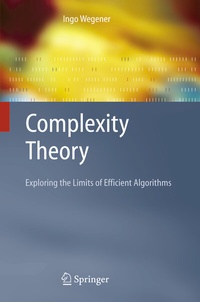
Complexity Theory
Description

Complexity theory is the theory of determining the necessary resources for the solution of algorithmic problems and, therefore, the limits of what is possible with the available resources. An understanding of these limits prevents the search for non-existing efficient algorithms. This textbook considers randomization as a key concept and emphasizes the interplay between theory and practice:
New branches of complexity theory continue to arise in response to new algorithmic concepts, and its results - such as the theory of NP-completeness - have influenced the development of all areas of computer science.
The topics selected have implications for concrete applications, and the significance of complexity theory for today's computer science is stressed throughout.
Reviews / Votes
From the reviews:
"This book should be important and useful for students of computer science as an introduction to complexity theory with an emphasis on randomized and approximation algorithms . . It contains 16 chapters and extends from the foundations of modern complexity theory to recent developments with implications for concrete applications. . The text is well written . and the translation is successful." (Gerhard Lischke, Mathematical Reviews, Issue 2006 j)
"Complexity theory is an extremely important and vivid field on the border of mathematics and computer science. . Ingo Wegener certainly created an appealing, well-written book that is a definite choice for the specialists and lecturers when an undergraduate or graduate student asks for guidance into this challenging new field of mathematics." (Péter Hajnal, Acta Scientiarum Mathematicarum, Vol. 71, 2005)
More details
Other editions
Additional editions
Persons
The author is a full professor at the Computer Science Department of Dortmund University. He is the author of 8 monographs and more than 150 journal and conference articles. He was head of the German youth competition in computer science and has obtained the university medal for excellent teaching. He is an elected member of the German Academy of Sciences and was head of the committee reviewing computer research projects in Germany.
