

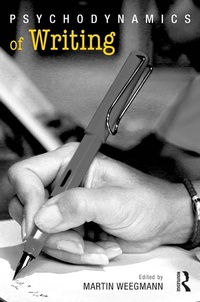
Psychodynamics of Writing
1st Edition
Published on 6. August 2018
164 pages
978-0-429-75913-0 (ISBN)
Description

Psychoanalysis is often referred to a talking cure, but in this fascinating book it is the art of writing that is discussed and explored.
Including contributions from a selection of leading therapists, the book shines a psychoanalytic light on the very process through which the discipline is described. It includes chapters on the idea of creativity, the issues around a therapist's subjectivity, the challenges of describing trauma, as well as those of co-authorship.
Psychodynamics of Writing will appeal to clinicians, therapists and anyone interested in what the process of writing means.
Including contributions from a selection of leading therapists, the book shines a psychoanalytic light on the very process through which the discipline is described. It includes chapters on the idea of creativity, the issues around a therapist's subjectivity, the challenges of describing trauma, as well as those of co-authorship.
Psychodynamics of Writing will appeal to clinicians, therapists and anyone interested in what the process of writing means.
Reviews / Votes
'This book is a veritable treasure-trove of inspired psychoanalytic ideas about the nature of professional writing, deeply rooted in the experience of some of the most distinguished and creative writers in the field. It is a testament to the eloquence of psychodynamic writing, the inspiring and sometimes audacious quality of the way the writers are able to capture the multi-layered nature of our actions even when exploring the meaning of the very act of communication that they are at the time engaged in. A brilliant and timely volume.'Peter Fonagy, Professor of Contemporary Psychoanalysis and Developmental Science, UCL, UK
'This is a unique and wonderfully engaging book for those of us who embrace writing as well as those of us who recoil with the prospect of it. The book invites the reader into the realms of the fear and love of writing. The authors for this book include therapists, analysts, academics, and novelists, and their musings, reflections and candid disclosures tell us how this is so. Through case examples and personal accounts, the authors touch so many of the ups and downs that we encounter in trying to find a confident enough self to convey to others our ideas and thoughts.'
Dr. E. Khantzian, Professor, Psychoanalyst, Harvard Medical School, USA
'This book enables a window onto who we are, and who we think we are, when we write. These questions are apt to bring surprises, as the Editor notes in his introduction. I can recommend this book for its breadth and also its surprises, which include the little-known statement of Freud on the subject of his own writing: "I invented psychoanalysis because it had no literature".'
Chris Mawson, Training & Supervising Analyst, British Psychoanalytical Society, UK
More details
Edition
1. Auflage
Language
English
Place of publication
London
United Kingdom
Publishing group
Taylor & Francis Ltd
Target group
Professional and scholarly
ISBN-13
978-0-429-75913-0 (9780429759130)
Copyright in bibliographic data and cover images is held by Nielsen Book Services Limited or by the publishers or by their respective licensors: all rights reserved.
Schweitzer Classification
Other editions
Additional editions
Person
Martin Weegmann is Clinical Psychologist and Group Analyst, working in private practice and the NHS in London. He is a trainer and teacher. His latest book is Permission to Narrate: Explorations in Group Analysis, Psychoanalysis, Culture (Karnac, 2016)
Content
On writing - notes from an attachment-informed psychotherapist. Jeremy Holmes
Finding a Creative Writing Space. Joyce Slochower
A Letter Always Reaches its Destination. Stephen Frosh
Becoming an author. Martin Weegmann
Mad Desire and Feverish Melancholy: reflections on the
psychodynamics of academic writing. Nick Barwick
Clinical writing and the analyst's subjectivity. Lawrence Spurling
The transformative other: Some thoughts on the psychodynamics of co authorship. Ian S. Miller & Alistair Sweet
The writer in the archive: trauma, empathy, ambivalence. Phil Leask
An I for an I. Cheryl Moskowitz
Configuring words. Joan Raphael-Leff
Writing as rebellion. Morris Nitsun
Raiding the inarticulate- the clinical case study & the representation of trauma. Maggie Turp
Finding a Creative Writing Space. Joyce Slochower
A Letter Always Reaches its Destination. Stephen Frosh
Becoming an author. Martin Weegmann
Mad Desire and Feverish Melancholy: reflections on the
psychodynamics of academic writing. Nick Barwick
Clinical writing and the analyst's subjectivity. Lawrence Spurling
The transformative other: Some thoughts on the psychodynamics of co authorship. Ian S. Miller & Alistair Sweet
The writer in the archive: trauma, empathy, ambivalence. Phil Leask
An I for an I. Cheryl Moskowitz
Configuring words. Joan Raphael-Leff
Writing as rebellion. Morris Nitsun
Raiding the inarticulate- the clinical case study & the representation of trauma. Maggie Turp
