

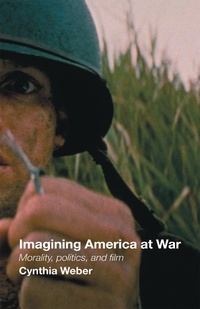
Imagining America at War
Morality, Politics and Film
1st Edition
Published on 24. July 2020
196 pages
978-1-000-11602-1 (ISBN)
Description

Ten films released between 9/11 and Gulf War II reflect raging debates about US foreign policy and what it means to be an American.
Tracing the portrayal of America in the films Pearl Harbor (World War II); We Were Soldiers and The Quiet American (the Vietnam War); Behind Enemy Lines, Black Hawk Down and Kandahar (episodes of humanitarian intervention); Collateral Damage and In the Bedroom (vengeance in response to loss); Minority Report (futurist pre-emptive justice); and Fahrenheit 9/11 (an explicit critique of Bush's entire war on terror), Cynthia Weber presents a stimulating new study of how Americans construct their identity and the moral values that inform their foreign policy.
This is not just another book about post-9/11 America. It introduces the concept of 'moral grammars of war', and explains how they are articulated: Many Americans asked in the wake of 9/11 - not only 'why do they hate us?' but 'what does it mean to be a moral America(n) and how might such an America(n) act morally in contemporary international politics? This text explores how these questions were answered at the intersections of official US foreign policy and post-9/11 popular films.
It also details US foreign policy formation in relation to traditional US narratives about US identity 'who we think we were/are', 'who we wish we'd never been', 'who we really are', and 'who we might become' as well as in relation to their foundations in nationalist discourses of gender and sexuality.
This book will be of great interest to students of American Studies, US Foreign Policy, Contemporary US History, Cultural Studies, Gender and Sexuality Studies and Film Studies.
Tracing the portrayal of America in the films Pearl Harbor (World War II); We Were Soldiers and The Quiet American (the Vietnam War); Behind Enemy Lines, Black Hawk Down and Kandahar (episodes of humanitarian intervention); Collateral Damage and In the Bedroom (vengeance in response to loss); Minority Report (futurist pre-emptive justice); and Fahrenheit 9/11 (an explicit critique of Bush's entire war on terror), Cynthia Weber presents a stimulating new study of how Americans construct their identity and the moral values that inform their foreign policy.
This is not just another book about post-9/11 America. It introduces the concept of 'moral grammars of war', and explains how they are articulated: Many Americans asked in the wake of 9/11 - not only 'why do they hate us?' but 'what does it mean to be a moral America(n) and how might such an America(n) act morally in contemporary international politics? This text explores how these questions were answered at the intersections of official US foreign policy and post-9/11 popular films.
It also details US foreign policy formation in relation to traditional US narratives about US identity 'who we think we were/are', 'who we wish we'd never been', 'who we really are', and 'who we might become' as well as in relation to their foundations in nationalist discourses of gender and sexuality.
This book will be of great interest to students of American Studies, US Foreign Policy, Contemporary US History, Cultural Studies, Gender and Sexuality Studies and Film Studies.
More details
Edition
1. Auflage
Language
English
Place of publication
London
United Kingdom
Publishing group
Taylor & Francis Ltd
Target group
College/higher education
Professional and scholarly
ISBN-13
978-1-000-11602-1 (9781000116021)
Copyright in bibliographic data and cover images is held by Nielsen Book Services Limited or by the publishers or by their respective licensors: all rights reserved.
Schweitzer Classification
Other editions
Additional editions
Book
10/2005
1st Edition
Routledge
€205.80
Shipment within 15-20 days

Book
10/2005
1st Edition
Routledge
€67.70
Shipment within 15-20 days
Person
Cynthia Weber, herself American, is Professor of International Relations at Lancaster University, UK. She is the author of numerous articles on US foreign policy and US hegemony, as well as several books about international relations.
Content
1. Introduction 2. Who we think we were/are 3. Who We Wish We'd Never Been 4. Who We Really Are (Humanitarians) 5. Who We Really Are (Vigilantes) 6. Who We Might Become 7. Conclusion
