

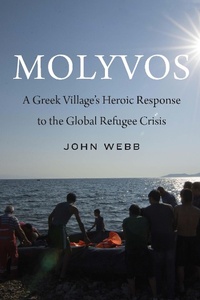
Molyvos
A Greek Village's Heroic Response to the Global Refugee Crisis
Published on 1. October 2023
312 pages
978-1-64012-610-7 (ISBN)
Description

Molyvos, a small seaside village once home to fishermen and shepherds but now a popular summer vacation destination, sits on the northern shore of the Greek island of Lesvos along a four-mile-wide stretch of the Aegean Sea, which separates Greece from Turkey. In the summer of 2015 Molyvos became an epicenter of the mass migration of some 450,000 refugees, mainly Syrians, Afghans, and Iraqis, who crossed from Turkey, fleeing war and brutal dictatorships in their home countries in search of safety in the European Union.
In Molyvos John Webb chronicles the dramatic and fearless efforts of a small band of people who carried out a homemade yet full-fledged, around-the-clock rescue operation until international NGOs began to arrive. Between November 2014 and September 2015, Melinda McRostie, owner of a restaurant in Molyvos's harbor, her family, and a small group of their friends, as well as Eric and Philippa Kempson, a skeleton coast guard crew, some local fishermen, and eventually summer tourists provided relief. During those months, they had no help from the outside-not from Greece, which was already mired in a serious fiscal crisis, not from the EU, which was struggling with its own economic and political issues, and not from any international aid organizations.
Webb provides detailed accounts of refugees crossing the Mytilene Strait in both quiet and rough, frigid waters in boats on the verge of sinking. The Kempsons learned to guide the boats ashore and handled tragic landings in dangerous surf. Ordinary residents of Molyvos rescued thousands of refugees and offered them clothes, food, shelter, and counseling about where they could travel next in their search for safety and asylum. As the tourism industry suffered, a backlash began against the migrants and locals who were helping them, leading to discord in the community. Still, as the ranks of refugees swelled, the volunteer corps in Molyvos expanded its capacity to help.
In Molyvos John Webb chronicles the dramatic and fearless efforts of a small band of people who carried out a homemade yet full-fledged, around-the-clock rescue operation until international NGOs began to arrive. Between November 2014 and September 2015, Melinda McRostie, owner of a restaurant in Molyvos's harbor, her family, and a small group of their friends, as well as Eric and Philippa Kempson, a skeleton coast guard crew, some local fishermen, and eventually summer tourists provided relief. During those months, they had no help from the outside-not from Greece, which was already mired in a serious fiscal crisis, not from the EU, which was struggling with its own economic and political issues, and not from any international aid organizations.
Webb provides detailed accounts of refugees crossing the Mytilene Strait in both quiet and rough, frigid waters in boats on the verge of sinking. The Kempsons learned to guide the boats ashore and handled tragic landings in dangerous surf. Ordinary residents of Molyvos rescued thousands of refugees and offered them clothes, food, shelter, and counseling about where they could travel next in their search for safety and asylum. As the tourism industry suffered, a backlash began against the migrants and locals who were helping them, leading to discord in the community. Still, as the ranks of refugees swelled, the volunteer corps in Molyvos expanded its capacity to help.
Reviews / Votes
"A rigorous and sensitive account of what happened in a Greek village during the migration crisis of 2014 to 2016, when desperate refugees from Syria, Afghanistan, and Iraq risked their lives to reach the nations of the European Union. This book prompts us to ask what it means to lead an ethical life and to help strangers in need. In a century in which conflict and climate will prompt ever-larger numbers of people to seek refuge, Molyvos is a profound meditation on compassion and resilience."-Sewell Chan, editor in chief of the Texas Tribune and former editorial page editor of the Los Angeles Times "John Webb captures the sense of trauma, shock, and disbelief as thousands of desperate people began appearing on the shores of Molyvos. His focus on the motivations and stories of rescuers on the frontlines is both a celebration of heroism and a dire wakeup call about the depth of an ongoing global crisis."-Daniel Gashler, associate professor of history at State University of New York at Delhi "This beautifully written book takes you into one of the biggest refugee crises Greece has witnessed in modern times. Mostly without outside help, many big-hearted Greeks neglected their jobs and saved untold numbers of refugees from drowning. As they got to know refugees, the Greeks were again energized by their determination to live a better life. A truly inspiring story!"-Deborah Kaple, author of Dream of a Red Factory: The Legacy of High Stalinism in China "We often think of refugees and migrants as the domain of the UN, national governments, and big nonprofits such as the Red Cross. But as John Webb shows in his compassionate, well-researched book Molyvos, it's really individuals and community groups who are the first responders to migrants arriving on their shores. These local residents act from the heart, often with few resources and sometimes are shunted aside when bigger players get involved. The question remains why some folks act with empathy and others do not. We surely need more compassion and coordination for new migration waves to come."-Doreen Hemlock, freelance journalist and former business reporter for the South Florida Sun SentinelMore details
Language
English
Place of publication
Dulles
United States
Illustrations
index
File size
7,33 MB
ISBN-13
978-1-64012-610-7 (9781640126107)
Copyright in bibliographic data and cover images is held by Nielsen Book Services Limited or by the publishers or by their respective licensors: all rights reserved.
Schweitzer Classification
Other editions
Additional editions
Book
10/2023
Potomac Books Inc
€35.00
Shipment within 3-4 weeks
Person
John Webb is retired director of the Program in Teacher Preparation at Princeton University. He spent fourteen years teaching at Hunter College, where he also developed instructional and institutional practices for schools working with immigrant and refugee populations. He also spent eighteen years in Spring Valley, New York, working with migrants and refugees as a foreign language and ESL instructor and liaison with cultural and social organizations. He is the author of Teaching Heritage Language Learners: Voices from the Classroom.
Content
List of Illustrations
Prologue: Introduction to the Story of Molyvos
1. Inescapable Memories and an Uncertain Future: April 2018
2. The Tide of Refugees Began as a Trickle: November 2014
3. In the Harbor and on the Beach: Midwinter 2015
4. The Refugees: Their Origins and Their Perilous Journeys to Molyvos
5. The Kempsons Are Still Alone on the Beach: Spring and Summer 2015
6. Enduring the Screams of Desperation: The Coast Guard at Sea and Melinda in the Harbor
7. The Situation in the Harbor Worsens: May 2015
8. Locals and Tourists: How They Felt about the Refugees and What They Did . . . at First
9. The Situation in Molyvos Goes Out of Control: Summer 2015
10. A Long, Hot Summer: The Death March and the Caravan
11. Skala Sykaminias: The Crisis Spreads
12. The Parking Lot by the School: August and September 2015
13. The Starfish Foundation: September and October 2015
14. Oxy Refugee Transit Camp: October through December 2015
15. The Calamitous Shipwreck: October 28, 2015
16. Blessings and Burdens: Volunteers and the NGOs in Molyvos
17. Cleaning the Beaches and Weathering the Community's Bitterness: Fall and Winter 2015
18. Oxy Closes: December 2015
Epilogue: Reflections on the Story of Molyvos
Acknowledgments
Notes
Bibliography
Index
Prologue: Introduction to the Story of Molyvos
1. Inescapable Memories and an Uncertain Future: April 2018
2. The Tide of Refugees Began as a Trickle: November 2014
3. In the Harbor and on the Beach: Midwinter 2015
4. The Refugees: Their Origins and Their Perilous Journeys to Molyvos
5. The Kempsons Are Still Alone on the Beach: Spring and Summer 2015
6. Enduring the Screams of Desperation: The Coast Guard at Sea and Melinda in the Harbor
7. The Situation in the Harbor Worsens: May 2015
8. Locals and Tourists: How They Felt about the Refugees and What They Did . . . at First
9. The Situation in Molyvos Goes Out of Control: Summer 2015
10. A Long, Hot Summer: The Death March and the Caravan
11. Skala Sykaminias: The Crisis Spreads
12. The Parking Lot by the School: August and September 2015
13. The Starfish Foundation: September and October 2015
14. Oxy Refugee Transit Camp: October through December 2015
15. The Calamitous Shipwreck: October 28, 2015
16. Blessings and Burdens: Volunteers and the NGOs in Molyvos
17. Cleaning the Beaches and Weathering the Community's Bitterness: Fall and Winter 2015
18. Oxy Closes: December 2015
Epilogue: Reflections on the Story of Molyvos
Acknowledgments
Notes
Bibliography
Index
