

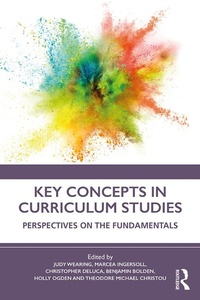
Key Concepts in Curriculum Studies
Perspectives on the Fundamentals
1st Edition
Published on 16. July 2019
258 pages
978-1-351-16707-9 (ISBN)
Description

Offering an accessible entry into curriculum theory, this book defines and contextualizes key concepts for novice and experienced students. Leading scholars in curriculum studies provide short anchor texts that introduce, define, and situate contemporary curriculum theory constructs. Each anchor text is followed by two concise, creative keyword responses that demonstrate varied perspectives and connections, allowing readers to reflect on and engage with the personal relevance of these fundamental concepts.
Useful to instructors and scholars alike, this book explains keyword writing as a teaching and learning strategy and invites readers to enter the complicated conversations of contemporary curriculum theory through their own creative, personal responses. Featuring wide-ranging, nuanced, and varied commentary on major relevant themes, as well as discussion questions for students, this book is an essential text for doctoral and masters-level courses in curriculum studies.
Useful to instructors and scholars alike, this book explains keyword writing as a teaching and learning strategy and invites readers to enter the complicated conversations of contemporary curriculum theory through their own creative, personal responses. Featuring wide-ranging, nuanced, and varied commentary on major relevant themes, as well as discussion questions for students, this book is an essential text for doctoral and masters-level courses in curriculum studies.
More details
Edition
1. Auflage
Language
English
Place of publication
London
United Kingdom
Publishing group
Taylor & Francis Ltd
Target group
College/higher education
Illustrations
1 Tables, black and white; 3 Line drawings, black and white; 1 Halftones, black and white
ISBN-13
978-1-351-16707-9 (9781351167079)
Copyright in bibliographic data and cover images is held by Nielsen Book Services Limited or by the publishers or by their respective licensors: all rights reserved.
Schweitzer Classification
Other editions
Additional editions
Judy Wearing | Marcea Ingersoll | Christopher DeLuca
Key Concepts in Curriculum Studies
Perspectives on the Fundamentals
Book
07/2019
1st Edition
Routledge
€65.40
Shipment within 15-20 days
Judy Wearing | Marcea Ingersoll | Christopher DeLuca
Key Concepts in Curriculum Studies
Perspectives on the Fundamentals
Book
06/2019
1st Edition
Routledge
€206.50
Shipment within 15-20 days
Persons
Judy Wearing is an independent scholar researching the pedagogy of creativity.
Marcea Ingersoll is an Associate Professor in the School of Education and a member of the Centre for Interdisciplinary Research on Narrative at St. Thomas University, Canada.
Christopher DeLuca is an Associate Professor and graduate faculty member in Curriculum and Classroom Assessment at the Faculty of Education, Queen's University, Canada.
Benjamin Bolden is an Associate Professor and UNESCO Chair of Arts and Learning in the Faculty of Education at Queen's University, Canada.
Holly Ogden is an Assistant Professor and Coordinator of the Concurrent Education Program at the Faculty of Education, Queen's University, Canada.
Theodore Michael Christou is an Associate Professor of Social Studies in the Faculty of Education, cross-appointed to the Department of History in the Faculty of Arts, Queen's University, Canada.
Marcea Ingersoll is an Associate Professor in the School of Education and a member of the Centre for Interdisciplinary Research on Narrative at St. Thomas University, Canada.
Christopher DeLuca is an Associate Professor and graduate faculty member in Curriculum and Classroom Assessment at the Faculty of Education, Queen's University, Canada.
Benjamin Bolden is an Associate Professor and UNESCO Chair of Arts and Learning in the Faculty of Education at Queen's University, Canada.
Holly Ogden is an Assistant Professor and Coordinator of the Concurrent Education Program at the Faculty of Education, Queen's University, Canada.
Theodore Michael Christou is an Associate Professor of Social Studies in the Faculty of Education, cross-appointed to the Department of History in the Faculty of Arts, Queen's University, Canada.
Content
Foreword
Rebecca Luce-Kapler
Chapter 1: Introduction
Marcea Ingersoll, Benjamin Bolden, Judy Wearing, Christopher DeLuca, Holly Ogden, Theodore Michael Christou
Chapter 2: Aesthetics
Anchor Text: Shifra Schonmann
Keyword Responses: Galicia Blackman, Benjamin Bolden
Chapter 3: Becoming
Anchor Text: Marg Sellers
Keyword Responses: Benjamin Bolden, Judy Wearing
Chapter 4: Complexity
Anchor Text: Brent Davis
Keyword Responses: Stephen MacGregor, Christopher DeLuca
Chapter 5: Currere
Anchor Text: William F. Pinar
Keyword Responses: Holly Ogden, Benjamin Bolden
Chapter 6: Discourse
Anchor Text: James Paul Gee
Keyword Responses: Benjamin Bolden, Clarissa Mae de Leon
Chapter 7: Ecology
Anchor Text: Rena Upitis
Keyword Responses: Rosie Kerr, Marcea Ingersoll
Chapter 8: Ethics
Anchor Text: Nel Noddings
Keyword Responses: Pamela Rogers, Holly Ogden
Chapter 9: Experience
Anchor Text: Rachel Heydon & Elisabeth Davies
Keyword Responses: Matthew Jenkins, Alice Johnston
Chapter 10: Hermeneutics
Anchor Text: Karen A. Krasny & Patrick Slattery
Keyword Responses: Daniela Greco-Giancola, Judy Wearing
Chapter 11: Imagination
Anchor Text: Gillian Judson
Keyword Responses: Cassie MacPhail, Barbara Lorraine Laing
Chapter 12: Indigeneity
Anchor Text: Jennifer Davis, Lindsay Morcom, & Deb St. Amant
Keyword Responses: James McCourt, Kimberly Eyers
Chapter 13: Narrative
Anchor Text: Leah C. Fowler
Keyword Responses: Shamari Reid, Francine Almash
Chapter 14: Normativity
Anchor Text: Claire Robson & Dennis Sumara
Keyword Responses: Robert P. Robinson, Clarissa Mae de Leon
Chapter 15: Place
Anchor Text: Dwayne Donald
Keyword Responses: Andy Curtis, Judy Wearing
Chapter 16: Poetics
Anchor Text: Carl Leggo
Keyword Responses: Kimberly Eyers, Theodore Michael Christou
Chapter 17: Representation
Anchor Text: Awad Ibrahim
Keyword Responses: Tiina Kukkonen, Christopher DeLuca
Chapter 18: Social Justice
Anchor Text: Debbie Sonu
Keyword Responses: Leanne Nunes, Marcea Ingersoll
Chapter 19: Standards
Anchor Text: Lorna M. Earl & Ken O'Connor
Keyword Responses: Rubaiyat Jabeen, Marcea Ingersoll
Chapter 20: Temporality
Anchor Text: Adrian Downey & Pam Whitty
Keyword Responses: Jen McConnel, Andy Curtis
Chapter 21: Conclusion: In Curriculum Conversation
Christopher DeLuca & Holly Ogden
Rebecca Luce-Kapler
Chapter 1: Introduction
Marcea Ingersoll, Benjamin Bolden, Judy Wearing, Christopher DeLuca, Holly Ogden, Theodore Michael Christou
Chapter 2: Aesthetics
Anchor Text: Shifra Schonmann
Keyword Responses: Galicia Blackman, Benjamin Bolden
Chapter 3: Becoming
Anchor Text: Marg Sellers
Keyword Responses: Benjamin Bolden, Judy Wearing
Chapter 4: Complexity
Anchor Text: Brent Davis
Keyword Responses: Stephen MacGregor, Christopher DeLuca
Chapter 5: Currere
Anchor Text: William F. Pinar
Keyword Responses: Holly Ogden, Benjamin Bolden
Chapter 6: Discourse
Anchor Text: James Paul Gee
Keyword Responses: Benjamin Bolden, Clarissa Mae de Leon
Chapter 7: Ecology
Anchor Text: Rena Upitis
Keyword Responses: Rosie Kerr, Marcea Ingersoll
Chapter 8: Ethics
Anchor Text: Nel Noddings
Keyword Responses: Pamela Rogers, Holly Ogden
Chapter 9: Experience
Anchor Text: Rachel Heydon & Elisabeth Davies
Keyword Responses: Matthew Jenkins, Alice Johnston
Chapter 10: Hermeneutics
Anchor Text: Karen A. Krasny & Patrick Slattery
Keyword Responses: Daniela Greco-Giancola, Judy Wearing
Chapter 11: Imagination
Anchor Text: Gillian Judson
Keyword Responses: Cassie MacPhail, Barbara Lorraine Laing
Chapter 12: Indigeneity
Anchor Text: Jennifer Davis, Lindsay Morcom, & Deb St. Amant
Keyword Responses: James McCourt, Kimberly Eyers
Chapter 13: Narrative
Anchor Text: Leah C. Fowler
Keyword Responses: Shamari Reid, Francine Almash
Chapter 14: Normativity
Anchor Text: Claire Robson & Dennis Sumara
Keyword Responses: Robert P. Robinson, Clarissa Mae de Leon
Chapter 15: Place
Anchor Text: Dwayne Donald
Keyword Responses: Andy Curtis, Judy Wearing
Chapter 16: Poetics
Anchor Text: Carl Leggo
Keyword Responses: Kimberly Eyers, Theodore Michael Christou
Chapter 17: Representation
Anchor Text: Awad Ibrahim
Keyword Responses: Tiina Kukkonen, Christopher DeLuca
Chapter 18: Social Justice
Anchor Text: Debbie Sonu
Keyword Responses: Leanne Nunes, Marcea Ingersoll
Chapter 19: Standards
Anchor Text: Lorna M. Earl & Ken O'Connor
Keyword Responses: Rubaiyat Jabeen, Marcea Ingersoll
Chapter 20: Temporality
Anchor Text: Adrian Downey & Pam Whitty
Keyword Responses: Jen McConnel, Andy Curtis
Chapter 21: Conclusion: In Curriculum Conversation
Christopher DeLuca & Holly Ogden
