

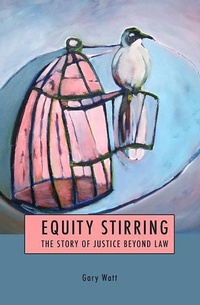
Equity Stirring
The Story of Justice Beyond Law
1st Edition
Published on 17. July 2009
258 pages
978-1-84731-524-3 (ISBN)
Description

Sir Frederick Pollock wrote that 'English-speaking lawyers ...have specialised the name of Equity'. It is typical for legal textbooks on the law of equity to acknowledge the diverse ways in which the word 'equity' is used and then to focus on the legal sense of the word to the exclusion of all others. There may be a professional responsibility on textbook writers to do just that. If so, there is a counterpart responsibility to read the law imaginatively and to read what non-lawyers have said of equity with an open mind. This book is an exploration of the meaning of equity as artists and thinkers have portrayed it within the law and without. Watt finds in law and literature an equity that is necessary to good life and good law but which does not require us to subscribe to a moral or 'natural law' ideal. It is an equity that takes a principled and practical stand against rigid formalism and unthinking routine in law and life, and so provides timely resistance to current forces of extremism and entitlement culture. The project is an educational one in the true etymological sense of leading the reader out into new territory. The book will provide the legal scholar with deep insight into the rhetorical, literary and historical foundations of the idea of equity in law, and it will provide the law student with a cultural history of, and an imaginative introduction to, the technical law of equity and trusts. Scholars and students of such disciplines as literature, classics, history, theology, theatre and rhetoric will discover new insights into the art of equity in the law and beyond. Along the way, Watt offers a new theory on the naming of Dickens' chancery case Jarndyce and Jarndyce and suggests a new connection between Shakespeare and the origin of equity in modern law.
'This beautiful book, deeply learned in the branch of jurisprudence we call equity and deeply engaged with the western literary tradition, gives new life to equity in the legal sense by connecting it with equity in the larger sense: as it is defined both in ordinary language and experience and by great writers, especially Dickens and Shakespeare. Equity Stirring transforms our sense of what equity is and can be and demonstrates in a new and graceful way the importance of connecting law with other arts of mind and language.'
James Boyd White, author of Living Speech: Resisting the Empire of Force
'Equity Stirring' is a fine example of interdisciplinary legal scholarship at its best. Watt has managed to produce a book that is fresh and innovative, and thoroughly accessible. Deploying a range of familiar, and not so familiar, texts from across the humanities, Watt has presented a fascinating historical and literary commentary on the evolution of modern ideas of justice and equity.
Ian Ward, Professor of Law at the University of Newcastle upon Tyne.
"this is an important, compendious, and thought-provoking work that should be on the shelves of everyone interested in equity studies."
Mark Fortier, Law and Literature
"there is much of interest to the legal historian...the book's insights and erudition did engage this rather sceptical reader, who would like to believe that equity could achieve justice, but fears rather that it can only be as fair as the court dispensing it."
Rosemary Auchmuty, The Journal of Legal History
"With luck, Equity Stirring will stir...taxonomic positivists from their culture of entitlement, waking them to the possibility that law and justice do not form the perfect quadration".
Nick Piska, Social & Legal Studies
"a highly imaginative, original and refreshing foray into the legal and ethical import of concepts too often thought to be difficult, archaic and obscure...Watt gives us a way into the subject which is forceful in its imaginative reach and its ethical import..."
David Gurnham, Law, Culture and the Humanities
'This beautiful book, deeply learned in the branch of jurisprudence we call equity and deeply engaged with the western literary tradition, gives new life to equity in the legal sense by connecting it with equity in the larger sense: as it is defined both in ordinary language and experience and by great writers, especially Dickens and Shakespeare. Equity Stirring transforms our sense of what equity is and can be and demonstrates in a new and graceful way the importance of connecting law with other arts of mind and language.'
James Boyd White, author of Living Speech: Resisting the Empire of Force
'Equity Stirring' is a fine example of interdisciplinary legal scholarship at its best. Watt has managed to produce a book that is fresh and innovative, and thoroughly accessible. Deploying a range of familiar, and not so familiar, texts from across the humanities, Watt has presented a fascinating historical and literary commentary on the evolution of modern ideas of justice and equity.
Ian Ward, Professor of Law at the University of Newcastle upon Tyne.
"this is an important, compendious, and thought-provoking work that should be on the shelves of everyone interested in equity studies."
Mark Fortier, Law and Literature
"there is much of interest to the legal historian...the book's insights and erudition did engage this rather sceptical reader, who would like to believe that equity could achieve justice, but fears rather that it can only be as fair as the court dispensing it."
Rosemary Auchmuty, The Journal of Legal History
"With luck, Equity Stirring will stir...taxonomic positivists from their culture of entitlement, waking them to the possibility that law and justice do not form the perfect quadration".
Nick Piska, Social & Legal Studies
"a highly imaginative, original and refreshing foray into the legal and ethical import of concepts too often thought to be difficult, archaic and obscure...Watt gives us a way into the subject which is forceful in its imaginative reach and its ethical import..."
David Gurnham, Law, Culture and the Humanities
More details
Edition
1. Auflage
Language
English
Place of publication
London
United Kingdom
Publishing group
Bloomsbury Publishing PLC
Target group
Professional and scholarly
ISBN-13
978-1-84731-524-3 (9781847315243)
Copyright in bibliographic data and cover images is held by Nielsen Book Services Limited or by the publishers or by their respective licensors: all rights reserved.
Schweitzer Classification
Other editions
Additional editions
Book
05/2012
1st Edition
Hart Publishing
€49.75
Article exhausted; check different version
Person
Gary Watt is a Professor of Law at the University of Warwick, and one of the General Editors of Law and Humanities. He was named UK 'Law Teacher of the Year' 2009.
Content
1 Excursion
Equitable Reading
The Constancy of Remedial Equity
The 'Science' Fiction of Law
The Cultural Story of other Countries and other Worlds
Law, Humanities and the Humane
The Character of Equity
Multiple Meanings of Equity
Education
2 In Chancery
Equity Captured in Chancery
The Earl of Oxford's Case
In Fashion: Equity and the Problem of Precedent
The New Life of Equity
3 Chancery Script
The Future of Chancery Language in English Law
Bending without Breaking
Chancery Language
Maxims
Chancery Doctrine
Equitable Remedies
Equitable Property
Trust
The Historical Development of the Trust
The Metaphysical Appeal of the Trust
Constructive Trust
Public Example and Private Equity
Mortgage
Conclusion
4 Figuring Equity
General Law as Abstract Fiction
The Reductive Nature of Legal Abstraction
The Merit of Metaphor
Metaphor as Equitable Doctrine - the Example of Resulting Trust
Metaphors of Equity
Architectural Metaphors: Level Ground, Right Angles and the Leaden Rule
The River of Justice
The Scales
The Personification of Equity
5 The Equity of Esther Summerson
Esther and Summerson
The Fractured Canon and the Equity of the Book of Common Prayer
The Stereotype of Female Equity
Motive Moderation
Domestic Goddess
The Close of Esther's Narrative
6 Shakespeare's Equity
Shakespeare's Legal Language
Shakespeare and the 'Equity'Word
Falstaff and Equity - a Reinterpretation
Equity Stirring
To Catch and Keep the Conscience of the King
The Merchant of Venice
Measure for Measure
Shakespeare's Impartiality
7 Pretence of Equity
Outlaw Equity
House and Homecoming
Pretence of Equity
The Future
The Limit
Equitable Reading
The Constancy of Remedial Equity
The 'Science' Fiction of Law
The Cultural Story of other Countries and other Worlds
Law, Humanities and the Humane
The Character of Equity
Multiple Meanings of Equity
Education
2 In Chancery
Equity Captured in Chancery
The Earl of Oxford's Case
In Fashion: Equity and the Problem of Precedent
The New Life of Equity
3 Chancery Script
The Future of Chancery Language in English Law
Bending without Breaking
Chancery Language
Maxims
Chancery Doctrine
Equitable Remedies
Equitable Property
Trust
The Historical Development of the Trust
The Metaphysical Appeal of the Trust
Constructive Trust
Public Example and Private Equity
Mortgage
Conclusion
4 Figuring Equity
General Law as Abstract Fiction
The Reductive Nature of Legal Abstraction
The Merit of Metaphor
Metaphor as Equitable Doctrine - the Example of Resulting Trust
Metaphors of Equity
Architectural Metaphors: Level Ground, Right Angles and the Leaden Rule
The River of Justice
The Scales
The Personification of Equity
5 The Equity of Esther Summerson
Esther and Summerson
The Fractured Canon and the Equity of the Book of Common Prayer
The Stereotype of Female Equity
Motive Moderation
Domestic Goddess
The Close of Esther's Narrative
6 Shakespeare's Equity
Shakespeare's Legal Language
Shakespeare and the 'Equity'Word
Falstaff and Equity - a Reinterpretation
Equity Stirring
To Catch and Keep the Conscience of the King
The Merchant of Venice
Measure for Measure
Shakespeare's Impartiality
7 Pretence of Equity
Outlaw Equity
House and Homecoming
Pretence of Equity
The Future
The Limit
