

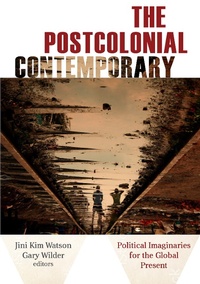
The Postcolonial Contemporary
Political Imaginaries for the Global Present
Published on 3. July 2018
352 pages
978-0-8232-8009-4 (ISBN)
Description

This volume invokes the "postcolonial contemporary" in order to recognize and reflect upon the emphatically postcolonial character of the contemporary conjuncture, as well as to inquire into whether postcolonial criticism can adequately grasp it. Neither simply for nor against postcolonialism, the volume seeks to cut across this false alternative, and to think with postcolonial theory about political contemporaneity.
Many of the most influential frameworks of postcolonial theory were developed during the 1970s and 1990s, during what we may now recognize as the twilight of the postwar period. If forms of capitalist imperialism are entering into new configurations of neoliberal privatization, wars-without-end, xenophobic nationalism and unsustainable extraction, what aspects of postcolonial inquiry must be reworked or revised in order to grasp our political present?
In twelve essays that draw from a number of disciplines-history, anthropology, literature, geography, indigenous studies- and regional locations (the Black Atlantic, South Africa, South Asia, East Asia, Australia, Argentina) The Postcolonial Contemporary seeks to move beyond the habitual oppositions that have often characterized the field, such as universal vs. particular; Marxism vs. postcolonialism; and politics vs. culture. These essays signal an attempt to reckon with new and persisting postcolonial predicaments and do so under four inter-related analytics: Postcolonial Temporality; Deprovincializing the Global South; Beyond Marxism versus Postcolonial Studies; and Postcolonial Spatiality and New Political Imaginaries.
Many of the most influential frameworks of postcolonial theory were developed during the 1970s and 1990s, during what we may now recognize as the twilight of the postwar period. If forms of capitalist imperialism are entering into new configurations of neoliberal privatization, wars-without-end, xenophobic nationalism and unsustainable extraction, what aspects of postcolonial inquiry must be reworked or revised in order to grasp our political present?
In twelve essays that draw from a number of disciplines-history, anthropology, literature, geography, indigenous studies- and regional locations (the Black Atlantic, South Africa, South Asia, East Asia, Australia, Argentina) The Postcolonial Contemporary seeks to move beyond the habitual oppositions that have often characterized the field, such as universal vs. particular; Marxism vs. postcolonialism; and politics vs. culture. These essays signal an attempt to reckon with new and persisting postcolonial predicaments and do so under four inter-related analytics: Postcolonial Temporality; Deprovincializing the Global South; Beyond Marxism versus Postcolonial Studies; and Postcolonial Spatiality and New Political Imaginaries.
More details
Edition
New edition
Language
English
Place of publication
NY
United States
Target group
Professional and scholarly
Edition type
New edition
File size
5,52 MB
ISBN-13
978-0-8232-8009-4 (9780823280094)
Copyright in bibliographic data and cover images is held by Nielsen Book Services Limited or by the publishers or by their respective licensors: all rights reserved.
Schweitzer Classification
Other editions
Additional editions
Jini Kim Watson | Gary Wilder
The Postcolonial Contemporary
Political Imaginaries for the Global Present
Book
07/2018
Fordham University Press
€126.50
Shipment within 10-20 days
Persons
Jini Kim Watson is Associate Professor of English and Comparative Literature at New York University. She is the author of The New Asian City: Three-dimensional Fictions of Space and Urban Form and editor, with Gary Wilder, of The Postcolonial Contemporary: Political Imaginaries for the Global Present.
Gary Wilder is Director of the Committee on Globalization and Social Change at the Graduate Center of the City University of New York, where he is Professor in the PhD Program of Anthropology, with cross appointments in History and French. He is the author of Concrete Utopianism: The Politics of Temporality and Solidarity (Fordham University Press, 2022), Freedom Time: Negritude, Decolonization, and the Future of the World (Duke University Press, 2015), and The French Imperial Nation-State: Negritude and Colonial Humanism between the World Wars (University of Chicago Press, 2005). He is coauthor of Theses on Theory and History (special issue of History of the Present: A Journal of Critical History, 2020) and two edited volumes, The Fernando Coronil Reader: The Struggle for Life Is the Matter (Duke University Press, 2019) and The Postcolonial Contemporary: Political Imaginaries for the Global Present (Fordham University Press, 2018). He is currently writing a book on the political thought of C. L. R. James.
Peter Hitchcock is professor of English at the CUNY Graduate Center and Baruch College of the City University of New York. His books include Dialogics of the Oppressed (1992); Oscillate Wildly: Space, Body, and Spirit of Millennial Materialism (1999); Imaginary States: Studies in Cultural Transnationalism (2003); The Long Space: Transnationalism and Postcolonial Form (2009); The New Public Intellectual: Politics, Theory, and the Public Sphere (2016; coedited with Jeffrey R. Di Leo); Labor in Culture, or, Worker of the World(s) (2017); and, most recently, The Debt Age (2018; coedited with Jeffrey R. Di Leo and Sophia McClennen).
Anupama Rao is Associate Professor of History at Barnard College. She is the author of The Caste Question (California, 2009).
Jini Kim Watson is Associate Professor of English and Comparative Literature at New York University. She is the author of The New Asian City: Three-dimensional Fictions of Space and Urban Form and editor, with Gary Wilder, of The Postcolonial Contemporary: Political Imaginaries for the Global Present.
Gary Wilder is Director of the Committee on Globalization and Social Change at the Graduate Center of the City University of New York, where he is Professor in the PhD Program of Anthropology, with cross appointments in History and French. He is the author of Concrete Utopianism: The Politics of Temporality and Solidarity (Fordham University Press, 2022), Freedom Time: Negritude, Decolonization, and the Future of the World (Duke University Press, 2015), and The French Imperial Nation-State: Negritude and Colonial Humanism between the World Wars (University of Chicago Press, 2005). He is coauthor of Theses on Theory and History (special issue of History of the Present: A Journal of Critical History, 2020) and two edited volumes, The Fernando Coronil Reader: The Struggle for Life Is the Matter (Duke University Press, 2019) and The Postcolonial Contemporary: Political Imaginaries for the Global Present (Fordham University Press, 2018). He is currently writing a book on the political thought of C. L. R. James.
Gary Wilder is Director of the Committee on Globalization and Social Change at the Graduate Center of the City University of New York, where he is Professor in the PhD Program of Anthropology, with cross appointments in History and French. He is the author of Concrete Utopianism: The Politics of Temporality and Solidarity (Fordham University Press, 2022), Freedom Time: Negritude, Decolonization, and the Future of the World (Duke University Press, 2015), and The French Imperial Nation-State: Negritude and Colonial Humanism between the World Wars (University of Chicago Press, 2005). He is coauthor of Theses on Theory and History (special issue of History of the Present: A Journal of Critical History, 2020) and two edited volumes, The Fernando Coronil Reader: The Struggle for Life Is the Matter (Duke University Press, 2019) and The Postcolonial Contemporary: Political Imaginaries for the Global Present (Fordham University Press, 2018). He is currently writing a book on the political thought of C. L. R. James.
Peter Hitchcock is professor of English at the CUNY Graduate Center and Baruch College of the City University of New York. His books include Dialogics of the Oppressed (1992); Oscillate Wildly: Space, Body, and Spirit of Millennial Materialism (1999); Imaginary States: Studies in Cultural Transnationalism (2003); The Long Space: Transnationalism and Postcolonial Form (2009); The New Public Intellectual: Politics, Theory, and the Public Sphere (2016; coedited with Jeffrey R. Di Leo); Labor in Culture, or, Worker of the World(s) (2017); and, most recently, The Debt Age (2018; coedited with Jeffrey R. Di Leo and Sophia McClennen).
Anupama Rao is Associate Professor of History at Barnard College. She is the author of The Caste Question (California, 2009).
Jini Kim Watson is Associate Professor of English and Comparative Literature at New York University. She is the author of The New Asian City: Three-dimensional Fictions of Space and Urban Form and editor, with Gary Wilder, of The Postcolonial Contemporary: Political Imaginaries for the Global Present.
Gary Wilder is Director of the Committee on Globalization and Social Change at the Graduate Center of the City University of New York, where he is Professor in the PhD Program of Anthropology, with cross appointments in History and French. He is the author of Concrete Utopianism: The Politics of Temporality and Solidarity (Fordham University Press, 2022), Freedom Time: Negritude, Decolonization, and the Future of the World (Duke University Press, 2015), and The French Imperial Nation-State: Negritude and Colonial Humanism between the World Wars (University of Chicago Press, 2005). He is coauthor of Theses on Theory and History (special issue of History of the Present: A Journal of Critical History, 2020) and two edited volumes, The Fernando Coronil Reader: The Struggle for Life Is the Matter (Duke University Press, 2019) and The Postcolonial Contemporary: Political Imaginaries for the Global Present (Fordham University Press, 2018). He is currently writing a book on the political thought of C. L. R. James.
Content
Introduction: Thinking the Postcolonial Contemporary
Jini Kim Watson and Gary Wilder
1. Foucault, Fanon, Intellectuals, Revolutions
Anthony C. Alessandrini
2. When Revolution Is Not Enough: Tracing the Limits of Black Radicalism in Dionne Brand's Chronicles of the Hostile Sun and In Another Place, Not Here
Laurie R. Lambert
3. Mysterious Moves of Revolution: Spectres of Black Power, Futures of Postcoloniality
Sharad Chari
4. Reading Du Bois's Revelation: Radical Humanism and Black Atlantic Criticism
Gary Wilder
5. De-provincializing Anticaste Thought: A Genealogy of Ambedkar's Dalit
Anupama Rao
6. The Postcolonial Avant-Garde and the Claim to Futurity: Edwar al-Kharrat's Ethics of Tentative Innovation
Adam Spanos
7. Neither Greek nor Indian: Space, Nation and, History in River of Fire and the Mermaid Madonna
Sadia Abbas
8. For a Marxist Theory of Waste: Seven Remarks
Vinay Gidwani
9. Goolarabooloo Futures: Mining and Aborigines in North-West Australia
Stephen Muecke
10. Buenos Aires' La Salada's Market and Plebeian Citizenship
Carlos A. Forment
11. The Speed of Place and the Space of Time: Toward a Theory of Postcolonial Velo/city
Peter Hitchcock
12. The Wrong Side of History: Anachronism and Authoritarianism
Jini Kim Watson
List of Contributors
Acknowledgments
Index
Jini Kim Watson and Gary Wilder
1. Foucault, Fanon, Intellectuals, Revolutions
Anthony C. Alessandrini
2. When Revolution Is Not Enough: Tracing the Limits of Black Radicalism in Dionne Brand's Chronicles of the Hostile Sun and In Another Place, Not Here
Laurie R. Lambert
3. Mysterious Moves of Revolution: Spectres of Black Power, Futures of Postcoloniality
Sharad Chari
4. Reading Du Bois's Revelation: Radical Humanism and Black Atlantic Criticism
Gary Wilder
5. De-provincializing Anticaste Thought: A Genealogy of Ambedkar's Dalit
Anupama Rao
6. The Postcolonial Avant-Garde and the Claim to Futurity: Edwar al-Kharrat's Ethics of Tentative Innovation
Adam Spanos
7. Neither Greek nor Indian: Space, Nation and, History in River of Fire and the Mermaid Madonna
Sadia Abbas
8. For a Marxist Theory of Waste: Seven Remarks
Vinay Gidwani
9. Goolarabooloo Futures: Mining and Aborigines in North-West Australia
Stephen Muecke
10. Buenos Aires' La Salada's Market and Plebeian Citizenship
Carlos A. Forment
11. The Speed of Place and the Space of Time: Toward a Theory of Postcolonial Velo/city
Peter Hitchcock
12. The Wrong Side of History: Anachronism and Authoritarianism
Jini Kim Watson
List of Contributors
Acknowledgments
Index
