

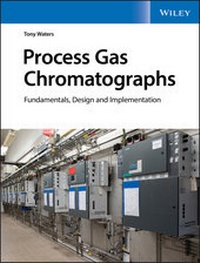
Process Gas Chromatographs
Description

This comprehensive resource provides the theory that underpins a full understanding of the fundamental techniques of gas chromatography and the process analyzer. Without relying on complex mathematics, the book addresses hands-on applications of gas chromatographs within process industries. The author - a noted expert on the topic - details both the scientific information needed to grasp the material presented and the practical applications for professionals working in the field.
Process Gas Chromatographs: Fundamentals, Design and Implementation comprises 15 chapters, a glossary of terms and a series of self-assessment questions and quizzes. This important resource:
* Describes practical procedures for design and troubleshooting
* Contains concise chapters that provide a structured course for advanced students in process engineering
* Reviews the fundamentals of applied gas chromatography
* Details the operation and maintenance of process gas chromatographs
* Offers a summary, and self-assessment questions, for every chapter
* Is written by an international expert in the field with extensive industry knowledge and teaching experience in courses on process sampling systems and gas chromatography
Written for process analyzer engineers and technicians, application engineers, and industrial environmental engineers, Process Gas Chromatographs: Fundamentals, Design and Implementation offers an essential guide to the basics of gas chromatography and reviews the applications of process gas chromatographs in industry today.
More details
Other editions
Additional editions
Person
Tony Waters owns Analyzer Consulting Engineers, LLC in USA and is an Elected Fellow of International Society of Automation. Since 2000, he has been a Consultant in Process Analysis assisting refiners and chemical processors to achieve optimal use of process analyzers. He has twenty-five years' experience of working in the industry before setting up his own company, Measurementation, Inc. in 1986 to manufacture process analyzer systems.
Content
Preface xix
Contributors xxi
Acknowledgments xxvii
Part One PGC fundamentals 1
1 An introduction 3
Chromatographic separation 3
The gas chromatograph 4
The basic instrument 4
The process instrument 5
The oven 7
Temperature control 7
Temperature programming 7
The sample injection valve 8
Laboratory and online practice 8
Plug injection 8
Gas sample injection 9
Liquid sample injection 9
The column 10
The separating device 10
It takes time 10
Multiple columns 11
SCI-FILE: On Column Types 12
Introduction to SCI-FILEs 12
Two kinds of column 12
Packed columns 12
Open-tubular columns 12
The detector 13
Making the measurements 13
The chromatogram 14
Knowledge Gained 18
Did you get it? 19
Self-assessment quiz: SAQ 01 19
Student evaluation test: SET 01 20
References 21
Cited 21
Figures 22
New technical terms 22
2 Peakshape 25
How columns work 25
What happens inside the column 26
How gas and liquid interact 26
Troubleshooting tips 28
How peaks form 28
Forming an equilibrium 28
The effect of movement 30
A peak appears 31
Effect of more equilibria 33
Some conclusions 34
Identical molecules - different behavior 34
All peaks are symmetrical 35
More equilibria - narrower peaks 35
More equilibria - taller peaks 35
Retention at the apex 36
More equilibria - same retention time 36
SCI-FILE: On Solubility 36
Solubility 36
Partition 36
Distribution 37
Limitations 37
Knowledge Gained 37
Did you get it? 38
Self-assessment quiz: SAQ 02 38
Student evaluation test: SET 02 38
References 40
Figures 40
Equation 41
Symbols 41
New technical terms 41
3 Separation 43
How peaks get separated 43
A more realistic explanation 43
A challenge question 46
Significance of the air peak 47
The answer 48
Measurements from chromatograms 50
A practical task 50
Typical calculations 51
Knowledge Gained 52
Did you get it? 53
Self-assessment quiz: SAQ 03 53
Student evaluation test: SET 03 53
References 55
Figures 55
Equations 55
Symbols 55
New technical terms 55
4 Peakpatterns 57
Migration rate 57
Predictable patterns in peak position 57
Space or time 57
Spatial or temporal separation 58
Predictable patterns in peak width 59
Distance or duration 59
SCI-FILE: On Chemical Names 60
Hydrocarbons 60
Shorthand notation 61
Predictable patterns in retention 61
The doubling rule 61
Challenge question 62
A process of elimination 62
Temperature programming 64
Relative retention 66
Separation and resolution 67
Resolution 67
Predictable patterns in resolution 69
Knowledge Gained 71
Did you get it? 72
Self-assessment quiz: SAQ 04 72
Student evaluation test: SET 04 72
References 74
Figures 74
Equations 74
Symbols 74
New technical terms 74
Part Two PGC analytics 77
5 Industrial gas chromatographs 79
Process analyzers 79
Introduction to process analysis 79
The measurement of quality 80
Process gas chromatographs 81
Versatile and reliable 81
PGC development 82
The value of analysis 83
Competing technologies 84
Gas chromatograph or spectrophotometer? 84
Speed of response 86
The outlook 87
The PGC analytics unit 87
Introduction 87
Carrier gas supply system 88
Sample injection system 89
Chromatographic valves 89
Column system 89
Detectors 89
Temperature-controlled ovens 90
Knowledge Gained 90
Did you get it? 91
Self-assessment quiz: SAQ 05 91
Student evaluation test: SET 05 92
References 93
Cited 93
Table 93
Figures 93
Symbol 94
New technical terms 94
6 Carrier gas system 95
Choice of carrier gas 95
Carrier gas purpose 95
Choice of carrier gas 95
Mixed carrier gases 97
Carrier gas purity 97
Analytical effect of impurities 98
Damaging effect of impurities 100
Maintenance of gas cleaners 101
Carrier gas supply system 101
Carrier gas supply line 102
Pressure regulation 103
Mechanical pressure regulators 103
Electronic pressure controllers 104
Flow regulation 104
Measuring the carrier gas flow rates 104
Setting the flow rates 105
Optimum flow rate 106
Knowledge Gained 106
Did you get it? 107
Self-assessment quiz: SAQ 06 107
Student evaluation test: SET 06 108
References 109
Cited 109
Table 110
Figures 110
Symbols 110
New technical terms 111
7 Sample injection 113
Introduction 113
Injecting gas samples 114
Gas sample volume 114
Gas sample temperature 115
Gas sample pressure 116
Injecting liquid samples 118
Less preferred 118
Vaporizing a liquid sample 118
Liquid sample volume 119
Liquid sample temperature 120
Liquid sample pressure 121
Other techniques 122
Sample splitting 122
Remote sample injection 122
Normalization 122
SCI-FILE: On Analytic Units 123
A fable 123
Constant sample size 123
Different ratio units 124
Injected quantity 124
Conversion of units 125
Knowledge Gained 126
Did you get it? 127
Self-assessment quiz: SAQ 07 127
Student evaluation test: SET 07 128
References 130
Cited 130
Tables 130
Figures 130
Symbols 130
New technical terms 131
8 Chromatographic valves 133
Valve technology 133
Evolution 133
The strange effect of competition 134
Valve types 135
Solenoid instrument valves 135
Spool or piston valves 135
Slide valves 136
Rotary valves 139
Diaphragm valves 141
Plunger valves for liquid injection 143
Other switching techniques 145
Valve leaks 146
About leaks 146
Valve leak mitigation 148
Knowledge Gained 149
Did you get it? 151
Self-assessment quiz: SAQ 08 151
Student evaluation test: SET 08 151
References 153
Cited 153
Table 154
Figures 154
New technical terms 155
9 Column systems 157
Two fundamental issues 157
The general elution problem 157
The temperature ramp solution 158
The multiple column solution 159
The choice 160
Delayed injection 161
Four types of column system 161
Recognizing the functions performed 161
Type A: A single column 162
Type B: Multiple columns, single detector 163
Type C: Multiple detectors, single injector 164
Type D: Multiple sample injectors 166
Elemental column systems 168
Useful techniques 168
Backflush column system 168
Distribution column system 170
Heartcut column system 171
Trap-and-hold column system 173
The real power 174
Endnote 175
Knowledge Gained 176
Did you get it? 177
Self-assessment quiz: SAQ 09 177
Student evaluation test: SET 09 177
References 180
Cited 180
Table 180
Figures 180
New technical terms 181
10 Detectors 183
Introduction 183
Types of detector 183
Two measured variables 183
Concentration detectors 184
Rate-of-arrival detectors 185
Multiple detectors 186
Signal capture 186
SCI-FILE: On Detectors 187
Signal noise 187
Speed of response 187
Sensitivity 188
Thermal conductivity detector 189
TCD application 189
TCD basic function 190
TCD detection principle 191
TCD thermal elements 192
TCD electrical arrangement 194
TCD electrical improvements 194
TCD performance enhancement 195
Flame ionization detector 197
FID application 197
FID detection principle 198
FID makeup gases 199
FID sensitivity 199
FID vent arrangements 200
FID methanator 200
Flame photometric detector 202
FPD application 202
FPD detection principle 202
FPD concerns 203
Other detectors 205
Electron capture detector 205
Helium ionization detector 206
Photoionization detector 207
Pulsed discharge detector 207
Knowledge Gained 210
Did you get it? 213
Self-assessment quiz: SAQ 10 213
Student evaluation test: SET 10 214
References 216
Cited 216
Tables 217
Figures 217
Equations 217
Symbols 218
New technical terms 218
11 Temperature control 221
Need for stability 221
Sample volume 221
Retention times 221
The air-bath oven 223
Heating with air purging 223
The airless oven 225
Heating without air 225
The 2008 ABB PGC1000 227
The 2014 Rosemount Danalyzer 370XA PGC 227
The 2009 Rosemount 700XA PGC 227
The 2002 Maxum Edition II 228
Direct column heating 228
Resistive heating 228
The ABB approach 229
The Teledyne Falcon approach 230
A few cautions 231
Summary of heating methods 231
PGC standardization 231
Realities of the market 231
The applications engineering conundrum 232
MEMS technology 233
The 2002 siemens MicroSAM 234
A closing thought 234
Knowledge Gained 235
Did you get it? 236
Self-assessment quiz: SAQ 11 236
Student evaluation test: SET 11 237
References 238
Cited 238
Table 239
Figures 239
New technical terms 240
Part Three PGC control 241
12 Event scheduling 243
A sequence of actions 243
Program timing 243
Autozero 245
Atmospheric referencing 245
Sample injection 245
Step stream 246
Column switching 247
Peak gating 247
Initiate a calculation 248
Data transmission 248
Alarm notifications 248
End-of-cycle 248
Event markers 248
Calendar events 248
Timing mechanisms 249
Mechanical programmers 249
Electronic timers 249
Microprocessor control 250
The program or method 250
Control of analyzer operation 250
Temperature control 251
Pressure control 251
Peak identification 251
Fixed-time gating 252
Retention time tracking 253
Knowledge Gained 254
Did you get it? 256
Self-assessment quiz: SAQ 12 256
Student evaluation test: SET 12 256
References 258
Cited 258
Figures 258
New technical terms 259
13 Data display techniques 261
The chromatogram display 261
Detector signal 261
Digitized chromatograms 262
Chromatogram autozero 263
Peak height calibration 263
Peak area calibration 264
The bargraph display 265
The paper saver 265
The trend record 266
Analog peak processing 266
Digital signal processing 267
The minicomputer story 267
The ubiquitous microprocessor 268
A regression perhaps? 269
Central maintenance station 271
Continuous analyzer controllers 271
PGC function alarms 272
Indicators 272
Alarm notifications 272
Knowledge Gained 273
Did you get it? 274
Self-assessment quiz: SAQ13 274
Student evaluation questions: SET-13 275
References 276
Cited 276
Table 277
Figures 278
New technical terms 278
14 Peak area integration 279
Digital chromatogram processing 279
Pulse frequency digitization 279
Signal noise measurement 281
Signal noise reduction 281
Quantifying the analyte peaks 283
Forced integration 284
Slope detection 285
Errors from baseline disturbances 286
Troubleshooting aids 287
Measuring overlapping peaks 287
Avoiding the problem 287
Tackling the problem 288
Perpendicular drop method 289
Don't integrate to a valley point 290
Angular drop or allocated area 292
Tangent skim method 292
Effect of setup mistakes 293
Knowledge Gained 294
Did you get it? 296
Self-assessment quiz: SAQ 14 296
Student evaluation test: SET 14 296
References 298
Cited 298
Figures 299
New technical terms 299
15 Calibration 301
Measurement principles 301
Terminology 301
Random error 302
Systematic error 302
Uncertainty 302
Accurate calibration 304
Calibration and validation 304
Calibration methods 307
External standard method 307
Normalization 308
Calibrating a composite peak 309
Grab sample calibration 310
Internal standard method 310
Area percentage method 311
SCI-FILE: On Response Factors 312
External standard 312
Normalization 312
Internal standard 312
Area percentage 313
Knowledge Gained 313
Did you get it? 314
Self-assessment quiz: SAQ 15 314
Student evaluation test: SET 15 314
References 317
Cited 317
Figure 317
Equations 317
Symbols 318
New technical terms 318
Answers to self-assessment questions 319
Bibliography 329
Glossary 331
Index 367
Contributors
An international team of expert chromatographers has peer-reviewed the technical content of this text. This Editorial Advisory Board comprised the experienced analyzer engineers listed below. We gratefully acknowledge their contributions. Culpability for remaining errors or omissions rests entirely on the author.
Jerry Clemons, PhD
Process Gas Chromatograph Consultant
Formerly, General Manager
ABB Process Analytics
Ronceverte, West Virginia, USA
- Jerry has worked with gas chromatographs during his entire career starting at Virginia Polytechnic University where he earned his PhD with Dr. Harold McNair.
- He has held many engineering and management positions at ABB Process Analytics and its predecessors, always focused on their process gas chromatographs. Now retired from active duty, he continues to provide his technical expertise as a consultant to that company.
- Jerry has 50 years of experience working with process gas chromatographs.
R. Aaron Eidt, BSc
Process Analyzer Consultant
PEAK PERFORMANCE Analytical Consulting Ltd.
Delta, British Columbia, Canada
Formerly, Analyzer and PGC Manager
Dow Chemical Canada
Fort Saskatchewan, AB, Canada
- Aaron is a chemist with 25 years of experience developing new GC methods for research and industrial chromatographs at Dow Chemical Canada. Aaron specialized in process analyzer validation, troubleshooting and performance improvement. For several years, he led the Dow Global Process Chromatography Technology Network.
- Since retiring from Dow, Aaron has had process analyzer consulting engagements with the Sadara Chemical Company in Jubail, Saudi Arabia, and with MEGlobal.
- Aaron has developed and instructs both introductory and advanced troubleshooting training courses in process gas chromatography for analyzer maintenance technicians.
- Aaron has 30 years of experience practicing industrial gas chromatography.
Zoltán Hajdú, RNDr
Marketing Manager
Analyzer System Integration
Yokogawa Europe
Formerly, Analyzer Systems Consultant for Yokogawa
Central and East Europe
- Responsible for analyzer system design and analyzer selection, including on site start up, and trouble-shooting of Yokogawa process chromatographs and analyzer systems throughout Central and East Europe.
- Previously, Supervisor of Process Analyzers at Slovnaft Refinery in Bratislava. Now responsible for analyzer system sales for Yokogawa in Europe.
- Zoli has 12 years' experience working with various process gas chromatographs.
Phil Harris, BSc MSc
Process Analyzer Consultant
President
Insight Analytical Ltd.
Calgary, Alberta, Canada
Formerly, Engineering Manager AMETEK Western Research
Calgary, Alberta, Canada
- Phil has a BSc in Physics and a Master's in Chemistry. His career began in the Research Chemistry branch of Atomic Energy of Canada, where he designed spectroscopic analyzers and built algorithms for numerical analysis of spectral and chemical data.
- Phil has been an independent consultant since 1998, primarily on the development of process analytical solutions in the oil, gas, and petrochemical industry. He provided services to AMETEK for a number of years and developed most of the numerical analysis algorithms used on the 900 series of Analyzers.
- He has published over 25 papers and has given training courses on spectroscopy and process analyzer sample systems all over the world.
- Phil has 35 years of experience with industrial process analyzers, mainly with process spectrometers.
Michael Hoffman
Business Development Manager
Siemens Industry, Inc.
Analytical Products & Solutions
Houston, Texas USA
- Michael started in industry at Phillips 66, and continued the journey with Standard Oil Chemicals, BP, Innovene, and INEOS.
- His initial work was with laboratory chromatographs. After transitioning to process chromatographs, he focused on online analyzer reliability, advanced control support, materials handling, and analyzer data management technologies.
- Michael joined Siemens in 2007. He now provides marketing and technical support for analytical solutions, communications, PGC applications, and sample handling system designs.
- Michael has 37 years of experience working with laboratory and process gas chromatographs.
Dirk Horst
Process Analyzer Consultant
Heerhugowaard, Netherlands
Formerly Global QMI Consultant
Shell Global Solutions Team
Amsterdam, Netherlands
- Dirk has long experience with process analyzers, including startup assignments at Shell jobsites in Germany, India, Nigeria, and Russia. He is also well known for his many classroom and practical training programs for analyzer maintenance technicians.
- Dirk has 34 years of experience working with process gas chromatographs.
Dr. Daniel Kuehne
Process Gas Chromatograph Consultant
Siemens AG
Analytical Products and Solutions
Manufacturing Karlsruhe, Germany
- Daniel studied Chemistry at the University of Bremen and did his diploma and doctorate thesis in Analytical Chemistry.
- He joined Siemens in 2005 as method developer for process GCs. He stayed in method development for 11 years, whereof the last five years being the head of the PGC method developer team.
- Since 2016 he has been making technical evaluations of PGC inquiries and working as a technical consultant for sales and customers and additionally as technical advisor for the GC method development team.
- Daniel has 14 years of experience working with process gas chromatographs.
James Leonard, PhD
Process Analyzer Specialist
Eastman Chemical Company
Kingsport, Tennessee, USA
- James received his PhD in Analytical Chemistry from The Ohio State University. He has 20 years of experience working in the field of Process Analytics at Eastman Chemical. During this time, James has designed, installed, and commissioned analyzer systems incorporating modern on-line techniques throughout the world.
- He has presented lectures on process analytics at universities and other organizations to promote the use of on-line technologies to improve process control and reduce waste.
- James has 17 years of experience working with process gas chromatographs.
Harald Mahler
Process Analyzer Engineer
Siemens AG
Analytical Products and Solutions
Karlsruhe, Germany
- Harald studied chemistry at the University of Applied Science in Reutlingen. Since 1989 he has gained experience in process analytics in various engineering and management positions within Siemens AG. He has authored and presented many technical papers within the process analytical community.
- Harald has held engineering and management roles in application and method development, project management, industry marketing, and product management. Currently he is Global Sales and Business Development Manager for process analytics within the Process Automation Division, serving mainly the petrochemical, oil and gas, and renewable energy markets.
- Harald has 29 years of experience working with process gas chromatographs.
Gen Matsuno, ME
Product Manager
Quality Analyzer Systems
General Manager
IA-PS Analyzer Center
Yokogawa Electric Corporation
Mitaka, Tokyo, Japan
- Matsuno-san was leader of the Yokogawa GC8000 PGC development team. In addition to his experience of designing process gas chromatographs, he has five years of experience as a laboratory GC user.
- Gen-san has 12 years of experience working with process gas chromatographs.
Takashi Matsuura, BE
Senior Field Engineer
Nippon Swagelok FST, Inc.
Yokohama, Japan
Formerly, Manager of Process GC Development
Yokogawa Electric Corporation
- Taka designed the Yokogawa GC1000 PGC oven and was leader of the engineering team that developed the Yokogawa GC1000 Mk2 PGC. He also wrote the specifications for the GC8000 PGC.
- Taka has over 25 years of experience working with process gas chromatographs.
Suru Patel, PhD
Process Analyzer Consultant
Patex Controls Ltd.
Calgary, Alberta, Canada
Formerly, Distinguished Engineering Associate for Process Analyzers
Exxon Chemical Company, Sarnia, Canada, and Singapore
- In addition to his process analyzer engineering work, Suru developed PGC training courses for process analyzer technicians and PGC data users.
- Previously, for several years, Suru was a PGC Applications Engineer at Servomex Company in the UK and was the Lead Analyzer Engineer in Houston for Exxon's Singapore Chemical Complex project. He was also the development engineer for a new flame ionization detector.
- Suru has 40 years of experience working with process gas chromatographs.
Ivan Rybár, PhD
Head of Process Analyzer Group
Slovnaft MaO, a.s.
Bratislava, Slovakia
Formerly Research and Teaching Assistant, Department of Analytical Chemistry, Comenius University
Bratislava,...
