

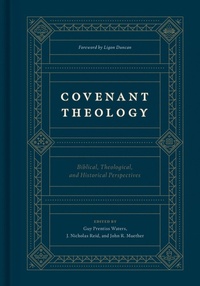
Covenant Theology
Description

A Comprehensive Exploration of the Biblical Covenants
This book forms an overview of the biblical teaching on covenant as well as the practical significance of covenant for the Christian life. A host of 26 scholars shows how covenant is not only clearly taught from Scripture, but also that it lays the foundation for other key doctrines of salvation. The contributors, who engage variously in biblical, systematic, and historical theology, present covenant theology not as a theological abstract imposed on the Bible but as a doctrine that is organically presented throughout the biblical narrative. As students, pastors, and church leaders come to see the centrality of covenant to the Christian faith, the more the church will be strengthened with faith in the covenant-keeping God and encouraged in their understanding of the joy of covenant life.
More details
Other editions
Additional editions
Persons
Guy Prentiss Waters (PhD, Duke University) is James M. Baird Jr. Professor of New Testament and academic dean at Reformed Theological Seminary, Jackson. He is the author or editor of fifteen books and numerous chapters, articles, and reviews. He is a teaching elder in the Presbyterian Church in America (PCA).
J. Nicholas Reid (DPhil, University College, University of Oxford) is associate professor of Old Testament and ancient Near Eastern studies, as well as the director of the hybrid MDiv program at Reformed Theological Seminary, Orlando. He is also a contributor to the Cuneiform Digital Library Initiative. Reid and his wife, Blair, live in the greater Orlando area with their four children. He is a member of St Paul's Presbyterian Church.
John R. Muether (MAR, Westminster Theological Seminary) serves as dean of libraries and professor of church history at Reformed Theological Seminary, Orlando. He has authored and coauthored several books, most notably Cornelius Van Til. John and his wife, Kathy, have four children and six grandchildren.
Content
- Intro
- Cover
- Newsletter Signup
- Endorsements
- Title Page
- Copyright
- Dedication
- Contents
- Tables
- Abbreviations
- Foreword
- Introduction
- Part 1 Biblical Covenants
- 1 The Covenant of Redemption
- 2 The Covenant of Works in the Old Testament
- 3 The Covenant of Works in the New Testament
- 4 Adam and the Beginning of the Covenant of Grace
- 5 The Noahic Covenant of the Covenant of Grace
- 6 The Abrahamic Covenant
- 7 The Mosaic Covenant
- 8 The Davidic Covenant
- 9 The New Covenant as Promised in the Major Prophets
- 10 Covenant in the Gospels
- 11 Covenant in Paul
- 12 Covenant in Hebrews
- 13 Covenant in the Johannine Epistles and Revelation
- Part 2 Historical Theology
- 14 Covenant in the Early Church
- 15 Covenant in Medieval Theology
- 16 Covenant in Reformation Theology
- 17 Post-Reformation Developments
- 18 Covenant Theology in the Dutch Reformed Tradition
- 19 Covenant Theology in Barth and the Torrances
- 20 Covenant in Recent Theology
- Part 3 Collateral and Theological Studies
- 21 Ancient Near Eastern Backgrounds to Covenants
- 22 Covenant and Second Temple Judaism
- 23 Covenant in Contemporary New Testament Scholarship
- 24 Israel and the Nations in God's Covenants
- 25 Dispensationalism
- 26 New Covenant Theologies
- 27 Covenant, Assurance, and the Sacraments
- Afterword Why Covenant Theology?
- An Annotated Bibliography of Reformed Reflection on the Covenant
- Contributors
- General Index
- Scripture Index
