

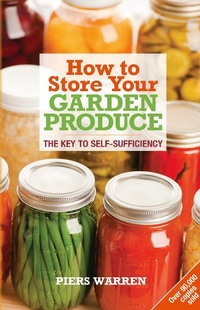
How to Store Your Garden Produce
The Key to Self-Sufficiency
2nd Edition
Published on 17. March 2008
152 pages
978-1-907448-01-0 (ISBN)
Description

Become self-sufficient all year round with this handy guide to storing your garden produce.
There is a huge sense of satisfaction in being so self-reliant that you can grow fresh fruit and vegetables all year. With less than an acre, you can cultivate enough produce to feed a family of four for an entire year - but as most produce is ripe in the summer and autumn, most of it will go to waste without proper storage.
How to Store Your Garden Produce: The Key to Self-Sufficiency is a modern guide to storing and preserving your garden produce, enabling you to eat home-grown goodness all year round. The book is beautifully organised with the first part detailing a variety of creative storage methods, including basic storage, clamping, drying and vacuum-packing as well as pickles, chutneys, cheese, jams and jellies.
The book also features an easy-to-use A-Z list of produce, in which each entry includes recommended varieties, suggested methods of storage and a range of delicious and unusual recipes to try out, from apple cider and strawberry wine to mushroom ketchup and pumpkin soup. With this helpful book, you'll know where your food has come from, save money, avoid packaging and eat home-grown food.
Learn simple and enjoyable techniques for storing your produce and embrace the wonderful world of self-sufficiency.
There is a huge sense of satisfaction in being so self-reliant that you can grow fresh fruit and vegetables all year. With less than an acre, you can cultivate enough produce to feed a family of four for an entire year - but as most produce is ripe in the summer and autumn, most of it will go to waste without proper storage.
How to Store Your Garden Produce: The Key to Self-Sufficiency is a modern guide to storing and preserving your garden produce, enabling you to eat home-grown goodness all year round. The book is beautifully organised with the first part detailing a variety of creative storage methods, including basic storage, clamping, drying and vacuum-packing as well as pickles, chutneys, cheese, jams and jellies.
The book also features an easy-to-use A-Z list of produce, in which each entry includes recommended varieties, suggested methods of storage and a range of delicious and unusual recipes to try out, from apple cider and strawberry wine to mushroom ketchup and pumpkin soup. With this helpful book, you'll know where your food has come from, save money, avoid packaging and eat home-grown food.
Learn simple and enjoyable techniques for storing your produce and embrace the wonderful world of self-sufficiency.
Reviews / Votes
There are so many benefits to 'growing your own', and as more and more of us get bitten by the bug this is the kind of book we'll need to give us storage tips in order to prevent all that unnecessary waste. * The Cottage Gardener *More details
Edition
2nd edition
Language
English
Place of publication
London
United Kingdom
Publishing group
Bloomsbury Publishing PLC
Target group
Professional and scholarly
Illustrations
8 pages of colour plates
File size
0,77 MB
ISBN-13
978-1-907448-01-0 (9781907448010)
Copyright in bibliographic data and cover images is held by Nielsen Book Services Limited or by the publishers or by their respective licensors: all rights reserved.
Schweitzer Classification
Other editions
Additional editions
Book
03/2008
2nd Edition
Green Books
€32.39
Shipment within 3-4 weeks
Persons
Piers Warren grows all manner of fruit and vegetables in his garden and greenhouse. As well as being an author of several books and many magazine articles, he also teaches wildlife film-making. He is very experienced in running a smallholding and is keen to promote organic principles, sustainability and green thinking. He lives near Norwich.
Content
Introduction
PART 1: METHODS AND GUIDELINES
Basic storage
Clamping
Freezing
Drying
Vacuum packing
Salting
Bottling
Pickles & chutneys
Relishes, ketchups & sauces
Jams & jellies
Fruit butters & cheeses
Fermenting
Part 2: A-Z OF PRODUCE
Apples
Artichokes (Globe)
Artichokes (Jerusalem)
Asparagus
Aubergines
Beans - Broad
Beans - French
Beans - Runner
Beetroot
Blackberries
Black Currants, Red and
White Currants, Jostaberries and Chokeberries
Broccoli and Calabrese
Brussels Sprouts
Cabbages
Carrots
Cauliflowers
Celeriac
Celery
Chard
Cherries
Chicory
Cucumbers
Endive
Fennel
Figs
Garlic
Gooseberries
Grapes
Herbs
Horseradish
Kale
Kohlrabi
Leeks
Lettuces
Medlars
Melons
Mulberries
Mushrooms
Nuts
Okra
Onions
Parsnips
Peaches, Apricots and Nectarines
Pears
Peas
Peppers (Capsicum and Chilli)
Plums, Damsons and Greengages
Potatoes
Quinces
Radishes
Raspberries, Loganberries, Tayberries and Boysenberries
Rhubarb
Salsify and Scorzonera
Spinach
Squashes - Summer
Squashes - Winter
Strawberries
Swedes
Sweetcorn (Maize)
Tomatoes
Turnips
Index
PART 1: METHODS AND GUIDELINES
Basic storage
Clamping
Freezing
Drying
Vacuum packing
Salting
Bottling
Pickles & chutneys
Relishes, ketchups & sauces
Jams & jellies
Fruit butters & cheeses
Fermenting
Part 2: A-Z OF PRODUCE
Apples
Artichokes (Globe)
Artichokes (Jerusalem)
Asparagus
Aubergines
Beans - Broad
Beans - French
Beans - Runner
Beetroot
Blackberries
Black Currants, Red and
White Currants, Jostaberries and Chokeberries
Broccoli and Calabrese
Brussels Sprouts
Cabbages
Carrots
Cauliflowers
Celeriac
Celery
Chard
Cherries
Chicory
Cucumbers
Endive
Fennel
Figs
Garlic
Gooseberries
Grapes
Herbs
Horseradish
Kale
Kohlrabi
Leeks
Lettuces
Medlars
Melons
Mulberries
Mushrooms
Nuts
Okra
Onions
Parsnips
Peaches, Apricots and Nectarines
Pears
Peas
Peppers (Capsicum and Chilli)
Plums, Damsons and Greengages
Potatoes
Quinces
Radishes
Raspberries, Loganberries, Tayberries and Boysenberries
Rhubarb
Salsify and Scorzonera
Spinach
Squashes - Summer
Squashes - Winter
Strawberries
Swedes
Sweetcorn (Maize)
Tomatoes
Turnips
Index
