

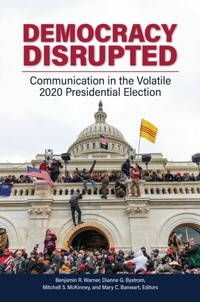
Democracy Disrupted
Communication in the Volatile 2020 Presidential Election
1st Edition
Published on 13. September 2022
352 pages
978-1-4408-7924-1 (ISBN)
Description

Leading scholars analyze three disruptions in the 2020 presidential campaign and election: disruptions to the status quo caused by the renewed quest for racial justice and greater diversity of candidates, pandemic disruptions to traditional campaigning, and disruptions to democratic norms.
Democracy Disrupted documents the most significant features of the 2020 U.S. presidential election through research conducted by leading scholars in political communication. Chapters consider the coinciding of three historical events in 2020: a 100-year pandemic co-occurring with the presidential campaign, the reinvigorated call for social and racial justice in response to the killing of George Floyd and other Black men and women, and the authoritarian lurch that emerged in reaction to Donald Trump's norm-challenging rhetoric. The Democratic Party's campaign stood out because of the historically diverse field of presidential candidates and the election of the first female vice president.
Chapter authors adopt diverse scientific methodologies and field-leading theories of political communication to understand the way these events forced candidates, campaigns, and voters to adapt to these extraordinary circumstances. Experiments, surveys, case studies, and textual analysis illuminate essential features of this once-in-a-generation campaign. The four editors of this timely volume have been central to describing and contextualizing each recent presidential contest.
Democracy Disrupted documents the most significant features of the 2020 U.S. presidential election through research conducted by leading scholars in political communication. Chapters consider the coinciding of three historical events in 2020: a 100-year pandemic co-occurring with the presidential campaign, the reinvigorated call for social and racial justice in response to the killing of George Floyd and other Black men and women, and the authoritarian lurch that emerged in reaction to Donald Trump's norm-challenging rhetoric. The Democratic Party's campaign stood out because of the historically diverse field of presidential candidates and the election of the first female vice president.
Chapter authors adopt diverse scientific methodologies and field-leading theories of political communication to understand the way these events forced candidates, campaigns, and voters to adapt to these extraordinary circumstances. Experiments, surveys, case studies, and textual analysis illuminate essential features of this once-in-a-generation campaign. The four editors of this timely volume have been central to describing and contextualizing each recent presidential contest.
More details
Edition
1. Auflage
Language
English
Place of publication
United States
Publishing group
Bloomsbury Publishing Plc
Target group
Professional and scholarly
ISBN-13
978-1-4408-7924-1 (9781440879241)
Copyright in bibliographic data and cover images is held by Nielsen Book Services Limited or by the publishers or by their respective licensors: all rights reserved.
Schweitzer Classification
Other editions
Additional editions
Benjamin R. Warner | Dianne G. Bystrom | Mitchell S. McKinney
Democracy Disrupted
Communication in the Volatile 2020 Presidential Election
Book
09/2022
Praeger Publishers Inc
€93.60
Shipment within 10-20 days
Persons
Benjamin R. Warner is Associate Professor of Communication and Director of Graduate Studies at the University of Missouri, USA.
Dianne G. Bystrom is Director Emerita of the Carrie Chapman Catt Center for Women and Politics at Iowa State University, USA.
Mitchell S. McKinney is Dean of the Buchtel College of Arts and Sciences at the University of Akron, USA.
Mary C. Banwart is Associate Professor of Communication Studies at the University of Kansas, Director of the Institute for Leadership Studies, and program director for the Women's Global Leadership Consortium.
Dianne G. Bystrom is Director Emerita of the Carrie Chapman Catt Center for Women and Politics at Iowa State University, USA.
Mitchell S. McKinney is Dean of the Buchtel College of Arts and Sciences at the University of Akron, USA.
Mary C. Banwart is Associate Professor of Communication Studies at the University of Kansas, Director of the Institute for Leadership Studies, and program director for the Women's Global Leadership Consortium.
Content
Introduction Exploring the Disruptive 2020 Campaign: Contextualizing the Role of the Push for Progress, the Pandemic, and the Insurrection at the Capitol
Benjamin R. Warner and Dianne G. Bystrom
Part One Disrupting the Status Quo
Chapter 1Looking In/Looking Out: Pete Buttigieg's Not-So-Queer Run for the Presidency3
Bryan G. Pepper and Mitchell S. McKinney
Chapter 2Mediating Race and Gender in Campaign 2020: The Cooking with Kamala Videos21
Trevor Parry-Giles, Divine Narkotey Aboagye, Jin R. Choi, Taylor Hourigan, Meg Itoh, Carolyn Robbins, Matthew Salzano, Kalin Schultz, and Shelby Sturm
Chapter 3Rhetoric of Optimism and Promise of Transformation: Concession Speeches by U.S. Presidential Women Candidates in 2020
Julia A. Spiker
Chapter 4Partisan Motivations for News Use: Implications for Threat Perceptions during the 2020 U.S. Election
Andrea Figueroa-Caballero and Julius Matthew Riles
Chapter 5Navigating Difficult Conversations in the Family in the 2020 Election Environment77
Xavier Scruggs and Colleen Warner Colaner
Part Two Disrupting the Campaign
Chapter 6Political Party Tweets during the 2020 Presidential Campaign93
Daniel Montez and Kate Kenski
Chapter 7Donald Trump and the COVID-19 Information Environment in Campaign 2020117
Joshua M. Scacco, Jonathon Smith, and Kevin Coe
Chapter 8Forced Online: The Promise and Challenge of Relational Organizing Technology in a 2020 State-Level Campaign
Ashley Muddiman and Cameron W. Piercy
Chapter 9"The SPN Family Votes!": Celebrity Endorsements in Online Fan Communities159
Ashley A. Hinck
Chapter 10Hope and Fear in a Pandemic: Videostyle in 2020 Presidential Advertising 177
Kelly L. Winfrey
Part Three Disrupting Democratic Norms
Chapter 11Donald Trump, Emotional Activation, and Authoritarianism207
Robert C. Rowland
Chapter 12Reclaiming the Center: Constitutive Rhetoric and the "Moderate Ethos" in Crossover Endorsements for Joe Biden
Ryan Neville-Shepard
Chapter 13Trump's Disruptive Debate: Analyzing the Candidate Branding Costs239
Josh C. Bramlett, Benjamin R. Warner, and Mitchell S. McKinney
Chapter 14Social Dominance, Sexism, and the Lasting Effects on Political Communication from the 2020 Election
Mary C. Banwart and Michael W. Kearney
Chapter 15Partisan Media and Polarization in the 2020 Campaign289
Benjamin R. Warner, Jihye Park, Go-Eun Kim, and Alyssa N. Coffey
About the Editors and Contributors 311
Index 317
Benjamin R. Warner and Dianne G. Bystrom
Part One Disrupting the Status Quo
Chapter 1Looking In/Looking Out: Pete Buttigieg's Not-So-Queer Run for the Presidency3
Bryan G. Pepper and Mitchell S. McKinney
Chapter 2Mediating Race and Gender in Campaign 2020: The Cooking with Kamala Videos21
Trevor Parry-Giles, Divine Narkotey Aboagye, Jin R. Choi, Taylor Hourigan, Meg Itoh, Carolyn Robbins, Matthew Salzano, Kalin Schultz, and Shelby Sturm
Chapter 3Rhetoric of Optimism and Promise of Transformation: Concession Speeches by U.S. Presidential Women Candidates in 2020
Julia A. Spiker
Chapter 4Partisan Motivations for News Use: Implications for Threat Perceptions during the 2020 U.S. Election
Andrea Figueroa-Caballero and Julius Matthew Riles
Chapter 5Navigating Difficult Conversations in the Family in the 2020 Election Environment77
Xavier Scruggs and Colleen Warner Colaner
Part Two Disrupting the Campaign
Chapter 6Political Party Tweets during the 2020 Presidential Campaign93
Daniel Montez and Kate Kenski
Chapter 7Donald Trump and the COVID-19 Information Environment in Campaign 2020117
Joshua M. Scacco, Jonathon Smith, and Kevin Coe
Chapter 8Forced Online: The Promise and Challenge of Relational Organizing Technology in a 2020 State-Level Campaign
Ashley Muddiman and Cameron W. Piercy
Chapter 9"The SPN Family Votes!": Celebrity Endorsements in Online Fan Communities159
Ashley A. Hinck
Chapter 10Hope and Fear in a Pandemic: Videostyle in 2020 Presidential Advertising 177
Kelly L. Winfrey
Part Three Disrupting Democratic Norms
Chapter 11Donald Trump, Emotional Activation, and Authoritarianism207
Robert C. Rowland
Chapter 12Reclaiming the Center: Constitutive Rhetoric and the "Moderate Ethos" in Crossover Endorsements for Joe Biden
Ryan Neville-Shepard
Chapter 13Trump's Disruptive Debate: Analyzing the Candidate Branding Costs239
Josh C. Bramlett, Benjamin R. Warner, and Mitchell S. McKinney
Chapter 14Social Dominance, Sexism, and the Lasting Effects on Political Communication from the 2020 Election
Mary C. Banwart and Michael W. Kearney
Chapter 15Partisan Media and Polarization in the 2020 Campaign289
Benjamin R. Warner, Jihye Park, Go-Eun Kim, and Alyssa N. Coffey
About the Editors and Contributors 311
Index 317
