

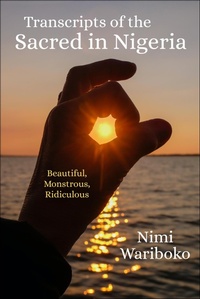
Transcripts of the Sacred in Nigeria
Description

Transcripts of the Sacred in Nigeria explores how the sacred plays itself out in contemporary Africa. It offers a creative analysis of the logics and dynamics of the sacred (understood as the constellation of im/possibility available to a given community) in religion, politics, epistemology, economic development, and reactionary violence. Using the tools of philosophy, postcolonial criticism, political theory, African studies, religious studies, and cultural studies, Wariboko reveals the intricate connections between the sacred and the existential conditions that characterize disorder, terror, trauma, despair, and hope in the postcolonial Africa.
The sacred, Wariboko argues, is not about religion or divinity but the set of possibilities opened to a people or denied them, the sum total of possibilities conceivable given their level of social, technological, and economic development. These possibilities profoundly speak to the present political moment in sub-Saharan Africa.
More details
Person
Nimi Wariboko is Walter G. Muelder Professor of Social Ethics at Boston University. His books include Social Ethics and Governance in Contemporary African Writing and The Split Time: Economic Philosophy for Human Flourishing in African Perspective.
Content
Preface
Acknowledgments
Introduction: Ambiguity of the Sacred
Interlude: Methodological Matters and a Theory of African Postcolony
1. The Sacred as Im/possibility
2. Demons as Guests: Pentecostal Aesthetics of Prayers
3. The Pentecostal Incredible
4. Production of Violence in the Postcolony
5. Chosenness, Spirituality, and the Weight of Blackness
6. Disruption and Promise: The Religious Powers of Development
Conclusion
Notes
Bibliography
Index
