

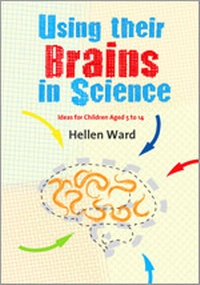
Using their Brains in Science
Ideas for Children Aged 5 to 14
1st Edition
Published on 22. October 2007
160 pages
978-1-84920-279-4 (ISBN)
Description

'This is a fascinating and very useful book....I cannot recommend it highly enough. It will inspire you' - School Science Review
By focusing on active ways to help 5 to 14 year olds improve their thinking and learning skills in science, this book provides teachers with inspiration and ideas for ways to teach creative, enjoyable and interesting science lessons.
Linked to up-to-date research in brain-based learning, the author gives practical advice on topics including:
o ways to motivate pupils
o developing pupils' skills of detection
o the importance of using movement to promote learning
o improving pupils' language skills and understanding of scientific vocabulary
o suggestions for different ways learners can record in science
o effective strategies for assessing learning in science
o ideas to promote creativity
o the importance of using ICT to support and promote learning.
This book is an inspirational read for teachers, student teachers and teaching assistants, and anyone interested in science and how children learn.
Helen Ward is Senior Lecturer at Canterbury Christ Church University, Programme Director for the Modular PGCE at Christ Church and also an independent education consultant and active member of the Association for Science Education (ASE).
By focusing on active ways to help 5 to 14 year olds improve their thinking and learning skills in science, this book provides teachers with inspiration and ideas for ways to teach creative, enjoyable and interesting science lessons.
Linked to up-to-date research in brain-based learning, the author gives practical advice on topics including:
o ways to motivate pupils
o developing pupils' skills of detection
o the importance of using movement to promote learning
o improving pupils' language skills and understanding of scientific vocabulary
o suggestions for different ways learners can record in science
o effective strategies for assessing learning in science
o ideas to promote creativity
o the importance of using ICT to support and promote learning.
This book is an inspirational read for teachers, student teachers and teaching assistants, and anyone interested in science and how children learn.
Helen Ward is Senior Lecturer at Canterbury Christ Church University, Programme Director for the Modular PGCE at Christ Church and also an independent education consultant and active member of the Association for Science Education (ASE).
All prices
More details
Language
English
Place of publication
London
United Kingdom
Target group
Professional and scholarly
ISBN-13
978-1-84920-279-4 (9781849202794)
Copyright in bibliographic data and cover images is held by Nielsen Book Services Limited or by the publishers or by their respective licensors: all rights reserved.
Schweitzer Classification
Other editions
Additional editions
Book
10/2007
1st Edition
SAGE Publications Inc
€219.86
Shipment within 10-20 days
Book
10/2007
1st Edition
SAGE Publications Inc
€86.50
Shipment within 10-20 days
Person
Hellen Ward is actively involved in science education, working as a Principal lecturer at Canterbury Christ Church University and with teachers in a number of Local Authorities. Hellen has written several books and a number of other publications, and has developed teaching resources and teaching materials to support the teaching and learning of science. She has also contributed to science television programmes, website and teaching resources for the BBC Hellen is faculty Director for STEM at Christ Church and is also an independent education consultant. Hellen is an active member of the Association for Science Education (ASE). and a regular contributor to both national and regional conferences. She is also a member of the Association for Achievement and Improvement through Assessment (AIAA) and has published materials on assessment. Hellen is a hub leader for the Primary Science Quality Mark working with teachers across the kent and Medway region.
Content
How the Brain Works
Learning Motivation and Self-Esteem
Detective Science
Moving and Learning
Words, Words, Words
Writing in Science
Assessing Science
Creativity
Learning Motivation and Self-Esteem
Detective Science
Moving and Learning
Words, Words, Words
Writing in Science
Assessing Science
Creativity
