

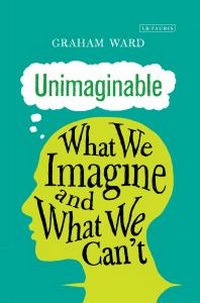
Unimaginable
What We Imagine and What We Can'T
1st Edition
Published on 30. July 2018
264 pages
978-1-78673-408-2 (ISBN)
Description

What we imagine can crush us or create us, destroy us or heal us; it can pitch us into battles with demons or set us among the songs of angels. It has roots beneath consciousness and is expressed in moods, rhythms, tones and textures of experience that are as much mental as physiological.
In his new book, a sequel to the earlier Unbelievable, one of Britain's most exciting writers on religion here presents a nuanced and many-dimensional portrait of the mystery and creativity of the human imagination. Traversing landscapes that are both physical and emotional, palpable and intangible, the author enlists the company of fellow-travellers William Wordsworth, William Turner, Samuel Palmer and Ralph Vaughan Williams - alongside many other creative artists - to try to get to the bottom of the true meanings of originality and memory. Drawing the while on his own rich and varied encounters with belief, he asks why it is that the imagination is so fundamental to who and what we are.
Using metaphor and story to unpeel the hidden motivations and architecture of the mind, and show what might lie beneath, Graham Ward grapples here with profound questions of ultimacy and transcendence. He reveals that, in understanding what it really means to be human, what cannot be imagined invariably means as much as what can.
In his new book, a sequel to the earlier Unbelievable, one of Britain's most exciting writers on religion here presents a nuanced and many-dimensional portrait of the mystery and creativity of the human imagination. Traversing landscapes that are both physical and emotional, palpable and intangible, the author enlists the company of fellow-travellers William Wordsworth, William Turner, Samuel Palmer and Ralph Vaughan Williams - alongside many other creative artists - to try to get to the bottom of the true meanings of originality and memory. Drawing the while on his own rich and varied encounters with belief, he asks why it is that the imagination is so fundamental to who and what we are.
Using metaphor and story to unpeel the hidden motivations and architecture of the mind, and show what might lie beneath, Graham Ward grapples here with profound questions of ultimacy and transcendence. He reveals that, in understanding what it really means to be human, what cannot be imagined invariably means as much as what can.
Reviews / Votes
'Unimaginable is a book of wonders. It is an interdisciplinary excavation of imagination, its "palaeontology, archaeology, biology, physiology, psychology... and how it engages with the world". Yet it is far more than this: it is an exploration of language and art, of life itself, through enchanted prose and a weaving together of ideas, layers and cultures - "the stark, ungraspable beauty; the raw, defenceless horror," - that makes for compulsive reading. Unimaginable is a unique and powerful contribution to our understanding. Not to be missed.' 'Our contemporary world has seen a great rift between so-called religious fundamentalists and an enlightened liberalism which wishes religion would simply go away. Both sides are woefully failing in that deep human quality: the imagination. Graham Ward's new book Unimaginable is a profound and richly enjoyable journey towards the ground of our being. I know this is a text which I shall often revisit.' [Ward] offers a kind of chiaroscuro of intellectual vignettes relating to the imagination. He speculates on how the evolution of hands and human locomotion gave rise to contemplating things beyond humans' current awareness, and reflects on imagination as employed by Shakespeare, the Romantic poets, and various filmmakers. * CHOICE * [O]ne may warmly recommend this deliberate attempt to stand apart from formal argument and instead provide numerous vignettes of how we might plausibly interpret both ancient and modern culture. * Theology *More details
Edition
1. Auflage
Language
English
Place of publication
London
United Kingdom
Publishing group
Bloomsbury Publishing PLC
ISBN-13
978-1-78673-408-2 (9781786734082)
Copyright in bibliographic data and cover images is held by Nielsen Book Services Limited or by the publishers or by their respective licensors: all rights reserved.
Schweitzer Classification
Other editions
Additional editions
Book
07/2018
I.B. Tauris
€51.50
Shipment within 3-4 weeks
Person
Graham Ward is Regius Professor of Divinity in the University of Oxford and a Canon of Christ Church, Oxford. A former editor of the journal Literature and Theology, he has written numerous books which explore varied topics in religion, theology, literature and literary and cultural theory. These include Barth, Derrida and the Language of Theology (1995), Theology and Contemporary Critical Theory (1996), Radical Orthodoxy: A New Theology (edited with John Milbank and Catherine Pickstock, 1998), The Certeau Reader (2000), True Religion (2002), Cultural Transformation and Religious Practice (2010) and Unbelievable: Why We Believe and Why We Don't (I.B.Tauris, 2014).
Content
Acknowledgements
Introduction: Deep Dreaming
PART ONE: ARCHAEOLOGIES
I. Landscapes
II. Palaeolithic Horizons
PART TWO: ARCHITECTURES
III. Imagination and Mental Life
IV. Imagination and Memory
V. Imagination and Dreams
PART THREE: ENGAGEMENTS
VI. Myth-Making
VII. The Cultural Imagination
VIII. The Social Imagination
Ecce Homo
Bibliography
Index
Introduction: Deep Dreaming
PART ONE: ARCHAEOLOGIES
I. Landscapes
II. Palaeolithic Horizons
PART TWO: ARCHITECTURES
III. Imagination and Mental Life
IV. Imagination and Memory
V. Imagination and Dreams
PART THREE: ENGAGEMENTS
VI. Myth-Making
VII. The Cultural Imagination
VIII. The Social Imagination
Ecce Homo
Bibliography
Index
