

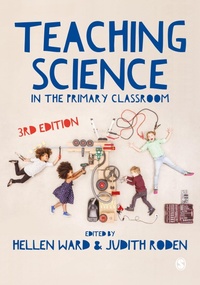
Teaching Science in the Primary Classroom
3rd Edition
Published on 10. March 2016
248 pages
978-1-4739-5307-9 (ISBN)
Description

Who was right about gravity - Aristotle or Galileo? Do woodlice like the damp or the sunshine?
Now in full colour, the new edition of this core textbook is packed full of exciting ideas and methods to help trainees and teachers looking for creative ways of teaching science to primary school children. It's the perfect step-by-step guide for anyone teaching science for the first time.
Reflecting the new curriculum, the third edition has been extensively updated throughout and now includes:
? a brand new chapter on teaching science outdoors
? lots of guidance on how to work scientifically in the classroom
? a new focus on assessment of 'secondary readiness'
? new activities and case studies, with helpful links to developing scientific skills
With practical examples, case studies, clear guidance on how to turn theory into creative practice, and lots of ideas for lively science lessons and activities, this is the ideal book for anyone studying primary science on initial teacher education courses, and teachers looking for new ideas to use in the classroom.
Now in full colour, the new edition of this core textbook is packed full of exciting ideas and methods to help trainees and teachers looking for creative ways of teaching science to primary school children. It's the perfect step-by-step guide for anyone teaching science for the first time.
Reflecting the new curriculum, the third edition has been extensively updated throughout and now includes:
? a brand new chapter on teaching science outdoors
? lots of guidance on how to work scientifically in the classroom
? a new focus on assessment of 'secondary readiness'
? new activities and case studies, with helpful links to developing scientific skills
With practical examples, case studies, clear guidance on how to turn theory into creative practice, and lots of ideas for lively science lessons and activities, this is the ideal book for anyone studying primary science on initial teacher education courses, and teachers looking for new ideas to use in the classroom.
More details
Edition
Third Edition
Language
English
Place of publication
London
United Kingdom
Target group
College/higher education
Product notice
Reflowable
File size
4,66 MB
ISBN-13
978-1-4739-5307-9 (9781473953079)
Copyright in bibliographic data and cover images is held by Nielsen Book Services Limited or by the publishers or by their respective licensors: all rights reserved.
Schweitzer Classification
Other editions
Additional editions
Hellen Ward | Judith Roden
Teaching Science in the Primary Classroom
Book
03/2016
3rd Edition
SAGE Publications Ltd
€98.80
Shipment within 15-20 days
Hellen Ward | Judith Roden
Teaching Science in the Primary Classroom
Book
03/2016
3rd Edition
SAGE Publications Ltd
€163.42
Shipment within 15-20 days
Persons
Hellen Ward is actively involved in science education, working as a Principal lecturer at Canterbury Christ Church University and with teachers in a number of Local Authorities. Hellen has written several books and a number of other publications, and has developed teaching resources and teaching materials to support the teaching and learning of science. She has also contributed to science television programmes, website and teaching resources for the BBC Hellen is faculty Director for STEM at Christ Church and is also an independent education consultant. Hellen is an active member of the Association for Science Education (ASE). and a regular contributor to both national and regional conferences. She is also a member of the Association for Achievement and Improvement through Assessment (AIAA) and has published materials on assessment. Hellen is a hub leader for the Primary Science Quality Mark working with teachers across the kent and Medway region.
Judith Roden is an experienced teacher of science in all phases of education. She was a Principal Lecturer working in the Faculty of Education, Canterbury Christ Church University, where she undertook the role of crossphase science team leader, managing a large team of science tutors. She has written a number of science books including the Reflective Reader in Primary Science Education, co-wrote Extending Knowledge in Practice as well a number of books, articles and chapters in respected science books. Judith now works part time for Teach First Kent and Medway.
Judith Roden is an experienced teacher of science in all phases of education. She was a Principal Lecturer working in the Faculty of Education, Canterbury Christ Church University, where she undertook the role of crossphase science team leader, managing a large team of science tutors. She has written a number of science books including the Reflective Reader in Primary Science Education, co-wrote Extending Knowledge in Practice as well a number of books, articles and chapters in respected science books. Judith now works part time for Teach First Kent and Medway.
Content
1. What is Science? - Hellen Ward
2. The Skills Learners Need to Learn Science: Process Skills - Hellen Ward
3. Observation, Measurement and Classification - Judith Roden
4. Raising and Analysing Questions and Use of Secondary Sources - Judith Roden
5. Scientific Enquiry and Working Scientifically - Hellen Ward
6. Assessing Learning - Hellen Ward and Keith Remnant
7. Science from Stories - Claire Hewlett
8. Using Role-play to Stimulate and Develop Learners' Understanding of Scientific Concepts - Maria Elsham and Julie Foreman
9. Science from Games - Hellen Ward
10. Using Computers in Science - Manette Carroll and Hellen Ward
11. Science Outdoors - Andrew Berry
2. The Skills Learners Need to Learn Science: Process Skills - Hellen Ward
3. Observation, Measurement and Classification - Judith Roden
4. Raising and Analysing Questions and Use of Secondary Sources - Judith Roden
5. Scientific Enquiry and Working Scientifically - Hellen Ward
6. Assessing Learning - Hellen Ward and Keith Remnant
7. Science from Stories - Claire Hewlett
8. Using Role-play to Stimulate and Develop Learners' Understanding of Scientific Concepts - Maria Elsham and Julie Foreman
9. Science from Games - Hellen Ward
10. Using Computers in Science - Manette Carroll and Hellen Ward
11. Science Outdoors - Andrew Berry
