

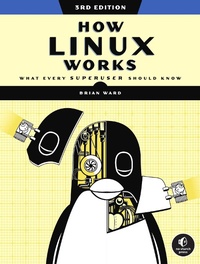
How Linux Works, 3rd Edition
What Every Superuser Should Know
Published on 13. April 2021
464 pages
978-1-7185-0041-9 (ISBN)
Description

Best-selling guide to the inner workings of the Linux operating system with over 50,000 copies sold since its release in 2014. This in-depth guide to the various components of a Linux system covers topics like how the system boots, how networking works, and what the Linux kernel actually does.
The Linux operating system is the power behind Android, Chromebooks, web servers, and the public cloud. It's impossible to know for sure, but there may well be over 60 million Linux users in the world. Developers and system maintainers need to understand how Linux works in order to use it effectively and fix it when it breaks. In this third edition of the best-selling How Linux Works, author Brian Ward peels back the layers of this well-loved operating system to make Linux internals accessible. You learn how Linux boots, how the kernel manages devices and device drivers, and how processes, networking, interfaces, firewalls, and servers work. You also learn how Linux-based development tools work, how to use shared libraries, and how to write effective shell scripts. This edition has been thoroughly updated and expanded with added coverage of Logical Volume Manager (LVM), virtualization, and containers.
The Linux operating system is the power behind Android, Chromebooks, web servers, and the public cloud. It's impossible to know for sure, but there may well be over 60 million Linux users in the world. Developers and system maintainers need to understand how Linux works in order to use it effectively and fix it when it breaks. In this third edition of the best-selling How Linux Works, author Brian Ward peels back the layers of this well-loved operating system to make Linux internals accessible. You learn how Linux boots, how the kernel manages devices and device drivers, and how processes, networking, interfaces, firewalls, and servers work. You also learn how Linux-based development tools work, how to use shared libraries, and how to write effective shell scripts. This edition has been thoroughly updated and expanded with added coverage of Logical Volume Manager (LVM), virtualization, and containers.
More details
Other editions
Additional editions
Book
04/2021
3rd Edition
No Starch Press
€47.00
Available immediately
Person
Brian Ward has been working with Linux since 1993. He is also the author of The Linux Kernel-HOWTO, The Book of VMware (No Starch Press), and The Linux Problem Solver (No Starch Press).
Content
1. The Big Picture
2. Basic Commands and Directory Hierarchy
3. Devices
4. Disks and Filesystems
5. How the Linux Kernel Boots
6. How User Space Starts
7. System Configuration: Logging, System Time, Batch Jobs, and Users
8. A Closer Look at Processes and Resource Utilization
9. Understanding Your Network and Its Configuration
10. Network Applications and Services
11. Introduction to Shell Scripts
12. Network File Transfer and Sharing
13. User Environments
14. A Brief Survey of the Linux Desktop and Printing
15. Development Tools
16. Introduction to Compiling Software from C Source Code
17. Virtualization
2. Basic Commands and Directory Hierarchy
3. Devices
4. Disks and Filesystems
5. How the Linux Kernel Boots
6. How User Space Starts
7. System Configuration: Logging, System Time, Batch Jobs, and Users
8. A Closer Look at Processes and Resource Utilization
9. Understanding Your Network and Its Configuration
10. Network Applications and Services
11. Introduction to Shell Scripts
12. Network File Transfer and Sharing
13. User Environments
14. A Brief Survey of the Linux Desktop and Printing
15. Development Tools
16. Introduction to Compiling Software from C Source Code
17. Virtualization
