

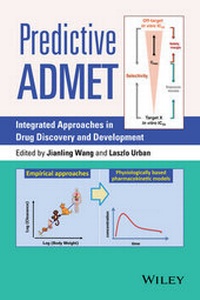
Predictive ADMET
Description

Reviews / Votes
"In conclusion, this volume fulfills its promise of being a very useful tool for guidance and diagnosis on ADMET matters, and I would recommend it to any scientist in the field." (ChemMedChem, 1 June 2015)More details
Other editions
Additional editions
Persons
Content
Preface ix
Contributors xi
I Introduction to the Current Scientific, Clinical, and Social Environment of Drug Discovery and Development
1 Current Social, Clinical, and Scientific Environment of Pharmaceutical R&D 3
Laszlo Urban, Jean-Pierre Valentin, Kenneth I Kaitin, and Jianling Wang
2 Polypharmacology and Adverse Bioactivity Profiles Predict Potential Toxicity and Drug-related ADRs 23
Teresa Kaserer, Veronika Temml, and Daniela Schuster
II Intelligent Integration and Extrapolation of Admet Data
3 ADMET Diagnosis Models 49
Bernard Faller, Suzanne Skolnik, and Jianling Wang
4 PATH (Probe ADME and Test Hypotheses): A Useful Approach Enabling Hypothesis-driven ADME Optimization 63
Leslie Bell, Suzanne Skolnik, and Dallas Bednarczyk
5 PK-MATRIX-A Permeability: Intrinsic Clearance System for Prediction, Classification, and Profiling of Pharmacokinetics and Drug-drug Interactions 89
Urban Fagerholm
6 Maximizing the Power of a Local Model for ADMET-property Prediction 103
Sebastien Ronseaux, Jeremy Beck, and Clayton Springer
7 Chemoinformatic and Chemogenomic Approach to ADMET 125
Virginie Y. Martiny, Ilza Pajeva, Michael Wiese, Andrew M. Davis, and Maria A. Miteva
8 Multiparameter Optimization of ADMET for Drug Design 145
Matthew D. Segall and Edmund J. Champness
9 PBPK: Integrating In Vitro and In Silico Data in Physiologically Based Models 167
Hannah M. Jones and Neil Parrott
10 Emerging Full Mechanistic Physiologically Based Modeling 189
Kiyohiko Sugano
11 Pharmacokinetic/Pharmacodynamic Modeling in Drug Discovery: A Translational Tool to Optimize Discovery Compounds Toward the Ideal Target-specific Profile 211
Patricia Schroeder
III Assessment and Mitigation of Critical Clinically Relevant Admet Risks in Drug Discovery and Development
12 In Vitro-In Silico Tools to Predict Pharmacokinetics of Poorly Soluble Drug Compounds 235
Christian Wagner and Jennifer B. Dressman
13 Evaluation of the Collective Impact of Passive Permeability and Active Transport on In Vivo Blood-brain Barrier and Gastrointestinal Drug Absorption 263
Donna A. Volpe, Hong Shen, and Praveen V. Balimane
14 Integrated Assessment of Drug Clearance and Cross-Species Scalability 291
Kevin Beaumont, James R. Gosset, and Chris E. Keefer
15 Practical Anticipation of Human Efficacious Doses and Pharmacokinetics using Preclinical In Vitro and In Vivo Data 319
Tycho Heimbach, Rakesh Gollen, and Handan He
16 Management and Mitigation of Human Drug-drug Interaction Risks in the Drug Discovery and Development Phases 353
Heidi J. Einolf and Imad Hanna
17 Integrated Assessment and Clinical Translation of In Vitro Off-target Safety Pharmacology Risks 397
Patrick Y. Muller and Christian F. Trendelenburg
18 Integrated Risk Assessment of Cardiovascular Safety in Drug Discovery 407
Gül Erdemli and Ruth L. Martin
19 Drug-induced Hepatotoxicity: Advances in Preclinical Predictive Strategies and Tools 433
Donna M. Dambach
20 Carcinogenicity and Teratogenicity Assessment 467
Hans-Jörg Martus, David Beckman, and Lutz Mueller
21 Nephrotoxicity: Development of Biomarkers for Preclinical and Clinical Application 491
Frank Dieterle and Estelle Marrer
IV Success Stories and Lessons Learned
22 Early Intervention with Formulation Strategies for Multidimensional Problems to Optimize for Success 507
Stephanie Dodd, Christina Capacci-Daniel, Christopher Towler, Riccardo Panicucci, and Keith Hoffmaster
23 Cytochrome P450-mediated Drug Interaction and Cardiovascular Safety: The Seldane to Allegra Transformation 523
F. Peter Guengerich
24 Clinical Toxicity Profile of VEGF Inhibitors 535
Mark P. S. Sie and Ferry A. L. M. Eskens
25 Cardiomyopathy: Drug Induced and Predisposed 555
Shirley A. Aguirre and Eileen R. Blasi
26 Safety Management by Pharmacokinetic Considerations: Ranibizumab (Lucentis) and Bevacizumab (Avastin) 569
Nicole H. Siegel and Manju L. Subramanian
Index 583
1
CURRENT SOCIAL, CLINICAL, AND SCIENTIFIC ENVIRONMENT OF PHARMACEUTICAL R&D
Laszlo Urban, Jean-Pierre Valentin, Kenneth I Kaitin, and Jianling Wang
1.1 THE CHANGING LANDSCAPE OF EPIDEMIOLOGY AND MEDICAL CARE
The rapidly changing landscape of epidemiology and associated medical requirements poses a significant challenge for the pharmaceutical industry, as well as for health care providers. Although the demand for new medicines is high in both developed and developing countries, the medical requirements differ considerably. In developed countries, the prevalence of diseases associated with lifestyle (e.g., obesity and type 2 diabetes) and aging (e.g., cancer and osteoporosis) is far greater than that in developing countries, whereas the latter suffer from a high frequency of infectious diseases, a large proportion of which is transmitted by vectors.
The demographic change in the United States and the developed Western world is biased toward older persons. The percentage of people 55 years and older in the United States has grown from 16.8% in 1950 to 23.6% in 2008. It is even more striking when considering real numbers, rising from 26 million to 73 million during the same time period. Moreover, as average life expectancy has increased, so have health-related issues. The major disease groups affecting this population include cardiovascular, respiratory and inflammatory diseases, cancer, neurodegenerative diseases, and psychiatric disorders. These diseases and disorders are associated with high overall drug costs. To support this, we looked at the statistics on arthritis and hypertension, which have high incidence in older persons. More specifically, according to government statistics, in 2010, more than 50 million adults of all ages in the United States suffered from doctor-diagnosed arthritis; that number is expected to exceed 60 million by 2015 [1]. However, whereas the overall prevalence of hypertension in people 18 years and older in the United States was 28.6%, it was 66.7% in people 60 years and older [2a].
Last, but not least, lifestyle, diet, and other behaviors in developed countries are associated with epidemics of diabetes, obesity, and stress-induced psychological/psychiatric disorders. There is emerging evidence that the combination of genetic and environmental factors could contribute to the development of particular mental disorders [2b]. In the United States, approximately 3.2% of boys between 6 and 17 years of age were found to have autism (National Health Statistics Report). Moreover, in the 15–17 year-old age group, the prevalence of parent-reported attentional deficit hyperactivity disorder (AD/HD) reached 13.6% in 2007, and these numbers are growing rapidly [3,4].
More and more diseases are controlled by chronic noncurative, symptomatic treatments, which contribute to persistently high medical expenses. Osteoporosis, high blood pressure, pain, atherosclerosis, diabetes, arthritis, and cancer, although not necessarily associated with an aging population, also require lifetime medications.
During the past 20–30 years, indications associated with large patient populations have led to increased consumption of particular drugs and have helped create a new class of “blockbuster” products. We have learned during the past decade that this strategy has not panned out well, as new blockbusters do not come easily, and the so-called patent cliff [5] could seriously affect the financial performance of companies.
Focus on particularly “profitable” areas in health care also meant that pharmaceutical companies neglected other segments of health care where return on investment was less assured. This was in part because little was known about the pathomechanisms of diseases, so efforts failed to produce viable drugs, for example, for Alzheimer's disease (AD), or because the disease was well managed by existing, relatively inexpensive medicines. This latter case is particularly relevant in the development of new agents to treat infectious diseases. The lack of investment into this area is resulting in an alarming dearth of therapies to treat multidrug-resistant bacterial strains.
Another contribution to the increase of expenditure on medicines is the parallel use of several medicines, either to affect various targets of the same disease, or to treat concomitant diseases. Approximately 37% of people 60 years and older in the United States takes five or more prescription medications at any time (Center for Disease Control and Prevention [CDC] statistics). Treatment regimens might also require further drugs to treat the side effects of the drugs used to treat the original disease. Cultural components are also pushing for more medications based on the commonly held belief that “pills” can provide easy and fast treatments in place of less expensive and sometimes more effective alternative methods, such as quitting bad habits, switching to healthy diet, physical exercise, and mental relaxation. An added benefit of these behavioral approaches would be the absence of adverse drug reactions (ADRs).
Use of antidepressants and antipsychotics has also skyrocketed during the past decades. For example, at the time of the publication of this book, one in ten U.S. adults reported having depression (CDC; [6]). The population 18 years of age and older reporting prescription antidepressant drug use in a single month has shown a significant increase between the periods 1988–1994 and 2005–2008. The increase is stunning from 5% to 22%. In the absence of appropriate medical care, the off-label use of psychotropic drugs has increased in the older population, particularly in senile dementia [7]. These aspects, however, did not facilitate more investment into drug development for psychiatric disorders. Instead, many companies discontinued investing in that disease area. A major reason for this trend is the fact that little is known about the pathomechanisms of mental disorders, which makes drug discovery highly speculative with a significant chance of failure.
We believe that the previous cases reflect a culture that nurtures a consumer-based approach to medicine in developed countries. Interestingly, the contribution of drug prices relative to total medical expenses remains relatively low, i.e., 10% in the United States, and similarly in the developed world.
Cost becomes even more of a pressing issue in the developing world, where there is likely to exist a large burden of epidemics of infectious, parasitic, and vector-carried diseases; lifestyle-associated diseases (e.g., smoking); or inappropriate nutrition and exposure to environmental hazards. Just to highlight the important contribution of infectious diseases to general health care issues, we looked at two diseases that overwhelmingly are associated with the developing world: dengue fever and drug-resistant tuberculosis. According to the World Health Organization (WHO), nine countries had reported severe dengue epidemics prior to 1970. Today the disease is endemic and affects more than 100 countries, with most cases reported in Southeast Asia and the western Pacific [8]. More recently, the number of reported cases has continued to rise. Because there is no treatment, and the most severe cases are life threatening or cause permanent disability, dengue fever remains a major neglected disease.
As another example, tuberculosis (TB) does not just remain a burden on its own, but more often it manifests in a multidrug-resistant format (MDR-TB). TB is the second highest cause of mortality worldwide as a result of a single infectious agent, resulting in an estimated 1.4 million death in 2010 alone (for further details and combination of HIV and TB, see Reference 8). A major problem is that MDR-TB does not respond to first-line standard anti-TB treatments. Second-line treatments are costly, significantly depend on compliance, and carry serious side effects. Alarmingly “extensively drug-resistant TB” (XDR-TB) is spreading and does not respond to any existing treatment. Of the greater than half million cases of MDR-TB in 2010, an estimated 9% progressed to XDR-TB, with an estimated annual death toll of 150,000. These numbers highlight the demand for action from health care professionals, governmental authorities, and the pharmaceutical industry.
1.2 COST OF DRUG DEVELOPMENT
The pharmaceutical industry faces challenges to develop affordable medications for diseases with high prevalence, regardless of whether they affect the population of a developed or developing country. Although hypertension, hyperlipidemia, and arthritis could be well controlled with relatively low-cost, generic products, new drugs for cancer with breakthrough results often demand high prices, which are likely to be unsustainable to health plans and other payers. Furthermore, diabetes, asthma, and mental disorders, to name a few conditions, are poorly managed even at higher cost.
During the last three decades, the cost of health care increased significantly worldwide, becoming a major strain on government resources [9]. National health expenditures in the United States skyrocketed during the past 10 years, from US$1,377.2B in 2000 to US$2,495.8B in 2009, according to CDC statistics [10]. The proportional rise in prescription drug spending during the same period (from US$120.9B to US$256.1B, respectively) contributed to increasing health care costs as well. The rise in prescription drug prices is driven by several factors, with a main contribution from three sources: the decline in overall industry productivity; the rise in safety issues during clinical testing and after...
