

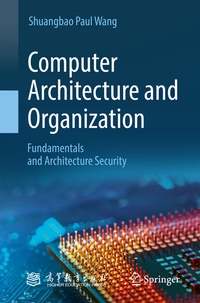
Computer Architecture and Organization
Description

In today's workplace, computer and cybersecurity professionals must understand both hardware and software to deploy effective security solutions. This book introduces readers to the fundamentals of computer architecture and organization for security, and provides them with both theoretical and practical solutions to design and implement secure computer systems. Offering an in-depth and innovative introduction to modern computer systems and patent-pending technologies in computer security, the text integrates design considerations with hands-on lessons learned to help practitioners design computer systems that are immune from attacks.
Studying computer architecture and organization from a security perspective is a new area. There are many books on computer architectures and many others on computer security. However, books introducing computer architecture and organization with security as the main focus are still rare. This book addresses not only how to secure computer components (CPU, Memory, I/O, and network) but also how to secure data and the computer system as a whole. It also incorporates experiences from the author's recent award-winning teaching and research.
The book also introduces the latest technologies, such as trusted computing, RISC-V, QEMU, cache security, virtualization, cloud computing, IoT, and quantum computing, as well as other advanced computing topics into the classroom in order to close the gap in workforce development.The book is chiefly intended for undergraduate and graduate students in computer architecture and computer organization, as well as engineers, researchers, cybersecurity professionals, and middleware designers.
More details
Other editions
Additional editions
Person
Paul Wang is a Professor and Chairperson of Computer Science at Morgan State University. He is a LINK Fellow and has held positions as the TSYS Endowed Chair in Cybersecurity with a $5 million endorsement, Director of the Center for Security Studies with more than 3,000 cyber students, and Chief Information and Technology Officer (CIO/CTO) of the National Biomedical Research Foundation. He has been a consultant to many companies and served on multiple boards and government and private sector technology committees. He was directly involved in drafting the National Initiatives of Cybersecurity Education (NICE) framework. His research areas include quantum computing, secure architecture, AI/ML, cybersecurity, and video indexing.
In addition to books, refereed publications, conference keynotes and numerous grant-related activities including recent grants from the NSF, NSA, Apple, and Microsoft, Paul holds four patents, three of which have been licensed to the industry. Paul Wang received his Ph.D. under Dr. Robert Ledley, the inventor of the body CT scanner, in 2004. He completed his postdoctoral studies in quantum computing at MIT and in data science at the University of Cambridge.
