

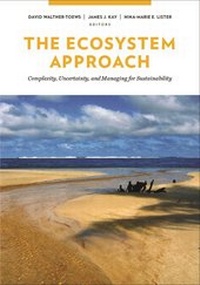
The Ecosystem Approach
Complexity, Uncertainty, and Managing for Sustainability
1st Edition
Published on 11. August 2008
408 pages
978-0-231-50720-2 (ISBN)
Description

Is sustainable development a workable solution for today's environmental problems? Is it scientifically defensible? Best known for applying ecological theory to the engineering problems of everyday life, the late scholar James J. Kay was a leader in the study of social and ecological complexity and the thermodynamics of ecosystems. Drawing from his immensely important work, as well as the research of his students and colleagues, The Ecosystem Approach is a guide to the aspects of complex systems theories relevant to social-ecological management.
Advancing a methodology that is rooted in good theory and practice, this book features case studies conducted in the Arctic and Africa, in Canada and Kathmandu, and in the Peruvian Amazon, Chesapeake Bay, and Chennai, India. Applying a systems approach to concrete environmental issues, this volume is geared toward scientists, engineers, and sustainable development scholars and practitioners who are attuned to the ideas of the Resilience Alliance-an international group of scientists who take a more holistic view of ecology and environmental problem-solving. Chapters cover the origins and rebirth of the ecosystem approach in ecology; the bridging of science and values; the challenge of governance in complex systems; systemic and participatory approaches to management; and the place for cultural diversity in the quest for global sustainability.
Advancing a methodology that is rooted in good theory and practice, this book features case studies conducted in the Arctic and Africa, in Canada and Kathmandu, and in the Peruvian Amazon, Chesapeake Bay, and Chennai, India. Applying a systems approach to concrete environmental issues, this volume is geared toward scientists, engineers, and sustainable development scholars and practitioners who are attuned to the ideas of the Resilience Alliance-an international group of scientists who take a more holistic view of ecology and environmental problem-solving. Chapters cover the origins and rebirth of the ecosystem approach in ecology; the bridging of science and values; the challenge of governance in complex systems; systemic and participatory approaches to management; and the place for cultural diversity in the quest for global sustainability.
All prices
More details
Other editions
Additional editions
David Waltner-Toews | James Kay | Nina-Marie Lister
The Ecosystem Approach
Complexity, Uncertainty, and Managing for Sustainability
Book
08/2008
Columbia University Press
€154.75
Article not available at the moment
David Waltner-Toews | James Kay | Nina-Marie Lister
The Ecosystem Approach
Complexity, Uncertainty, and Managing for Sustainability
Book
08/2008
Columbia University Press
€55.76
Article not available at the moment
Person
David Waltner-Toews is a professor of epidemiology in the Department of Population Medicine at the University of Guelph. With James Kay, Michelle Boyle, and David Cressman, he cofounded the Network for Ecosystem Sustainability and Health. He was also founding president of Veterinarians without Borders/Vétérinaires sans Frontières-Canada.
James J. Kay (1955-2004) was associate professor in environment and resource studies at the University of Waterloo, where he also held cross-appointments in systems design engineering and urban planning.
Nina-Marie E. Lister is a registered professional planner and associate professor in urban and regional planning at Ryerson University in Toronto.
David Waltner-Toews is a Professor in the Department of Population Medicine at the University of Guelph. He was trained both as a biologist and a veterinarian. He is the founder of the organization Veterinarians Without Borders.James J. Kay was Professor of Environment and Resource Studies at the University of Waterloo. He is internationally known for applying ideas from thermodynamics to ecological systems.Nina-Marie E. Lister is Associate Professor of Urban and Regional Planning at Ryerson Polytechnic University in Toronto.
James J. Kay (1955-2004) was associate professor in environment and resource studies at the University of Waterloo, where he also held cross-appointments in systems design engineering and urban planning.
Nina-Marie E. Lister is a registered professional planner and associate professor in urban and regional planning at Ryerson University in Toronto.
David Waltner-Toews is a Professor in the Department of Population Medicine at the University of Guelph. He was trained both as a biologist and a veterinarian. He is the founder of the organization Veterinarians Without Borders.James J. Kay was Professor of Environment and Resource Studies at the University of Waterloo. He is internationally known for applying ideas from thermodynamics to ecological systems.Nina-Marie E. Lister is Associate Professor of Urban and Regional Planning at Ryerson Polytechnic University in Toronto.
Content
Preface
David Waltner-Toews, by Nina-Marie E. Lister
Part I. Some theoretical bases for a new ecosystem approach
1. An Introduction to Systems Thinking
James Kay
2. Framing the Situation: Developing a system description
James Kay
3. Scale and type: a requirement for addressing complexity with dynamical quality
Tim Allen
4. Self-Organizing, by Holarchic
Michelle Boyle and James Kay
5. So what changes? Implications of complexity for an ecosystem approach to management
James Kay
6. Bridging Science and Values: The Challenge of Biodiversity
Nina-Marie E. Lister
7. The cultural basis for an ecosystem approach
Fikret Berkes and Iain Davidson-Hunt
8. A Family of Origin for an Ecosystem Approach to Managing for Sustainability
Martin Bunch, by Dan McCarthy
Part II. Case studies: Learning by Doing
9. Linking hard and soft systems in local development
Reg Noble, by Ricardo Ramirez
10. Human Activity and the Ecosystem Approach: The contribution of Soft Systems Methodology to managing the Cooum River in Chennai, by India
Martin Bunch
11. Landscape Perspectives on Agroecosystem Health in the Great Lakes Basin
Dominique Charron and David Waltner-Toews
12. An Agroecosystem Health case study in the Central Highlands of Kenya
Thomas Gitau, by David Waltner-Toews
13. Food, by Floods and Farming: an Ecosystem Approach to Human Health on the Peruvian Amazon frontier
Tamsyn Murray, by David Waltner-Toews
Part III. Managing for Sustainability: Meeting the Challenges
14. Implementing an Ecosystem Approach: The Diamond and AMESH
David Waltner-Toews and James Kay
15. Return to Kathmandu: A Post-Hoc Application of AMESH
Cynthia Neudoerffer, by D. Waltner-Toews
16. Tools for Learning: monitoring and indicator development
Michelle Boyle and James Kay
Part IV. Where to from here? Some challenges for a new science in an uncertain world
17. Beyond complex systems - Emergent complexity and social solidarity
Silvio Funtowicz and Jerry Ravetz
18. Thi
David Waltner-Toews, by Nina-Marie E. Lister
Part I. Some theoretical bases for a new ecosystem approach
1. An Introduction to Systems Thinking
James Kay
2. Framing the Situation: Developing a system description
James Kay
3. Scale and type: a requirement for addressing complexity with dynamical quality
Tim Allen
4. Self-Organizing, by Holarchic
Michelle Boyle and James Kay
5. So what changes? Implications of complexity for an ecosystem approach to management
James Kay
6. Bridging Science and Values: The Challenge of Biodiversity
Nina-Marie E. Lister
7. The cultural basis for an ecosystem approach
Fikret Berkes and Iain Davidson-Hunt
8. A Family of Origin for an Ecosystem Approach to Managing for Sustainability
Martin Bunch, by Dan McCarthy
Part II. Case studies: Learning by Doing
9. Linking hard and soft systems in local development
Reg Noble, by Ricardo Ramirez
10. Human Activity and the Ecosystem Approach: The contribution of Soft Systems Methodology to managing the Cooum River in Chennai, by India
Martin Bunch
11. Landscape Perspectives on Agroecosystem Health in the Great Lakes Basin
Dominique Charron and David Waltner-Toews
12. An Agroecosystem Health case study in the Central Highlands of Kenya
Thomas Gitau, by David Waltner-Toews
13. Food, by Floods and Farming: an Ecosystem Approach to Human Health on the Peruvian Amazon frontier
Tamsyn Murray, by David Waltner-Toews
Part III. Managing for Sustainability: Meeting the Challenges
14. Implementing an Ecosystem Approach: The Diamond and AMESH
David Waltner-Toews and James Kay
15. Return to Kathmandu: A Post-Hoc Application of AMESH
Cynthia Neudoerffer, by D. Waltner-Toews
16. Tools for Learning: monitoring and indicator development
Michelle Boyle and James Kay
Part IV. Where to from here? Some challenges for a new science in an uncertain world
17. Beyond complex systems - Emergent complexity and social solidarity
Silvio Funtowicz and Jerry Ravetz
18. Thi
