

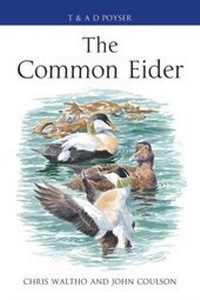
The Common Eider
1st Edition
Published on 15. January 2015
320 pages
978-1-4081-5280-5 (ISBN)
Description

A monograph of the Common Eider, a large and familiar duck with a long and fascinating cultural history.
A common sight around the more northerly shores of the British Isles, the Common Eider is the largest duck in the northern hemisphere. The eider is particularly well adapted to cold-water environments; the insulating properties of eider down are iconic.
The species is taxonomically interesting, with a range of well-marked subspecies reflecting the patterns of ice coverage during ancient glaciations, and these ducks have also provided the focus for a number of important behavioural studies, especially on feeding ecology and energy budgets.
Eiders have a long association with humans, and have deep cultural significance in many societies. However, modern lifestyles are exposing these ducks to a wide range of new pressures.
This monograph provides a comprehensive portrait of the Common Eider; authors Chris Waltho and John Coulson bring together an extensive and diverse international literature, with sections on taxonomy, habitats, breeding biology, population dynamics, diet and foraging, dispersal and migration, and conservation.
A common sight around the more northerly shores of the British Isles, the Common Eider is the largest duck in the northern hemisphere. The eider is particularly well adapted to cold-water environments; the insulating properties of eider down are iconic.
The species is taxonomically interesting, with a range of well-marked subspecies reflecting the patterns of ice coverage during ancient glaciations, and these ducks have also provided the focus for a number of important behavioural studies, especially on feeding ecology and energy budgets.
Eiders have a long association with humans, and have deep cultural significance in many societies. However, modern lifestyles are exposing these ducks to a wide range of new pressures.
This monograph provides a comprehensive portrait of the Common Eider; authors Chris Waltho and John Coulson bring together an extensive and diverse international literature, with sections on taxonomy, habitats, breeding biology, population dynamics, diet and foraging, dispersal and migration, and conservation.
More details
Series
Edition
1. Auflage
Language
English
Place of publication
London
United Kingdom
Publishing group
Bloomsbury Publishing PLC
Target group
Professional and scholarly
ISBN-13
978-1-4081-5280-5 (9781408152805)
Copyright in bibliographic data and cover images is held by Nielsen Book Services Limited or by the publishers or by their respective licensors: all rights reserved.
Schweitzer Classification
Other editions
Additional editions
Chris Waltho | John Coulson
The Common Eider
Book
01/2015
T & AD Poyser
€112.85
Shipment within 10-20 days
Persons
Chris Waltho has studied eiders for more than thirty years, with his research based around the Firth of Clyde, home to the largest population in the British Isles. An experienced aerial surveyor of seaducks and divers, Chris has been the president of the Scottish Ornithologist's Club since 2007.
Over more than 40 years of research, John Coulson has made outstanding contributions to the behavioral ecology of colonially breeding seabirds and our understanding of coloniality in birds. A former Reader in Zoology at the University of Durham, Coulson was awarded the Godman-Savin Medal by the British Ornithologists' Union in 1992.
Over more than 40 years of research, John Coulson has made outstanding contributions to the behavioral ecology of colonially breeding seabirds and our understanding of coloniality in birds. A former Reader in Zoology at the University of Durham, Coulson was awarded the Godman-Savin Medal by the British Ornithologists' Union in 1992.
Content
Acknowledgements
Introduction
1. Common Eider - some key features
2. Origins, taxonomy and differentiation
3. Distribution, movements and numbers
4. Food and feeding
5. Predators, parasites and diseases
6. Breeding and breeding season
7. Egg laying, parasitism, 'jumbo clutches' and egg stealing
8. Clutch Size
9. Incubation and Laying Success
10. Nesting with others: Is the Common Eider really a colonial species?
11. Ducklings
12. Mortality, survival and non-breeding
13. Exploitation, management and non-breeding
14. The eiders: comparison between species
Appendix 1: Schematic distribution of the Common Eider and its subspecies
Appendix 2: Important conversation sites for the Common Eider
Appendix 3: Prey species taken by Common Eiders
Appendix 4: Prey dominance in Common Eider diet
Appendix 5: The number of eggs recorded in samples of Common Eider nests on Inner Farne, Northumberland and 1958 to 2011
Appendix 6: Duckling growth
Appendix 7: Scientific names of species mentioned in the text
References
List of illustrations
Introduction
1. Common Eider - some key features
2. Origins, taxonomy and differentiation
3. Distribution, movements and numbers
4. Food and feeding
5. Predators, parasites and diseases
6. Breeding and breeding season
7. Egg laying, parasitism, 'jumbo clutches' and egg stealing
8. Clutch Size
9. Incubation and Laying Success
10. Nesting with others: Is the Common Eider really a colonial species?
11. Ducklings
12. Mortality, survival and non-breeding
13. Exploitation, management and non-breeding
14. The eiders: comparison between species
Appendix 1: Schematic distribution of the Common Eider and its subspecies
Appendix 2: Important conversation sites for the Common Eider
Appendix 3: Prey species taken by Common Eiders
Appendix 4: Prey dominance in Common Eider diet
Appendix 5: The number of eggs recorded in samples of Common Eider nests on Inner Farne, Northumberland and 1958 to 2011
Appendix 6: Duckling growth
Appendix 7: Scientific names of species mentioned in the text
References
List of illustrations
