

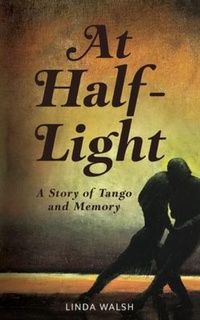
At Half-Light
Description

From 1976 to 1983, during a brutal military regime in Argentina, thousands of people disappeared. In At Half-Light, Alejandra's parents have fled the dictatorship and settled in Peterborough, Canada. As a child, she discovers they have been keeping terrible secrets from her and suffers from nightmares. She is comforted by her grandfather's stories of his life as an orphan in a tenement house in Buenos Aires at the turn of the last century. The stories are filled with colourful characters - singers, thieves, and fortune tellers. He fills the house with tango music and teaches her to dance. When her grandfather begins to lose his memory, Alejandra writes his stories down so they won't be forgotten and goes to Buenos Aires to look for a well-known tango singer who may be one of the women in the stories. There, she meets Las Madres, mothers still searching for their children who disappeared, keeping their stories alive. The trip to Argentina and her relationship with Silvio, an artist from Buenos Aires, are part of Alejandra's long journey to face the pain and loss in her family's past. If our stories are told, we do not disappear.
More details
Person
Content
CONTENTS
The title of the book is a reference to an iconic Argentine tango, A Media Luz. Alejandra, a young woman born in Canada grows up listening to her grandfather's stories of his life as an orphan in Buenos Aires, stories filled with colourful characters - tango singers, fortune tellers, dancers, and thieves. She returns to Argentina to try to find the people in his stories and come to terms with the pain and suffered by her family during the Argentinian military dictatorship from 1976 to 1983, in which thousands of people disappeared.
The chapters are:
- Residents of the House
- At Half-Light
- La Renga
- El Ciego
- El Dentista
- La Niña Bonita
- El Loco
- La Rusa
- The Dead Who Speak
- Return
- Epilogue
The acknowledgements include the filmmaker Miguel Libedinsky, editor Marion Wyse, the tango lyricist Oscar Casas, tango musicians, tango dancers, and the victims of the dictatorship, including The Mothers and Grandmothers of the Plaza de Mayo. Endorsements of the book include filmmaker Miguel Libedinsky (Hearts of Tango) and author Irene Guilford (The Embrace and Waiting for Stalin to Die).
