

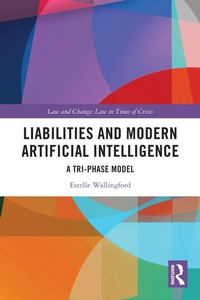
Liabilities and Modern Artificial Intelligence
A Tri-Phase Model
1st Edition
Published on 9. September 2025
290 pages
978-1-040-41197-1 (ISBN)
Description

This book addresses how private law liability should be assigned in contexts where modern forms of AI are deployed.
AI as a technology holds the potential to radically improve global society, yet the pace of its advancement far outstrips the pace at which legal systems are responding. This book explores legal approaches to AI, how AI should be legally characterised, and proposes an overarching theoretical liability framework termed the Tri-Phase AI Liability Model. This framework is flexible in nature and considers the type of AI, the context in which it is deployed, who has the most control over the AI system and the capacity of a deployed AI. In response, this book brings greatly needed clarity to the evolving landscape of AI governance, aiding in resolving existing and emerging private law challenges.
This book is a timely response to the urgent need to resolve private law liabilities and will appeal to legal professionals, policy makers, and scholars looking to understand or contribute to the current and future governance of AI within private law.
AI as a technology holds the potential to radically improve global society, yet the pace of its advancement far outstrips the pace at which legal systems are responding. This book explores legal approaches to AI, how AI should be legally characterised, and proposes an overarching theoretical liability framework termed the Tri-Phase AI Liability Model. This framework is flexible in nature and considers the type of AI, the context in which it is deployed, who has the most control over the AI system and the capacity of a deployed AI. In response, this book brings greatly needed clarity to the evolving landscape of AI governance, aiding in resolving existing and emerging private law challenges.
This book is a timely response to the urgent need to resolve private law liabilities and will appeal to legal professionals, policy makers, and scholars looking to understand or contribute to the current and future governance of AI within private law.
More details
Series
Edition
1. Auflage
Language
English
Place of publication
London
United Kingdom
Publishing group
Taylor & Francis Ltd
Target group
College/higher education
Professional and scholarly
Illustrations
4 Tables, black and white; 24 Line drawings, black and white; 24 Illustrations, black and white
File size
7,69 MB
ISBN-13
978-1-040-41197-1 (9781040411971)
Copyright in bibliographic data and cover images is held by Nielsen Book Services Limited or by the publishers or by their respective licensors: all rights reserved.
Schweitzer Classification
Other editions
Additional editions
Book
09/2025
1st Edition
Routledge
€208.00
Shipment within 15-20 days
Person
Estelle Wallingford is a legal academic based in the Department of Business Law and Taxation in the Monash Business School at Monash University, Australia. Her research examines the legal implications arising from the deployment of emerging technologies with a particular interest in artificial intelligence.
Content
List of Figures
List of Tables
Table of Cases
Table of Legislation
Table of Statutory Instruments
Acknowledgements
Introduction
1. Artificial Intelligence: A Legal Problem
2. What Is Modern AI?
3. Regulation versus Liability
4. Overview of Chapters
5. A Need for Flexibility
Part I
Chapter 1-Understanding the AI Legal Landscape
1. Evaluating Legal Approaches to Artificial Intelligence
2. Regulatory Responses to Artificial Intelligence
3. Evaluation of Proposed Legal Responses to a Deployed AI
4. The Need for an Overarching Liability Framework
Part II
Chapter 2-Reevaluating Legal Personality for AI
1. AI as a Legal Person?
2. Legal Personhood Approaches to AI
3. Socio-Legal Background of Legal Personhood
4. Elements of Legal Personhood: Legal Rights and Duties
5. Elements of Legal Personhood: Capacity
6. Viewing Legal Personality Hierarchically
7. Legal Personhood: An Adaptable Concept
Chapter 3-AI as a Legal Agent
1. The AI Legal Agent
2. Theories of Agency and Their Applicability to AI
3. Key Elements of a Principal-Agent Relationship
4. Problems with Modern AI as a Legal Agent
5. Agency and Situational Utility
Chapter 4-AI as Property
1. Proprietary Nature of AI
2. Can AI Be Construed as Non-IP Property?
3. AI as Intellectual Property
4. Other Important Considerations
5. Characterising AI as Property: Sufficient?
6. Artificial Intelligence: More than Merely Property
Chapter 5-A New Legal Characterisation
1. Artificial Intelligence: What Should It Be Legally?
2. The Unique Characteristics of AI
3. A Hierarchical Model of Legal Personhood
4. Incorporating Agency and Property into the Hierarchical Legal Personality Model
5. Resolving Characterising AI and Its Importance for Liability
Part III
Chapter 6-Adapting Causation Principles for AI
1. Causation: A Threshold Issue
2. Legal Causation and AI: Theoretical Approaches
3. Evaluating Proposed Causation Solutions in an AI Context
4. Additional Problems with Causation Approaches in an AI Context
5. Alternative Solution: Need for a Situational Approach to Causation
6. The Need for a Situational Approach to Causation for AI
Chapter 7-Narrowing Liability
1. Other Threshold Issues
2. Context in which AI Is Deployed, Scope of Actions and Multiple AI Systems
3. Question of Who Could Be Liable
4. Considering AI in Context: Viewing AI Situationally Rather than through a Fixed Approach
Chapter 8-The Tri-Phase AI Liability Model
1. A Liability Response for AI
2. A New Proposal: Alternative Liability Framework
3. Phase 1: Identification of Maximum Potential Legal Personhood Status
4. Phase 2: Liability Threshold Issues
5. Phase 3: Drawing Together Phases 1 and 2 - Situational Approach to Deciding Liability for AI Systems Operating at Different Levels of Ability
6. Evaluation of the Tri-Phase AI Liability Model
7. Reconceiving Liability as a Flexible Paradigm
Part IV
Chapter 9-Model in Application
1. Theory Informing Practice
2. The Tri-Phase AI Liability Model Relative to Regulatory Responses
3. Considerations for Stakeholders
4. Beyond Fixed Approaches: The Need for a Situational Response to AI
Conclusion
Bibliography
List of Tables
Table of Cases
Table of Legislation
Table of Statutory Instruments
Acknowledgements
Introduction
1. Artificial Intelligence: A Legal Problem
2. What Is Modern AI?
3. Regulation versus Liability
4. Overview of Chapters
5. A Need for Flexibility
Part I
Chapter 1-Understanding the AI Legal Landscape
1. Evaluating Legal Approaches to Artificial Intelligence
2. Regulatory Responses to Artificial Intelligence
3. Evaluation of Proposed Legal Responses to a Deployed AI
4. The Need for an Overarching Liability Framework
Part II
Chapter 2-Reevaluating Legal Personality for AI
1. AI as a Legal Person?
2. Legal Personhood Approaches to AI
3. Socio-Legal Background of Legal Personhood
4. Elements of Legal Personhood: Legal Rights and Duties
5. Elements of Legal Personhood: Capacity
6. Viewing Legal Personality Hierarchically
7. Legal Personhood: An Adaptable Concept
Chapter 3-AI as a Legal Agent
1. The AI Legal Agent
2. Theories of Agency and Their Applicability to AI
3. Key Elements of a Principal-Agent Relationship
4. Problems with Modern AI as a Legal Agent
5. Agency and Situational Utility
Chapter 4-AI as Property
1. Proprietary Nature of AI
2. Can AI Be Construed as Non-IP Property?
3. AI as Intellectual Property
4. Other Important Considerations
5. Characterising AI as Property: Sufficient?
6. Artificial Intelligence: More than Merely Property
Chapter 5-A New Legal Characterisation
1. Artificial Intelligence: What Should It Be Legally?
2. The Unique Characteristics of AI
3. A Hierarchical Model of Legal Personhood
4. Incorporating Agency and Property into the Hierarchical Legal Personality Model
5. Resolving Characterising AI and Its Importance for Liability
Part III
Chapter 6-Adapting Causation Principles for AI
1. Causation: A Threshold Issue
2. Legal Causation and AI: Theoretical Approaches
3. Evaluating Proposed Causation Solutions in an AI Context
4. Additional Problems with Causation Approaches in an AI Context
5. Alternative Solution: Need for a Situational Approach to Causation
6. The Need for a Situational Approach to Causation for AI
Chapter 7-Narrowing Liability
1. Other Threshold Issues
2. Context in which AI Is Deployed, Scope of Actions and Multiple AI Systems
3. Question of Who Could Be Liable
4. Considering AI in Context: Viewing AI Situationally Rather than through a Fixed Approach
Chapter 8-The Tri-Phase AI Liability Model
1. A Liability Response for AI
2. A New Proposal: Alternative Liability Framework
3. Phase 1: Identification of Maximum Potential Legal Personhood Status
4. Phase 2: Liability Threshold Issues
5. Phase 3: Drawing Together Phases 1 and 2 - Situational Approach to Deciding Liability for AI Systems Operating at Different Levels of Ability
6. Evaluation of the Tri-Phase AI Liability Model
7. Reconceiving Liability as a Flexible Paradigm
Part IV
Chapter 9-Model in Application
1. Theory Informing Practice
2. The Tri-Phase AI Liability Model Relative to Regulatory Responses
3. Considerations for Stakeholders
4. Beyond Fixed Approaches: The Need for a Situational Response to AI
Conclusion
Bibliography
