


The Psychology of the Internet
2nd Edition
Published on 11. November 2015
978-1-316-43509-0 (ISBN)
Description

An engaging and research-based text, The Psychology of the Internet provides a balanced overview of the psychological aspects of cyberspace. It explores crucial questions about the internet's effects on human behavior, such as why we often act in uncharacteristic ways in online environments and how social media influence the impressions we form and our personal relationships. The book's balanced approach to the subject encourages readers to think critically about the psychology of the internet, and how and why their own online behavior unfolds. Drawing on classic and contemporary research, this second edition examines new trends in internet technology, online dating, online aggression, group dynamics, child development, prosocial behavior, online gaming, gender and sexuality, privacy and surveillance, the net's addictive properties, and strategies for shaping the net's future.
Reviews / Votes
'As one of the original cyberpsychology researchers, Patricia Wallace provides an excellent exploration of a wide range of issues concerning how we experience cyberspace and how it affects our lives. She offers insights into not just the psychology of online identity, interpersonal relationships, and group dynamics, but also into the essence of human nature. Anyone interested in the Internet will appreciate her comprehensive knowledge of the fascinating role this new realm plays in the history of psychology.' John Suler, Rider University, New Jersey 'Whether you're an experienced IT user, a Facebook fan, an online shopper, a researcher, or simply someone who wants to know more about the Internet, this book is a must-read. Like the 1999 first edition, it is engagingly written and carefully documented. Much of what the second edition discusses, however - smartphones, Facebook, Twitter, Snapchat, viral videos, phishing, online privacy and surveillance, growing up online, and more - came about or morphed in the twenty-first century. The Psychology of the Internet offers a fascinating account of how the Internet affects all who use it and how we, in turn, can help to shape its future.' Joan Korenman, Professor Emerita of English, and Founder, Center for Women and Information Technology, University of Maryland, Baltimore CountyMore details
Edition
2nd Revised edition
Language
English
Place of publication
Cambridge
United Kingdom
Publishing group
Cambridge University Press
Target group
College/higher education
Edition type
Revised edition
Illustrations
8 Tables, black and white; 5 Line drawings, unspecified
File size
4,09 MB
ISBN-13
978-1-316-43509-0 (9781316435090)
Copyright in bibliographic data and cover images is held by Nielsen Book Services Limited or by the publishers or by their respective licensors: all rights reserved.
Schweitzer Classification
Other editions
Additional editions
Patricia Wallace
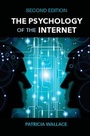
The Psychology of the Internet
Book
11/2015
2nd Edition
Cambridge University Press
€84.50
Shipment within 15-20 days
Person
Patricia Wallace is an adjunct professor at the University of Maryland University College's Graduate School and former Senior Director of CTYOnline and Information Technology at the Johns Hopkins Center for Talented Youth. She is the author of thirteen books, including The Internet in the Workplace: How New Technology Is Transforming Work (Cambridge, 2004).
Content
1. The internet in a psychological context; 2. Your online persona: the psychology of impression formation; 3. Group dynamics on the internet; 4. The psychology of online aggression; 5. Liking and loving on the net: the psychology of interpersonal attraction; 6. Altruism on the net: the psychology of prosocial behavior; 7. The psychology of online gaming; 8. Child development and the internet: growing up online; 9. Gender issues and sexuality on the internet; 10. The psychology of online privacy and surveillance; 11. The internet as a time sink; 12. Nurturing life on the internet.
