

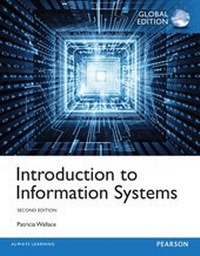
Introduction to Information Systems, Global Edition
1st Edition
Published on 17. April 2015
448 pages
978-1-292-07111-4 (ISBN)
Description

A fresh, contemporary, active introduction to information systemsIntroduction to Information Systems provides invaluable help for learning the knowledge and skills related to information systems. In it, students see clearly what information systems are all about and why they are so fundamental to business and society. Packed with revelations about business strategies, technology trends and innovationsplus tips to help students work smarter, and more efficiently Introduction to Information Systems provides a better teaching and learning experiencefor you and your students. Heres how: A focus on reaching all students, recognizing changing student roles, and showing clearly where the knowledge of information systems skills can take them. Helping students see beyond todays classrooms and into todays varied world. End-of-book comprehensive case studies show students the concepts in action. MyMISLab not included. Students, if MyMISLab is a recommended/mandatory component of the course, please ask your instructor for the correct ISBN and course ID. MyMISLab should only be purchased when required by an instructor. Instructors, contact your Pearson representative for more information.MyMISLab is an online homework, tutorial, and assessment product designed to personalize learning and improve results. With a wide range of interactive, engaging, and assignable activities, students are encouraged to actively learn and retain tough course concepts.
More details
Other editions
Additional editions
Patricia Wallace
Introduction to Information Systems, Global Edition
Book
08/2014
2nd Edition
Pearson Education Limited
€106.77
Shipment within 10-20 days
Content
- Cover
- Title
- Copyright
- Contents
- Preface
- Acknowledgments
- Chapter 1 Information Systems and People
- Learning Objectives
- Introduction
- Information Systems in Action
- Managing Operations
- Supporting Customer Interactions
- Making Decisions
- Collaborating on Teams
- Gaining Competitive Advantage
- Improving Individual Productivity
- The Nature of Information
- What Makes Information Valuable?
- The Components of an Information System
- People
- Technology
- Processes
- Data
- Information Systems, the Discipline
- Information Systems Throughout the Organization
- Information Systems in Business
- Information Systems in Nonprofits and Government
- Inside the it Department
- Collaborating on Information Systems
- Improving Your Own Productivity
- Promises, Perils, and Ethical Issues
- Privacy Breaches and Amplification Effects
- THE ETHICAL FACTOR: Ethical Issues Surrounding Information Systems
- Online Simulation
- Chapter Summary
- Key Terms and Concepts
- Chapter Review Questions
- Projects and Discussion Questions
- Application Exercises
- Excel Application: Manpower Planning Spreadsheet
- Access Application: Information Systems in Business
- Case Study #1 Nasdaq's Information Challenges: Facebook's Botched Public Opening and High Frequency Trading
- Case Study #2 Breaking News: Twitter's Growing Role in Emergencies and Disaster Communications
- E-Project 1 Analyzing the May 6 "Flash Crash" with Excel Charts
- E-Project 2 Gathering, Visualizing, and Evaluating Reports from Twitter and Other Sources During a Disaster
- Chapter Notes
- Chapter 2 Information Systems and Strategy
- Learning Objectives
- Introduction
- Porter's Five Competitive Forces
- Threat of New Entrants
- Power of Buyers
- Power of Suppliers
- Threat of Substitutes
- Rivalry Among Existing Competitors
- Factors That Affect How the Five Forces Operate
- Disruptive Technology and Innovations
- Government Policies and Actions
- Complementary Services and Products in the Ecosystem
- Environmental Events and "Wildcards"
- The Value Chain and Strategic Thinking
- Extending the Value Chain: From Suppliers to the Firm to Customers
- Benchmarking Components of the Value Chain
- THE ETHICAL FACTOR: Ethical Responsibility in an Extended Value Chain
- It Benchmarks
- Competitive Strategies in Business
- The Role of Information Systems in Strategy
- Information Systems: Run, Grow, and Transform the Business
- Information Strategies and Nonprofit Organizations
- Fund-Raising
- Volunteering
- Information Strategies and Government
- Does IT Matter?
- Spending on Running, Growing, and Transforming
- Leveling Up!: A Strategic Analysis
- Online Simulation
- Chapter Summary
- Key Terms and Concepts
- Chapter Review Questions
- Projects and Discussion Questions
- Application Exercises
- Excel Application: It Benchmarks
- Access Application: Telethon Call Reports
- Case Study #1 Can GameStop Survive with Its Brick-and-Mortar Stores?
- Case Study #2 The Open Internet Coalition and the Battle for Net Neutrality
- E-Project 1 Identifying Company Strategy with Online Financial Chart Tools
- E-Project 2 Analyzing Movie Download Times with Excel
- Chapter Notes
- Chapter 3 Information and Communications Technologies: The Enterprise Architecture
- Learning Objectives
- Introduction
- The Hardware
- Input and Output
- Processing
- Storage
- THE ETHICAL FACTOR: Ethical Implications of Big Data
- The Software
- Types of Software
- How Is Software Created?
- Networks and Telecommunications
- Transmission Media and Protocols
- Types of Networks
- Network Protocols
- The Enterprise Architecture
- Trends in Enterprise Architectures
- Guiding the Architecture
- Online Simulation
- Chapter Summary
- Key Terms and Concepts
- Chapter Review Questions
- Projects and Discussion Questions
- Application Exercises
- Excel Application: Analyzing Growth in Computer Storage Capacities
- Access Application: Managing Ict Assets with a Database
- Case Study #1 Google Glass and Wearable Technologies
- Case Study #2 Rolling Out Its 4G Network, Sprint Nextel Competes with Rivals
- E-Project 1 Voluntary Distributed Computing
- E-Project 2 Using Excel to Analyze Cost Effectiveness for 4G Rollouts
- Chapter Notes
- Chapter 4 Databases and Data Warehouses
- Learning Objectives
- Introduction
- The Nature of Information Resources
- Structured, Unstructured, and Semi-Structured Information
- Metadata
- The Quality of Information
- Managing Information: From Filing Cabinets to the Database
- Tables, Records, and Fields
- The Rise and Fall of File Processing Systems
- Databases and Database Management Software
- Developing and Managing a Relational Database
- Planning the Data Model
- Accessing the Database and Retrieving Information
- THE ETHICAL FACTOR: Ethical Issues in Database Design: The Case of Ethnic Identification
- Managing and Maintaining the Database
- Multiple Databases and the Challenge of Integration
- Shadow Systems
- Integration Strategies and Master Data Management
- Data Warehouses and Big Data
- Building the Data Warehouse
- The Challenge of Big Data
- Strategic Planning, Business Intelligence, and Data Mining
- The Challenges of Information Management: The Human Element
- Ownership Issues
- Databases Without Boundaries
- Balancing Stakeholders' Information Needs
- Online Simulation
- Chapter Summary
- Key Terms and Concepts
- Chapter Review Questions
- Projects and Discussion Questions
- Application Exercises
- Excel Application: Managing Catering Supplies
- Access Application: DD-Designs
- Case Study #1 U.K. Police Track Suspicious Vehicles in Real Time with Cameras and the License Plate Database
- Case Study #2 Colgate-Palmolive Draws on Its Global Database to Evaluate Marketing Strategies
- E-Project 1 Identifying Suspects with a License Plate Database: Constructing Queries with Access
- E-Project 2 Building a Database for Customer Records
- Chapter Notes
- Chapter 5 Information Systems for the Enterprise
- Learning Objectives
- Introduction
- Finance Management
- Components of Financial Information Systems
- Financial Reporting, Compliance and Transparency
- Human Capital Management
- Components of Human Capital Management Systems
- HCM Metrics
- Managing the Supply Chain
- THE ETHICAL FACTOR: Ethics and Talent Management
- Supply Chain Fundamentals
- Measuring Performance in Supply Chains
- Information Systems and Technology for Supply Chain Management
- Customer Relationship Management
- CRM Goals and Metrics
- CRM Strategies and Technologies
- Enterprise Resource Planning (ERP): Bringing It All Together
- ERP Components
- Integration Strategies
- Implementation Issues
- Online Simulation
- Chapter Summary
- Key Terms and Concepts
- Chapter Review Questions
- Projects and Discussion Questions
- Application Exercises
- Excel Application: Performance Bicycle Parts
- Access Application: VSI Consultants
- Case Study #1 Helping the Homeless: A Customer-Centric Approach with CRM Software
- Case Study #2 Winning the War for Talent: The Mandarin Oriental's Talent Management System
- E-Project 1 CRM for Human Services Agencies
- E-Project 2 Evaluating Employment and Recruitment Websites
- Chapter Notes
- Chapter 6 The Web, E-Commerce, and M-Commerce
- Learning Objectives
- Introduction
- Developing a Web Strategy
- Choosing a Goal
- Naming the Website
- Building the Website
- Website Design
- THE ETHICAL FACTOR: Website Accessibility: Why Is Progress So Slow?
- Software Development Strategies for the Web
- E-Commerce
- The Online Transaction and E-Commerce Software
- E-Commerce Security
- E-Commerce Trust
- Mobile Devices and M-Commerce
- Why Mobile Matters
- Designing Websites and Apps for Mobile Devices
- M-Commerce and Mobile Payments
- Marketing the Website
- Search Engine Optimization
- Web Advertising
- Web 2.0 and Beyond
- Crowdsourcing and Collective Intelligence
- Expanding Data and Sensory Input: The "Internet of Things"
- The Learning Web
- Online Simulation
- Chapter Summary
- Key Terms and Concepts
- Chapter Review Questions
- Projects and Discussion Questions
- Application Exercises
- Website Application: Heritage Dogs
- Excel Application: Heritage Dogs Website Metrics
- Access Application: Springfield Animal Shelter
- Case Study #1 Mobile Payments and the Digital Wallet
- Case Study #2 Pandora Internet Radio: The Net Threatens the Music Business (Again)
- E-Project 1 Examining Top M-Commerce Sites
- E-Project 2 Exploring Pandora's Web Analytics
- Chapter Notes
- Chapter 7 Business Intelligence and Decision Making
- Learning Objectives
- Introduction
- Levels of Decision Making
- Operational Level
- Tactical Level
- Strategic Level
- Sources of Business Intelligence
- Transactional Databases, Data Warehouses, and Internal Data Sources
- External Data Sources and Big Data
- THE ETHICAL FACTOR: The Ethics of Tagging Faces in Photos
- Data Mining and Analytics
- Analyzing Patterns, Trends, and Relationships
- Simulating, Optimizing, and Forecasting
- Artificial Intelligence
- Web Analytics
- Web Metrics
- Analyzing Traffic and Achieving Success
- Putting It All Together: Dashboards, Portals, and Mashups
- Dashboards
- Portals
- Mashups
- Business Intelligence: The Human Element
- Online Simulation
- Chapter Summary
- Key Terms and Concepts
- Chapter Review Questions
- Projects and Discussion Questions
- Application Exercises
- Excel Application: Analyzing Revenue and Expenses for City Hospital Seminars
- Access Application: Marketing City Hospital Seminars
- Case Study #1 Cracking Fraud with Government's Big Data
- Case Study #2 TV and Twitter: How Nielsen Rates Programs with "Social TV"
- E-PROJECT 1 Detecting Suspicious Activity in Insurance Claims
- E-PROJECT 2 Analyzing Nielsen TV Ratings with Excel
- Chapter Notes
- Chapter 8 Collaborating with Technology
- Learning Objectives
- Introduction
- The Evolution of Collaborative Technologies
- Discussion Forums
- Instant Messaging and Texting
- Group Decision Support Systems (GDSS)
- Web Conferencing
- Interactive Video
- Shared Workspaces
- Web 2.0 Collaborative Technologies
- Blogs
- Wikis
- Social Networking
- Microblogging
- Virtual Worlds
- Unified Communications
- Capabilities for Unified Communications
- Universal Dashboards
- The Human Element and Collaborative Technologies
- Psychological Characteristics of Online Environments
- THE ETHICAL FACTOR: Flash Mobs and Free Speech: Should Police Block Mobile Messaging Services?
- Managing Online Impressions
- Group Dynamics in Virtual Teams
- Making Virtual Teams Work
- Online Simulation
- Chapter Summary
- Key Terms and Concepts
- Chapter Review Questions
- Projects and Discussion Questions
- Application Exercises
- Excel Application: Going Green!
- Access Application: Cloud 9
- Case Study #1 "Telepresence Robots" Support Remote Collaboration
- Case Study #2 Yahoo! Bans Telecommuting: Was It the Right Move?
- E-Project 1 Estimating Breakeven Pricing for Telepresence Robots Using a Spreadsheet
- E-Project 2 Estimating Savings for Virtual Work Using an Excel Model
- Chapter Notes
- Chapter 9 Knowledge Management and E-Learning
- Learning Objectives
- Introduction
- The Nature of Intellectual Capital
- Types of Intellectual Capital
- Types of Knowledge
- Managing Intellectual Capital
- Knowledge Management Strategies and Technologies
- Identify the Goal
- Locate the Sources
- Capture the Knowledge
- Organize, Share, and Value Knowledge
- Knowledge Management: Pitfalls and Promises
- The Human Element: why Share Knowledge?
- Incentives for Knowledge Sharing
- THE ETHICAL FACTOR: Knowledge Sharing in Fast-Paced Industries: The Case of Formula One Racing
- Technology Hurdles and Content Issues
- The Semantic Web
- Practical Tips for Launching a Knowledge Management Project
- E-Learning
- Comparing E-Learning Approaches
- Creating an E-Learning Program
- Course Development
- Learning Objects
- Content Authoring Tools
- Collaboration Tools
- Strategies to Prevent Cheating
- Learning Management Systems
- E-Learning in Education
- Differences Between Corporate and Education E-Learning
- Comparing E-Learning and Classroom Learning
- Online Simulation
- Chapter Summary
- Key Terms and Concepts
- Chapter Review Questions
- Projects and Discussion Questions
- Application Exercises
- Excel Application: Top Talent
- Access Application: Top Talent
- Case Study #1 Lynda.com: How an E-Learning Entrepreneur Rides Waves of Change
- Case Study #2 Diplopedia: Managing State Department Knowledge with a Wiki
- E-Project 1 Exploring the World of Online Courses
- E-Project 2 Managing the Human Element on Wikipedia with Technology
- Chapter Notes
- Chapter 10 Ethics, Privacy, and Security
- Learning Objectives
- Introduction
- Ethics
- Ethical Frameworks
- Ethics and the Law
- Ethical Issues and Information and Communications Technologies
- Information Ethics
- Intellectual Property and Digital Rights Management
- Plagiarism
- Privacy
- Trading Privacy for Convenience and Freebies
- Anonymity
- Surveillance
- "The Right to be Forgotten"
- Information Security
- Risk Management
- Identifying Threats
- THE ETHICAL FACTOR: Ethical Dilemmas in a Distributed Denial of Service Attack
- Assessing Vulnerability
- Administrative Security Controls
- Technical Security Controls
- Information Security and Cloud Computing
- The Human Element in Information Ethics, Security, and Privacy
- Cognitive Issues and Productivity
- Social Engineering and Information Security
- Security Awareness and Ethical Decision Making
- Online Simulation
- Chapter Summary
- Key Terms and Concepts
- Chapter Review Questions
- Projects and Discussion Questions
- Application Exercises
- Excel Application: Citywide Community College
- Access Application: Citywide Community College
- Case Study #1 Zynga Kills Petville and Angers Virtual Pet Owners
- Case Study #2 Community Policing on the Internet: Spamhaus Targets Worldwide Spammers and Draws a Massive Distributed Denial of Service Attack
- E-Project 1 Tracking the Trackers: Investigating How Third-Party Cookies Steer the Ads You See
- E-Project 2 Analyzing Spammers by Country, Using Excel Pivot Tables
- Chapter Notes
- Chapter 11 Systems Development and Procurement
- Learning Objectives
- Introduction
- Systems Development Life Cycle
- Planning
- Analysis
- Design Phase
- Development Phase
- Testing Phase
- Implementation
- Maintenance
- Software Development Strategies
- THE ETHICAL FACTOR: Developing Systems That Promote Ethical Decision Making and Social Responsibility
- Waterfall Software Development
- Iterative Methods
- Agile Methods
- Comparing Software Development Approaches
- Type of Project
- Organizational Culture
- Is Waterfall Dead?
- Software Procurement: The "Buy" Strategy
- Pros and Cons of Build and Buy
- The Procurement Process
- Adaptation and Customization
- The Human Element in Systems Development and Procurement
- Cross-Functional Teams
- The Role of Senior Management
- Working With Consultants
- Online Simulation
- Chapter Summary
- Key Terms and Concepts
- Chapter Review Questions
- Projects and Discussion Questions
- Application Exercises
- Excel Application: Jay's Bikes
- Access Application: Managing a Recipe Collection
- Case Study #1 Baby Steps Toward Scrum: How Babycenter.com Made the Cultural Transition to Agile Software Development
- Case Study #2 Extreme Programming at the U.S. Strategic Command
- E-Project 1 Watching Babycenter.com Change over Time with the Internet Archive
- E-Project 2 Analyzing Software Defect Rates Using Excel
- Chapter Notes
- Chapter 12 Project Management and Strategic Planning
- Learning Objectives
- Introduction
- What Is a Project?
- Projects vs. Processes
- The Triple Constraint: Time, Cost, and Scope
- Project Management
- The Five Project Management Processes
- The Role of the Project Manager
- THE ETHICAL FACTOR: Code of Ethics for Project Managers
- Project Management Software
- Managing Time
- Managing People and Resources
- Managing Costs
- Why Projects Succeed, and Why They Fail
- Why Do Projects Fail?
- Success Factors for Project Management
- Strategic Planning for Information Systems
- Vision, Principles, and Policies
- Project Portfolio Management
- Disaster Recovery and Business Continuity
- Technology and Industry Trends
- Planning for the Future: The Human Element
- Cognitive Biases and Strategic Planning
- The Black Swan
- Online Simulation
- Chapter Summary
- Key Terms and Concepts
- Chapter Review Questions
- Projects and Discussion Questions
- Application Exercises
- Excel Application: Creating a Gantt Chart with Excel
- Access Application: Apprentice Project Managers
- Case Study #1 Predicting the Future: Gartner's Research Informs Strategic Planning
- Case Study #2 JetBlue and WestJet: A Tale of Two Software Implementations
- E-Project 1 Checking on Gartner's Predictions
- E-Project 2 Analyzing Airline Performance with Excel Pivot Tables
- Chapter Notes
- Case Studies
- Glossary
- A
- B
- C
- D
- E
- F
- G
- H
- I
- J
- K
- L
- M
- N
- O
- P
- R
- S
- T
- U
- V
- W
- Index
- A
- B
- C
- D
- E
- F
- G
- H
- I
- J
- K
- L
- M
- N
- O
- P
- Q
- R
- S
- T
- U
- V
- W
- Y
- Z
