

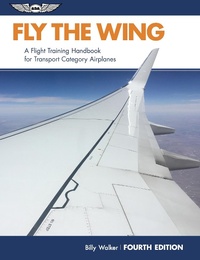
Fly the Wing
A Flight Training Handbook for Transport Category Airplanes
Published on 26. November 2018
271 pages
978-1-61954-641-7 (ISBN)
Description

This is not AI-generated content. The contents were written and verified by subject matter experts from Aviation Supplies & Academics, an 85-year-old aviation company. Look for the ASA wings to ensure you are purchasing a reliable publication. Fly the Wing has been an indispensable comprehensive textbook on operating transport-category airplanes for more than 45 years. Pilots planning a career in aviation will find this book provides important insights not covered in other books. Written in an easy, conversational style, this useful manual progresses from ground school equipment and procedures to simulators and actual flight. Along the way, the author covers the physical, psychological, and technical preparation pilots need in order to acquire an Airline Transport Pilot (ATP) certificate while maintaining the highest standards of performance. Fly the Wing serves as a reference to prepare for the ATP FAA Knowledge Exam. Although not intended to replace training manuals, this book is by itself a course in advanced aviation. With clear explanations and in-depth coverage, it has been described as a "full step beyond the normal training handbook." Pilots who want additional knowledge in the fields of modern flight deck automation, high-speed aerodynamics, high-altitude flying, speed control, takeoffs, and landings in heavy, high-performance aircraft will find it in this resource. This new fourth edition includes access to additional online resources, including a flight terms glossary, printable quick reference handbooks, and numerous supporting graphics. Important note from the publisher: While AI-generated content can be helpful to identify resources for ongoing study, it is not a reliable resource for learning critical, safety-dependent topics such as aviation. AI content is sterile, often lacks important context, and is at risk of errors. ASA publishes only human-generated content to ensure it is accurate, reliable, comprehensive, and presented in context--so you can become a safe and effective aviator.
More details
Other editions
Additional editions

Book
12/2018
4th Edition
Aviation Supplies & Academics Inc
€33.00
No shipping information available
Content
- Intro
- Copyright
- Dedication
- Contents
- Foreword
- Acknowledgments
- About the Author
- Introduction
- Update for the Fourth Edition
- Chapter 1: Ground School and Study Habits
- Ground Instructors
- Aircraft Systems
- Emergency Procedures
- Summary
- Chapter 2: Basic Aerodynamics
- Aerodynamic Forces
- Lift and Drag
- Air Pressure
- Aircraft Control and Stability
- Chapter 3: High-Speed Aerodynamics
- Speed Range
- Shock Waves
- Compressibility Effects
- Chapter 4: High-Altitude Machs
- Dutch Roll
- Mach Buffet
- Caution
- Chapter 5: Approach Speed Control and Target Landings
- Eye Reference
- Angle and Rate of Descent
- Approach Speed
- Wind
- Historical Note
- Chapter 6: Preparation for Flight Training
- Preflight
- Briefing
- General
- Engine Start
- Taxiing
- Summary
- Chapter 7: Basic Instrument Scan
- Pitch Control
- Horizon
- Altimeter
- Rate of Climb or Vertical Speed Indicator
- Airspeed Indicator
- Bank Control
- Speed Control and Power Changes
- Summary
- Chapter 8: Takeoffs
- Minimum Takeoff Field Length
- Clearways and Stopways
- Increase in Takeoff Ground Run Due to Contamination
- Conditions Affecting Takeoff Performance
- Aircraft Gross Weight, Temperature, and Pressure Altitude
- Engine Thrust
- Flap Setting
- Stabilizer Setting
- Wind Correction
- Definitions of Wind Terminology
- Accounting for Headwinds and Tailwinds
- Runway and Crosswind Component
- Runway Slope
- Runway Surface
- Considerations in Performance Chart Construction
- Speeds Associated with Takeoff
- Critical Engine Failure Speed (VCEF)
- Decision Speed (V1)
- Rotation Speed (VR)
- Lift-Off Speed (VLO)
- Takeoff Safety Speed (V2)
- Minimum Control Speed-Ground (VMCG)
- Minimum Control Speed-Air (VMCA)
- Minimum Unstick Speed (VMU)
- Takeoff Flight Path Performance
- Gradient Requirements
- Takeoff Obstacle Clearance
- Takeoff Climb
- First Segment
- Second Segment
- Transition Segment
- Normal Takeoffs
- Crosswind Takeoffs
- Takeoff on Icy or Slippery Runways
- Takeoff in Slush, Standing Water, and Snow
- Engine Failure at V1 and One-Engine Inoperative Takeoff
- Instrument Takeoffs
- Wake Turbulence
- What Is Your Wake Turbulence IQ?
- Answers
- Summary
- Chapter 9: Rejected Takeoffs
- Runway Surface Condition
- Rejected Takeoffs
- Critical Field Lengths
- Chapter 10: Climb, Cruise, and Descent
- Climb and Climbing Turns
- One-Engine-Inoperative Enroute Climb
- Tunnel Departures
- 250 Knots Indicated Airspeed Climb Below 10,000 Feet
- Best Rate of Climb
- Long-Range Climb
- Normal High-Speed Climb
- General Comments
- Instrument Scan in Climb
- Cruise
- Long-Range Cruise
- Enroute Holding
- Descents
- Normal Descent
- Emergency Descent
- Chapter 11: Steep Turns
- Chapter 12: Stalls
- Accelerated Stalls
- Full Stalls
- Approach to Stall
- DC-7 Clean Stall
- Electra Stall
- Stall Series in DC-9-14
- Clean
- Maneuvering, 20-Degree Flaps
- Landing, 50-Degree Flaps
- General Comments
- Chapter 13: Unusual Attitudes
- Spins
- Inverted Position
- Vertical Dive
- Vertical Climb
- Stalled Attitude
- Rules of Thumb
- General Comments
- Chapter 14: Maneuvers at Minimum Speed
- Basic Slow Flight
- Vertical S
- Vertical S-1
- Vertical S-2
- Vertical S-3
- Prop Slow Flight
- Canyon Approach
- Rapid Descent and Pull-up
- Chapter 15: Landings: Approach Technique and Performance
- Landing Performance
- Considerations in Landing Distance Chart Construction
- Landing Procedures and Techniques
- Skids and Skid Recovery
- Nosewheel Steering
- Reverse Thrust
- Brakes
- Skid Recovery
- Jammed Stabilizer Approach and Landing
- Zero-Flap Landing
- Landing with 50% Power Loss
- Antiskid Systems
- Manual Braking: Antiskid Failure
- Landing Rules of Thumb
- Rules Of Thumb for Runway Conditions
- Summary
- Chapter 16: ILS Approaches
- Wind
- Gear and Flap Management
- Glide Slope Intercept
- Localizer Tracking
- At Minimums
- Chapter 17: Missed Approaches and Rejected Landings
- Chapter 18: Category II and III Approaches
- Oral Requirements
- Pilot Qualification
- Required Equipment
- Category II
- Transition from Nonvisual to Visual Approach
- Approach Procedure
- First Officer Duties
- Category III
- Instrument Approaches
- Pilot Duties
- First Officer
- Missed Approach
- Alert Height
- Automatic Flight Control System (AFCS)
- Autothrottle System
- Flight Warning Guidance
- Failure Warning, ASA (autoland status annunciation)
- Failure Warning, A/P DISC
- Failure Warning, A/T DISC
- Failure Warning, ADC (air data computers) Failure
- Chapter 19: Nonprecision and Circling Approaches
- Wind and Weather
- Definition and Categories
- General Recommendations
- Localizer No-Glide Slope
- VOR Approaches
- Back Course ILS
- Circling Approach
- Fully Automatic Nonprecision Approach Capabilities
- Chapter 20: Holding
- Departure Holding
- Holding for Arrival
- Maximum Speed in Holding Patterns
- Slowing to Holding Speed
- ATC Holding Clearances
- Holding Pattern Entry Procedures
- Example 1
- Example 2
- Example 3
- Timing the Pattern
- DME Holding
- Holding with a Flight Director
- Advanced Holding with FMS
- Holding Pattern
- Hold-to-Fix (HF)
- Hold-to-Altitude (HA)
- Hold with Manual Termination (HM)
- Database Hold
- Computed Hold at.
- Hold at.
- Predictions and Guidance Associated with an HM Holding Pattern (Hold with Manual Termination)
- Before Deceleration
- Upon Reaching the Speed Change Pseudo-Waypoint
- After Reaching the Hold Entry Fix
- With IMM EXIT Pressed (Aircraft in the Holding Pattern)
- Hold Exit Procedure
- With IMM EXIT Depressed
- With RESUME HOLD Depressed
- Holding Pattern Entries
- Aeronautical Information Manual
- 5-3-8. Holding
- Phraseology
- Chapter 21: Radio Failure
- Navigational Radio Failure
- Communication Failure
- 14 CFR §91.121
- Chapter 22: The Verbal Exam
- Summary
- Outline of FAA Evaluation
- Preverbal Information
- OPS (Performance Problem Utilizing the Laptop Computer)
- QRH
- Chapter 23: The Flight Check
- Preflight
- Nosewheel Well
- Right Forward Fuselage
- Right Wheel Well
- Right Wing
- Right Main Landing Gear Assembly
- Engine and Right Rear Fuselage
- Upper Rear Fuselage and Tail Assembly
- Conduct Check on the Left Side of Aircraft as on the Right Side, Plus the Following
- The Rating Ride
- Chapter 24: Weight and Balance
- Chapter 25: Flight Planning
- Altitude
- True Airspeed
- Mach Cruise
- Below Mach Altitudes
- Time en Route
- Fuel Burn-Off
- Flight Plan by the Pilot
- Actual Flight
- Chapter 26: Icing
- Sleet
- Freezing Rain Mixed with Sleet
- Freezing Rain
- Freezing Drizzle
- Icing Summary
- Snow
- Wet Snow in Above-Freezing Temperature
- Rain Mixed with Wet Snow
- Wet Snow with Below-Freezing Temperature
- Chapter 27: Use of Anti-Ice and Deice
- Reciprocating Engines
- Jet Engines
- Chapter 28: Winter Operation
- Planning
- Fuel Requirements
- Ground Conditions
- Preflight
- Engine Starting
- Poor or No Throttle Response after Start
- Ground Operation
- Before Takeoff
- En Route
- Instrument Approaches
- Landing under Adverse Conditions
- Chapter 29: Thunderstorm Flight
- Thunderstorm Hazards
- Turbulence and Wind Shear
- Squall Lines
- Tornadoes
- Icing
- Hail
- Visibility and Low Ceiling
- Effect on Altimeters
- Lightning
- Weather Radar
- Ground Weather Radar
- The Dos and Don'ts of Thunderstorm Flying
- Penetration of a Thunderstorm
- Chapter 30: Low-Level Wind Shear
- Effects of Wind Shear
- Crosswind Shear
- Headwind or Tailwind Shear
- Vertical Wind Shear
- Meteorology of Wind Shear
- Thunderstorms
- Fronts
- Rule of Thumb
- Cold Front
- Warm Front
- Localized Conditions
- Strong Surface Winds
- Sea Breeze Fronts
- Mountain Waves
- Detecting Wind Shear
- Airplane Performance in Wind Shear
- Power Compensation
- Headwind
- Tailwind
- Thunderstorm
- Angle of Attack in a Downdraft
- Climb Performance
- Energy Trade
- Trading Altitude for Speed
- Trading Speed for Altitude
- Adding Speed for Wind Shear
- Difficulties of Flying Near Stick Shaker
- General Procedures for Coping with Wind Shear
- Takeoff
- Approach to Landing
- Critical Steps
- Takeoff
- Approach and Landing
- Recovery from Wind Shear
- Terrain Avoidance
- Corrective Action
- Simulator Experience
- Rain
- Impact
- Momentum Loss
- Weight Increase
- Aerodynamic Effect
- Summary
- Index
- A
- B
- C
- D
- E
- F
- G
- H
- I
- L
- M
- N
- O
- P
- R
- S
- T
- U
- V
- W
