

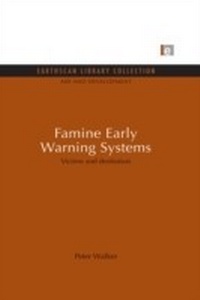
Famine Early Warning Systems
Victims and destitution
1st Edition
Published on 5. November 2013
210 pages
978-1-134-07086-2 (ISBN)
Description

Is it possible to see famines coming, to be prepared and to save possibly hundreds of thousands of lives? Or is this the wrong question?
A famine is not a single natural catastrophe: it has different stages. Many societies have sophisticated strategies for coping - but these are becoming dramatically limited. Famine Early Warning System is about the people who are caught up in the process of famine. Peter Walker looks at how they perceive their predicament and what they do to avert mass starvation: and at what genuinely useful help can be offered in order to prevent irreversible disaster. Originally published in 1989
A famine is not a single natural catastrophe: it has different stages. Many societies have sophisticated strategies for coping - but these are becoming dramatically limited. Famine Early Warning System is about the people who are caught up in the process of famine. Peter Walker looks at how they perceive their predicament and what they do to avert mass starvation: and at what genuinely useful help can be offered in order to prevent irreversible disaster. Originally published in 1989
More details
Series
Language
English
Place of publication
London
United Kingdom
Publishing group
Taylor & Francis Ltd
Target group
College/higher education
File size
4,29 MB
ISBN-13
978-1-134-07086-2 (9781134070862)
Copyright in bibliographic data and cover images is held by Nielsen Book Services Limited or by the publishers or by their respective licensors: all rights reserved.
Schweitzer Classification
Other editions
Additional editions
Book
03/2013
1st Edition
Routledge
€71.20
Shipment within 15-20 days
Book
10/2009
1st Edition
Earthscan Ltd
€215.41
Shipment within 3-4 weeks
Person
Walker, Peter
Content
Acknowledgements
Preface
1. The Nature of Disasters: the Challenge of Sustainable Development
Introduction
What is a Disaster?
Disaster Types and Scales
Famine: a Failure to Practise Sustainable Development?
What is Sustainable Development?
The Effect of Non-sustainable Development in Sudan
Non-sustainable Development in Brazil
What Triggers the Final Stages of Famine?
Natural Triggers
Man-made Triggers
The Success of Sustainable Development in Northern Ethiopia
2. The Outsider's View and the Victims' View of Famine
The Outsider's View
Famine as a Community Syndrome
Who are the Victims and who the Beneficiaries?
Famine Vulnerability
Famine Beneficiaries
The Victims' View
The Process of Famine
3. How do People Traditionally Respond?
The Victims' Perspective
Traditional Responses in Africa
Traditional Responses in the Indian Sub-continent
Conclusions and Lessons for Famine Early Warning
4. The Non-victims' Reaction
Introduction
Host Governments
Donor Governments
International Governmental Organizations (IGOs)
The Non-governmental Organizations (NGOs)
Conclusions
5. The Purpose of Early Warning Systems and the Nature of Information
What are the Components of a Perfect Warning System?
Who should be Warning Whom to do What?
Trigger-related Systems
Deprivation-related Systems
Conclusion
6. The Tools Available
Introduction
Remote Sensing
Food Balance Models
Nutritional Surveillance
Market Behaviour Models
Social Behaviour Models
Conclusions
7. How do States Warn of and Respond to Famine?
Introduction
India
Bangladesh
Botswana
Ethiopia
Conclusions
8. International and Non-governmental Early Warning Systems
Introduction
FAO/WFP
US AID-related
UNICEF
NGO Systems
Other Systems
9. Conclusions and Recommendations for Famine Warning Systems
Famine as a Process, not an Event
What makes a Warning System Work?
The Need for a Two-phase System
Recommendations for Famine Warning Systems
Recommendations for Mass Starvation Warning Systems
Additional Actions which need to be Taken
10. What is the Future for those Vulnerable to Famine?
Introduction
Population Growth
Global Warming and its Implications for Famine Vulnerability
Conclusions
References
Resource Centres
Index
Preface
1. The Nature of Disasters: the Challenge of Sustainable Development
Introduction
What is a Disaster?
Disaster Types and Scales
Famine: a Failure to Practise Sustainable Development?
What is Sustainable Development?
The Effect of Non-sustainable Development in Sudan
Non-sustainable Development in Brazil
What Triggers the Final Stages of Famine?
Natural Triggers
Man-made Triggers
The Success of Sustainable Development in Northern Ethiopia
2. The Outsider's View and the Victims' View of Famine
The Outsider's View
Famine as a Community Syndrome
Who are the Victims and who the Beneficiaries?
Famine Vulnerability
Famine Beneficiaries
The Victims' View
The Process of Famine
3. How do People Traditionally Respond?
The Victims' Perspective
Traditional Responses in Africa
Traditional Responses in the Indian Sub-continent
Conclusions and Lessons for Famine Early Warning
4. The Non-victims' Reaction
Introduction
Host Governments
Donor Governments
International Governmental Organizations (IGOs)
The Non-governmental Organizations (NGOs)
Conclusions
5. The Purpose of Early Warning Systems and the Nature of Information
What are the Components of a Perfect Warning System?
Who should be Warning Whom to do What?
Trigger-related Systems
Deprivation-related Systems
Conclusion
6. The Tools Available
Introduction
Remote Sensing
Food Balance Models
Nutritional Surveillance
Market Behaviour Models
Social Behaviour Models
Conclusions
7. How do States Warn of and Respond to Famine?
Introduction
India
Bangladesh
Botswana
Ethiopia
Conclusions
8. International and Non-governmental Early Warning Systems
Introduction
FAO/WFP
US AID-related
UNICEF
NGO Systems
Other Systems
9. Conclusions and Recommendations for Famine Warning Systems
Famine as a Process, not an Event
What makes a Warning System Work?
The Need for a Two-phase System
Recommendations for Famine Warning Systems
Recommendations for Mass Starvation Warning Systems
Additional Actions which need to be Taken
10. What is the Future for those Vulnerable to Famine?
Introduction
Population Growth
Global Warming and its Implications for Famine Vulnerability
Conclusions
References
Resource Centres
Index
