

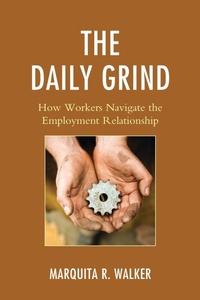
The Daily Grind
How Workers Navigate the Employment Relationship
1st Edition
Published on 27. October 2014
270 pages
979-8-216-24564-3 (ISBN)
Description

The Daily Grind:How WorkersNavigate the Employment Relationship introduces students to the tensions between labor and management within the U.S. employment relationship and explores how workers, operating in a socially and culturally structured system of capitalism, are influenced and manipulated by economic institutions and polity which exploit, devalue, and dehumanize workers in the name of corporate profit. The text covers how the American work ethic of the early nineteenth century helped shape the current perspective on the labor-management relationship, and how, over time, the Protestant and patriarchal influences of that period have countered the collective actions of workers in profound ways. The text further explores the effect of societal, cultural, and economic structures, both global and local, which limit workers' ability to achieve the "American Dream" and result in depressed economic conditions and discouraged workers. The text's focus on the current economic inequality and lack of social mobility challenges the current neoliberal ideology that capitalism is the best economic system.
The overarching framework for The Daily Grind: How Workers Navigate the Employment Relationship is situated in Labor Process Theory (LPT) which explores the control and resistance dichotomy between labor and management, the systematic deskilling of the workforce in order to increase production and increase owners' profits, and examines conflict over control of the labor process. An extension of Marxist theory about the organization of work, LPT explores the employment relationship, the control of work, the payment of work, the skills necessary for work, and the facilitation of work.
The overarching framework for The Daily Grind: How Workers Navigate the Employment Relationship is situated in Labor Process Theory (LPT) which explores the control and resistance dichotomy between labor and management, the systematic deskilling of the workforce in order to increase production and increase owners' profits, and examines conflict over control of the labor process. An extension of Marxist theory about the organization of work, LPT explores the employment relationship, the control of work, the payment of work, the skills necessary for work, and the facilitation of work.
More details
Other editions
Additional editions
Book
03/2017
Lexington Books
€69.30
Shipment within 15-20 days
Person
Marquita R. Walker is associate professor of labor studies in the School of Social Work at Indiana University Purdue University Indianapolis (IUPUI).
Content
The Daily Grind: How Workers Navigate the Employment Relationship
Table of Contents
Overview
About the Author
Acknowledgments
Introduction
Chapter 1: An Overview of the Field of Labor Studies
What is Labor Studies?The American Work EthicWorkers, Culture and Social Class Worker's Place in the Social StructureLabor's Place in the Social StructureChapter 2: Employment Relations in Historical Perspective, 1870-1935
The First and Second Industrial RevolutionsUnion Formation and StrikesSocial Environment: Early 20th CenturyCourt Decision, Legislation, and Public OpinionChapter 3: Employment Relations in Historical Perspective, 1935-present
Changing of the GuardThe New DealWWII BeginsLabor in Crisis and Transition Labor's Structural and Organizational Response Chapter 4: Theoretical Models Associated with the Labor Movement
A. The Compulsory Nature of Unionism
B. Theories of the Labor Movement
C. Social Movement Unionism
D. Militancy and Social Movements
Chapter 5: The Current State of the U.S. Employment Relationship
A. Poverty, Wealth and Income Inequities, and Equality versus Equity
B. Poverty in the U.S.
C. Wealth and Income Inequality
D. Policies to Alleviate Poverty: Minimum Wage and the Earned Income Tax Credit
E. Equality versus Equity: The Role of Fairness
Chapter 6: The Evolution of the Employment Relationship
Standard and Nonstandard Employment RelationshipsThe Nature of the Employment RelationshipEmployment Relationships over TimeJob Insecurity in Employment RelationshipsGlobalization's Effect on WorkersChapter 7: Compensation for American Workers
A. Time-oriented versus Task-oriented Labor
B. Human, Social, and Cultural Capital
C. Work versus Leisure
D. American Workers and Leave Time
E. Wage Theft
Chapter 8: Race and Ethnicity in the Employment Relationship
A. Definitions of Race and Ethnicity
B. Racial and Ethnic Immigration Flows
C. Causes and Continuations of Racial and Ethnic Disparities
Chapter 9: Gender and the Employment Relationship
A. Brief History of Women's Devalued Status
B. Women's Participation in the Labor Force
C. Women as Primary Care-givers
C. Wage Disparities Resulting from Gender
D. Gender Discrimination in the Workplace
E. Gender Disparities in Unions
Glossary
References
Index
Table of Contents
Overview
About the Author
Acknowledgments
Introduction
Chapter 1: An Overview of the Field of Labor Studies
What is Labor Studies?The American Work EthicWorkers, Culture and Social Class Worker's Place in the Social StructureLabor's Place in the Social StructureChapter 2: Employment Relations in Historical Perspective, 1870-1935
The First and Second Industrial RevolutionsUnion Formation and StrikesSocial Environment: Early 20th CenturyCourt Decision, Legislation, and Public OpinionChapter 3: Employment Relations in Historical Perspective, 1935-present
Changing of the GuardThe New DealWWII BeginsLabor in Crisis and Transition Labor's Structural and Organizational Response Chapter 4: Theoretical Models Associated with the Labor Movement
A. The Compulsory Nature of Unionism
B. Theories of the Labor Movement
C. Social Movement Unionism
D. Militancy and Social Movements
Chapter 5: The Current State of the U.S. Employment Relationship
A. Poverty, Wealth and Income Inequities, and Equality versus Equity
B. Poverty in the U.S.
C. Wealth and Income Inequality
D. Policies to Alleviate Poverty: Minimum Wage and the Earned Income Tax Credit
E. Equality versus Equity: The Role of Fairness
Chapter 6: The Evolution of the Employment Relationship
Standard and Nonstandard Employment RelationshipsThe Nature of the Employment RelationshipEmployment Relationships over TimeJob Insecurity in Employment RelationshipsGlobalization's Effect on WorkersChapter 7: Compensation for American Workers
A. Time-oriented versus Task-oriented Labor
B. Human, Social, and Cultural Capital
C. Work versus Leisure
D. American Workers and Leave Time
E. Wage Theft
Chapter 8: Race and Ethnicity in the Employment Relationship
A. Definitions of Race and Ethnicity
B. Racial and Ethnic Immigration Flows
C. Causes and Continuations of Racial and Ethnic Disparities
Chapter 9: Gender and the Employment Relationship
A. Brief History of Women's Devalued Status
B. Women's Participation in the Labor Force
C. Women as Primary Care-givers
C. Wage Disparities Resulting from Gender
D. Gender Discrimination in the Workplace
E. Gender Disparities in Unions
Glossary
References
Index
