

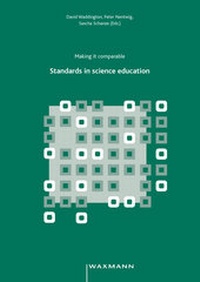
Making it comparable
Standards in science education
1st Edition
Published on 1. December 2007
440 pages
978-3-8309-6901-3 (ISBN)
Description

One of the most significant developments in school education in recent years has been the development and introduction of standards, a subject of considerable controversy.
This book is the result of a symposium held in Kiel, a symposium that was arranged by two leading science education groups, one at IPN (Leibniz Institute for Science Education at the University of Kiel) in Germany and the other at the University of York, UK. The seminar brought together experts from 15 countries. These countries include those that have extensive experience with the effects of standards on the educational system, on individual schools and teachers and on students. Other reports concern countries which are introducing them shortly and yet others on countries that are in the early stages of development of standards. 11 are from Europe and the others are from Australia, Israel, Taiwan and the U.S.
The book is divided into three parts. In Part A, two of the organizers set the scene, describing the reasons for arranging the symposium and outlining the preparations and the work done at the meeting. Part B contains 17 reports from the 15 countries and in Part C, there are two summaries, analysing the conclusions, taken from two different vantage points.
The controversies surrounding standards remain. However, this book gives a succinct and authoritative overall account of the advantages and disadvantages of their introduction taken from the experiences of many countries.
This book is the result of a symposium held in Kiel, a symposium that was arranged by two leading science education groups, one at IPN (Leibniz Institute for Science Education at the University of Kiel) in Germany and the other at the University of York, UK. The seminar brought together experts from 15 countries. These countries include those that have extensive experience with the effects of standards on the educational system, on individual schools and teachers and on students. Other reports concern countries which are introducing them shortly and yet others on countries that are in the early stages of development of standards. 11 are from Europe and the others are from Australia, Israel, Taiwan and the U.S.
The book is divided into three parts. In Part A, two of the organizers set the scene, describing the reasons for arranging the symposium and outlining the preparations and the work done at the meeting. Part B contains 17 reports from the 15 countries and in Part C, there are two summaries, analysing the conclusions, taken from two different vantage points.
The controversies surrounding standards remain. However, this book gives a succinct and authoritative overall account of the advantages and disadvantages of their introduction taken from the experiences of many countries.
More details
Other editions
Additional editions
David Waddington | Peter Nentwig | Sascha Schanze
Making it comparable
Standards in science education
Book
12/2007
1st Edition
Waxmann
€38.00
Article exhausted; check different version
