

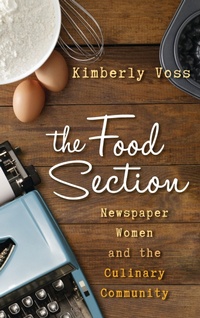
The Food Section
Newspaper Women and the Culinary Community
1st Edition
Published on 24. April 2014
1 pages
979-8-216-21529-5 (ISBN)
Description

Food blogs are everywhere today but for generations, information and opinions about food were found in the food sections of newspapers in communities large and small. Until the early 1970s, these sections were housed in the women's pages of newspapers-where women could hold an authoritative voice. The food editors-often a mix of trained journalist and home economist-reported on everything from nutrition news to features on the new chef in town. They wrote recipes and solicited ideas from readers. The sections reflected the trends of the time and the cooks of the community. The editors were local celebrities, judging cooking contests and getting calls at home about how to prepare a Thanksgiving turkey. They were consumer advocates and reporters for food safety and nutrition. They helped make James Beard and Julia Child household names as the editors wrote about their television appearances and reviewed their cookbooks.
These food editors laid the foundation for the food community that Nora Ephron described in her classic 1968 essay, "The Food Establishment," and eventually led to the food communities of today. Included in the chapters are profiles of such food editors as Jane Nickerson, Jeanne Voltz, and Ruth Ellen Church, who were unheralded pioneers in the field, as well as Cecily Brownstone, Poppy Cannon, and Clementine Paddleford, who are well known today; an analysis of their work demonstrates changes in the country's culinary history. The book concludes with a look at how the women's pages folded at the same time that home economics saw its field transformed and with thoughts about the foundation that these women laid for the food journalism of today.
These food editors laid the foundation for the food community that Nora Ephron described in her classic 1968 essay, "The Food Establishment," and eventually led to the food communities of today. Included in the chapters are profiles of such food editors as Jane Nickerson, Jeanne Voltz, and Ruth Ellen Church, who were unheralded pioneers in the field, as well as Cecily Brownstone, Poppy Cannon, and Clementine Paddleford, who are well known today; an analysis of their work demonstrates changes in the country's culinary history. The book concludes with a look at how the women's pages folded at the same time that home economics saw its field transformed and with thoughts about the foundation that these women laid for the food journalism of today.
More details
Other editions
Additional editions
Book
04/2014
Rowman & Littlefield Publishers
€71.60
Shipment within 10-20 days
Person
Kimberly Wilmot Voss is associate professor and area coordinator of journalism at the Nicholson School of Communication, University of Central Florida.
Kimberly is the first recipient of the Association of Food Journalists' Carol DeMasters Service to Food Journalism Award. More information on the award is available at: http://www.afjonline.com/news-display.cfm?nid=39
Kimberly is the first recipient of the Association of Food Journalists' Carol DeMasters Service to Food Journalism Award. More information on the award is available at: http://www.afjonline.com/news-display.cfm?nid=39
Content
Acknowledgements
Preface
1: The Food Journalism Myth, History of Food Sections & Newspaper Food Editors
2: World War II, the Food Establishment & Food Editors' Meetings
3: The Role of Advertising, Consumer News & Ethics
4: Cookbooks, Exchanging Recipes & Competitive Cooking
5: Test Kitchens, Home Economics & Food Journalism
6: Restaurant Reviewing, An Authoritative Voice & Women's Roles
7: Death of the Women's Pages, Changing Industry & the Women Forgotten
Appendix: Editors List
Bibliography
Preface
1: The Food Journalism Myth, History of Food Sections & Newspaper Food Editors
2: World War II, the Food Establishment & Food Editors' Meetings
3: The Role of Advertising, Consumer News & Ethics
4: Cookbooks, Exchanging Recipes & Competitive Cooking
5: Test Kitchens, Home Economics & Food Journalism
6: Restaurant Reviewing, An Authoritative Voice & Women's Roles
7: Death of the Women's Pages, Changing Industry & the Women Forgotten
Appendix: Editors List
Bibliography
