

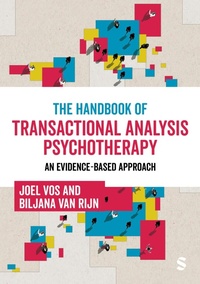
The Handbook of Transactional Analysis Psychotherapy
An Evidence-based Approach
1st Edition
Published on 4. June 2025
376 pages
978-1-5296-8025-6 (ISBN)
Description

This book is a comprehensive introduction to Transactional Analysis theory, evidence-base and practice. It provides a step by step manual to the competencies and skills needed across the therapy process, and a guide to working with a variety of client issues.
Supported by case studies, reflective questions, boxed summaries, and process questionnaires, this is the ideal book to support you in your training and practice. It is an essential companion whether you're studying on a specialist TA courses, studying TA as part of a wider training or integrating TA into your practice.
Supported by case studies, reflective questions, boxed summaries, and process questionnaires, this is the ideal book to support you in your training and practice. It is an essential companion whether you're studying on a specialist TA courses, studying TA as part of a wider training or integrating TA into your practice.
More details
Language
English
Place of publication
London
United Kingdom
Publishing group
Sage Publications Ltd (Digital)
Target group
College/higher education
File size
4,15 MB
ISBN-13
978-1-5296-8025-6 (9781529680256)
Copyright in bibliographic data and cover images is held by Nielsen Book Services Limited or by the publishers or by their respective licensors: all rights reserved.
Schweitzer Classification
Other editions
Additional editions
Joel Vos | Biljana van Rijn
The Handbook of Transactional Analysis Psychotherapy
An Evidence-based Approach
Book
07/2025
1st Edition
SAGE Publications Ltd
€38.24
Shipment within 3-4 weeks
Joel Vos | Biljana van Rijn
The Handbook of Transactional Analysis Psychotherapy
An Evidence-based Approach
Book
07/2025
1st Edition
SAGE Publications Ltd
€125.30
Shipment within 3-4 weeks
Persons
Dr Joel Vos, PhD, Cpsychol trained as a Clinical and Health Psychologist and Philosopher, and works as researcher, lecturer and therapist in Counselling Psychology.
Dr Biljana van Rijn, TSTA (Psychotherapy), UKCP Registered Psychotherapist and HCPC Registered Counselling Psychologist.
Biljana is a TA psychotherapist and a supervisor involved in the development of research both at Metanoia Institute in the UK, and in the wider professional field. She led the development of research as a Chair of the European Association for Transactional Analysis (EATA) Theory Development and Research committee. She is currently a President of the UK Chapter of the Society for Psychotherapy Research. Biljana is also a recipient of the 2019 ITAA research award for her contributions to research in Transactional Analysis.
Biljana has published a body of research within transactional analysis, psychotherapy process, and clinical supervision, as well as chapters and books on reflective practice, clinical assessment and formulation.
Dr Biljana van Rijn, TSTA (Psychotherapy), UKCP Registered Psychotherapist and HCPC Registered Counselling Psychologist.
Biljana is a TA psychotherapist and a supervisor involved in the development of research both at Metanoia Institute in the UK, and in the wider professional field. She led the development of research as a Chair of the European Association for Transactional Analysis (EATA) Theory Development and Research committee. She is currently a President of the UK Chapter of the Society for Psychotherapy Research. Biljana is also a recipient of the 2019 ITAA research award for her contributions to research in Transactional Analysis.
Biljana has published a body of research within transactional analysis, psychotherapy process, and clinical supervision, as well as chapters and books on reflective practice, clinical assessment and formulation.
Content
PART I. Background
1. Introduction
2. The Schools of TA
3. Overview of Research on TA
PART II. Evidence-based conceptual model of TA-psychotherapy
4. Clinical phenomenon: What are the client's problems?
5. Aetiological model: How did the client's problems start?
6. Therapeutic Aims and Outcomes: What can be achieved in TA?
7. Therapeutic mechanisms: How can therapists help clients?
PART III. Evidence-based TA Psychotherapeutic Competencies
8. Assessment Competencies
9. Relational Competencies
10. Structuring Competencies
11. Experiential Competencies
12. Integrative-therapeutic Competencies
PART IV. TA-psychotherapy for Specific Disorders
13. Depressive Disorders
14. Anxiety Disorders
15. Trauma Disorders
16. Cluster-A Personality Disorders (paranoid, schizotypical, schizoid)
17. Cluster-B Personality Disorders (narcissistic, antisocial, borderline, histrionic)
18. Cluster-C Personality Disorders (obsessive-compulsive, dependent, avoidant)
19. Neurodiversity
20. Behaviour problems and delinquency
21. Problematic use of alcohol or drugs
22. Physically Ill Clients
23. Eating Disorders
24. Sexual Disorders
25. Existential Concerns and Self-development
Part V. Evidence-based TA Treatment Manual
26. Overview of TA-Treatment
27. Establishing Relationship, Initial Assessment and Contract (sessions 1-2)
28. Systematic Assessment (sessions 3-7)
29. Experiential Processing in the Here-and-now (sessions 8-12)
30. Making Decisions and Changes in Daily Life (Sessions 13-16)
1. Introduction
2. The Schools of TA
3. Overview of Research on TA
PART II. Evidence-based conceptual model of TA-psychotherapy
4. Clinical phenomenon: What are the client's problems?
5. Aetiological model: How did the client's problems start?
6. Therapeutic Aims and Outcomes: What can be achieved in TA?
7. Therapeutic mechanisms: How can therapists help clients?
PART III. Evidence-based TA Psychotherapeutic Competencies
8. Assessment Competencies
9. Relational Competencies
10. Structuring Competencies
11. Experiential Competencies
12. Integrative-therapeutic Competencies
PART IV. TA-psychotherapy for Specific Disorders
13. Depressive Disorders
14. Anxiety Disorders
15. Trauma Disorders
16. Cluster-A Personality Disorders (paranoid, schizotypical, schizoid)
17. Cluster-B Personality Disorders (narcissistic, antisocial, borderline, histrionic)
18. Cluster-C Personality Disorders (obsessive-compulsive, dependent, avoidant)
19. Neurodiversity
20. Behaviour problems and delinquency
21. Problematic use of alcohol or drugs
22. Physically Ill Clients
23. Eating Disorders
24. Sexual Disorders
25. Existential Concerns and Self-development
Part V. Evidence-based TA Treatment Manual
26. Overview of TA-Treatment
27. Establishing Relationship, Initial Assessment and Contract (sessions 1-2)
28. Systematic Assessment (sessions 3-7)
29. Experiential Processing in the Here-and-now (sessions 8-12)
30. Making Decisions and Changes in Daily Life (Sessions 13-16)
