

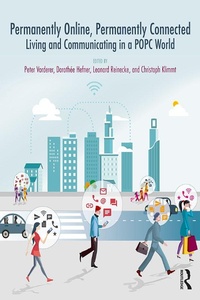
Permanently Online, Permanently Connected
Living and Communicating in a POPC World
Published on 28. July 2017
284 pages
978-1-351-99646-4 (ISBN)
Description

Permanently Online, Permanently Connected establishes the conceptual grounds needed for a solid understanding of the permanently online/permanently connected phenomenon, its causes and consequences, and its applied implications. Due to the diffusion of mobile devices, the ways people communicate and interact with each other and use electronic media have changed substantially within a short period of time. This megatrend comes with fundamental challenges to communication, both theoretical and empirical. The book offers a compendium of perspectives and theoretical approaches from leading thinkers in the field to empower communication scholars to develop this research systematically, exhaustively, and quickly. It is essential reading for media and communication scholars and students studying new media, media effects, and communication theory.
More details
Language
English
Place of publication
London
United Kingdom
Publishing group
Taylor & Francis Ltd
Target group
College/higher education
Product notice
Reflowable
Illustrations
11 s/w Zeichnungen
11 Line drawings, black and white
File size
2,00 MB
ISBN-13
978-1-351-99646-4 (9781351996464)
Copyright in bibliographic data and cover images is held by Nielsen Book Services Limited or by the publishers or by their respective licensors: all rights reserved.
Schweitzer Classification
Other editions
Additional editions
Peter Vorderer | Dorothee Hefner | Leonard Reinecke
Permanently Online, Permanently Connected
Living and Communicating in a POPC World
Book
08/2017
1st Edition
Routledge
€69.00
Shipment within 10-20 days
Peter Vorderer | Dorothee Hefner | Leonard Reinecke
Permanently Online, Permanently Connected
Living and Communicating in a POPC World
Book
08/2017
1st Edition
Routledge
€215.77
Shipment within 10-20 days
Persons
Peter Vorderer is a professor of media and communication studies at the University of Mannheim. Previous affiliations include the University of Toronto, Hanover University of Music, Drama and Media, the University of Southern California, and the VU University of Amsterdam. He served as president of the International Communication Association (ICA) from 2014 to 2015. His research focuses on media use and media effects with a special interest in entertainment research and new media and how permanent connectedness with others via mobile devices changes individuals and society at large.
Dorothee Hefner is a research associate at the Hanover University of Music, Drama and Media. Her research focuses on (permanent) mobile phone use and digital connectedness and their antecedents, as well as implications for interpersonal communication, political information, and individual well-being.
Leonard Reinecke is an assistant professor at the Department of Communication at Johannes Gutenberg University Mainz, Germany. His research focuses on media uses and effects, media entertainment, and online communication. He has conducted research on various aspects of media use and well-being, including media-induced recovery from stress and strain and the interaction of media use and self-control.
Christoph Klimmt is a professor of communication at Hanover University of Music, Drama and Media. Beyond research on media entertainment, video games in particular, he is interested in media effects in news, advertising, risk, health, and science communication. Klimmt is currently serving as associate editor of the Journal of Media Psychology.
Dorothee Hefner is a research associate at the Hanover University of Music, Drama and Media. Her research focuses on (permanent) mobile phone use and digital connectedness and their antecedents, as well as implications for interpersonal communication, political information, and individual well-being.
Leonard Reinecke is an assistant professor at the Department of Communication at Johannes Gutenberg University Mainz, Germany. His research focuses on media uses and effects, media entertainment, and online communication. He has conducted research on various aspects of media use and well-being, including media-induced recovery from stress and strain and the interaction of media use and self-control.
Christoph Klimmt is a professor of communication at Hanover University of Music, Drama and Media. Beyond research on media entertainment, video games in particular, he is interested in media effects in news, advertising, risk, health, and science communication. Klimmt is currently serving as associate editor of the Journal of Media Psychology.
Content
Introduction
Chapter 1: A brief history of individual addressability: The role of mobile communication in being permanently connected
Chapter 2: The Permanently Online and Permanently Connected Mind: Mapping the Cognitive Structures behind Mobile Internet Use
Chapter 3: Methodological Challenges of POPC for Communication Research
Chapter 4: Reconceptualising uses and gratifications vis-a-vis smartphone applications: The case of WhatsApp
Chapter 5: Always On? Explicating Impulsive Influences on Media Use
Chapter 6: Permanence of Online Access and Internet Addiction
Chapter 7: Multitasking: Does It Actually Exist?
Chapter 8: Threaded Cognition Approach to Multitasking and Activity Switching in a Permanently Online and Permanently Connected Ecosystem
Chapter 9: Living in the moment: Self-Narratives of Permanently Connected Media Users
Chapter 10: Getting the Best Out of POPC While Keeping the Risks in Mind: The Calculus of Meaningfulness and Privacy
Chapter 11: The Experience of Narrative in the Permanently Online, Permanently Connected Environment: Multitasking, Self-Expansion, and Entertainment Effects
Chapter 12: Being POPC together: Permanent Connectedness and Group Dynamics
Chapter 13: POPC and Social Relationships
Chapter 14: Between Surveillance and Sexting: Permanent Connectedness and Intimate Relationships
Chapter 15: Growing Up Online: Media Use and Development in Early Adolescence
Chapter 16: Being Mindfully Connected - Responding to the Challenges of Adolescents living in a POPC World
Chapter 17: Permanent Connections Around the Globe
Chapter 18: The POPC Citizen: Political Information in the Fourth Age of Political Communication
Chapter 19: The Networked Young Citizen as POPC (permanently online, permanently connected) Citizen
Chapter 20: Permanent Entertainment and Political Behavior
Chapter 21: POPC and Well-Being: A Risk-Benefit Analysis
Chapter 22: Being permanently online and being permanently connected at work: A demands-resources perspective
Chapter 23: The Dose Makes the Poison: Theoretical Considerations and Challenges of Health-Related POP
Chapter 1: A brief history of individual addressability: The role of mobile communication in being permanently connected
Chapter 2: The Permanently Online and Permanently Connected Mind: Mapping the Cognitive Structures behind Mobile Internet Use
Chapter 3: Methodological Challenges of POPC for Communication Research
Chapter 4: Reconceptualising uses and gratifications vis-a-vis smartphone applications: The case of WhatsApp
Chapter 5: Always On? Explicating Impulsive Influences on Media Use
Chapter 6: Permanence of Online Access and Internet Addiction
Chapter 7: Multitasking: Does It Actually Exist?
Chapter 8: Threaded Cognition Approach to Multitasking and Activity Switching in a Permanently Online and Permanently Connected Ecosystem
Chapter 9: Living in the moment: Self-Narratives of Permanently Connected Media Users
Chapter 10: Getting the Best Out of POPC While Keeping the Risks in Mind: The Calculus of Meaningfulness and Privacy
Chapter 11: The Experience of Narrative in the Permanently Online, Permanently Connected Environment: Multitasking, Self-Expansion, and Entertainment Effects
Chapter 12: Being POPC together: Permanent Connectedness and Group Dynamics
Chapter 13: POPC and Social Relationships
Chapter 14: Between Surveillance and Sexting: Permanent Connectedness and Intimate Relationships
Chapter 15: Growing Up Online: Media Use and Development in Early Adolescence
Chapter 16: Being Mindfully Connected - Responding to the Challenges of Adolescents living in a POPC World
Chapter 17: Permanent Connections Around the Globe
Chapter 18: The POPC Citizen: Political Information in the Fourth Age of Political Communication
Chapter 19: The Networked Young Citizen as POPC (permanently online, permanently connected) Citizen
Chapter 20: Permanent Entertainment and Political Behavior
Chapter 21: POPC and Well-Being: A Risk-Benefit Analysis
Chapter 22: Being permanently online and being permanently connected at work: A demands-resources perspective
Chapter 23: The Dose Makes the Poison: Theoretical Considerations and Challenges of Health-Related POP
