

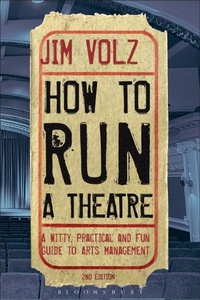
How to Run a Theatre
Description

"All of us in the arts field are hungry to improve our skills in arts management. The grim tenor of the times makes this witty and fun guide even more valuable to us all!" Ben Cameron, Former Executive Director, Theater Communications Group
"Dr. Jim Volz knows how to organize, how to manage, how to motivate, how to assign priorities. In short, he knows how to get the job done." Abe J. Bassett, Former Dean, Indiana University/Purdue University
Jim Volz is one of America's leading theatre consultants with over three decades of work with theatre, dance, music, museum and arts center management. Now, Jim Volz brings his expertise to anyone who works in arts management, from novices to middle managers to executive directors. How to Run a Theater is a unique, dynamic, and savvy guide to building an arts institution that works. Drawing on more than 30 years of experience, here is practical advice on a variety of management skills: Financial Management; Personnel Management; Fundraising Development; Board of Trustees Communications; and Marketing & Audience Development.
This new edition is thoroughly updated and revised and now includes a Board of Trustee Contract, new budget exercise with ticket income formulae and the use of social networking for marketing and fundraising.
More details
Other editions
Additional editions
Person
Jim Volz has produced over 100 professional productions and published more than 100 articles and seven books. He was a longtime theatre critic/columnist for Back Stage magazine, is the editor of the Shakespeare publication, quarto, and a Professor at California State University, Fullerton. He is a Ph.D. graduate from the University of Colorado, Boulder, and former Managing Director of the Alabama Shakespeare Festival.
Content
- Cover
- CONTENTS
- ACKNOWLEDGEMENTS
- PREFACE
- CHAPTER 1 LIFE MANAGEMENT AND THE ARTS
- Understanding Human Behavior Is the Key to Successful Arts Administration
- Communication
- Understanding and Empathy
- Strategic Life and Time Management for Savvy Arts Executives
- Tools for Time Management
- Ten Timely Tips for Savvy Arts Administrators
- Twenty Terrible Distractions That Erode Productivity
- Thirty Wonderful Ways to Seize Control of Your Own Life
- CHAPTER 2 PRODUCERS, ARTISTIC DIRECTORS AND MANAGING DIRECTORS: EXECUTIVE STAFF STRATEGIC PLANNING
- The Artistic Vision and Producing in America's Non-profit Theatres
- An Introduction to America's Non-profit Theatre Movement
- Beyond Broadway
- Non-profits Nationwide
- Dramatic Developments
- Artistic Visioning, the Artistic Director and the Artistic Team
- The Managing Director
- The Artistic Director/Managing Director Partnership
- Sample Organizational Chart for Non-profit Theatres
- A Sampling of Mission and Values Statements from Select Non-profit Theatre Institutions
- A Suggested Arts Planning Schedule
- Brainstorming and Strategic Vision
- Twelve Timely Tips for Taking Charge and Endearing Your Theatre to Your Community
- Fifteen Fabulous Ways to Infuriate Your Community
- Season Selection: Savvy Strategies, Sick Tales and Sad Stories
- Advice to Arts Leaders Everywhere: Twenty-one Wonderful Ways to Improve Your Life in the Theatre
- In Our Own Words: Seventeen Notes Actors Would Like to Offer Artistic Directors
- Creating Ownership: Strategic Tricks of the Trade
- Looking for Leaders in the Twenty-first Century Managers, Oh Managers, Wherefore Art Thou, Managers?
- Notes from Both Sides of the Field: Is There a Crisis in Management Leadership?
- University Training or Practical Experience?
- Graduate Degrees Offer Few Guarantees and Academia Isn't the Only Option
- Opportunities in the Field and Beyond
- Fifteen Distinctive Graduate Programs in Theatre Management Related Areas
- Notable Non-degree Pathways and Arts Leadership Financial Opportunities
- CHAPTER 3 BOARD OF TRUSTEE MANAGEMENT AND THE ARTS
- The Role of the Non-profit Arts Board of Trustees
- Board of Trustee and Executive Staff Relations
- Introduction
- General Tips on Board of Trustee and Executive Staff Relations
- Board Meeting Planning
- Organization of the Agenda
- Distribution of Board Meeting Minutes
- Season Planning, Budget Preparations and Board Communications
- Introduction
- Season Selection and Budget Planning
- Fundraising Planning and Board Communications
- A Sample "Board of Trustee Contract" and "Talking Points" Outline for Recruiting New Board Members
- Soothing Souls, Funding Dreams and Saving Theatres: National Theatre Leaders Speak Out on Building America's Non-profit Boards
- Who Should be on a Theatre Board?
- What Is the Right Size for a Non-profit Theatre Board of Trustees?
- How Do You Keep a Board of Trustees Focused on the Theatre's Needs?
- A Sample Board Meeting Agenda
- In Conclusion
- Is It Lonely at the Top? Give Yourself a Grade for Board/Staff Communications
- Board of Trustees: Institutional Audit Questionnaire
- Introduction
- Board/Staff Relations
- Budgeting, Finance and Season Planning
- Fundraising
- Marketing and General
- Volunteers: A Perspective
- A Brief Volunteer Manifesto
- Guidelines for the Recruitment and Nurturing of All Volunteers
- CHAPTER 4 STRATEGIC PLANNING FOR THE ARTS
- Strategic Planning for Successful Theatre Operations
- The ABCs of Strategic Planning
- SWOT Analysis
- CHAPTER 5 PERSONNEL MANAGEMENT AND HUMAN RESOURCES
- Company Management
- Introduction
- Important Advice
- Key Personnel for Most Non-profit Theatres
- The Company Handbook
- Areas for Company Handbook Consideration
- Managing People: A Day-to-Day Checklist
- Supervisory Skills, Secrets and Debatable Sins
- When Great Minds Gather: Running a Productive Meeting
- Communications Basics: Memos, E-mails and Letters
- Building Character and Careers: Theatre Personnel Development
- Human Resources: The Good, The Bad and The Ugly
- Hiring
- Sample Interview Questions
- Orientation and Training
- Promotion and Retention
- Termination
- Negotiating Tips for Arts Managers
- Introduction
- Motivational Points to Consider
- The Bottom Line and Golden Rules
- The Negotiation Tip Sheet
- Ethics and the Arts: Making a Commitment to Human Dignity
- Introduction
- Too Busy for Ethics?
- Taking a Stance: Codes of Ethics, Human Dignity and Sexual Harassment in Arts and Education Associations
- Individual Theatre Policies
- Summary
- CHAPTER 6 FUNDRAISING FOR THE ARTS: BASIC STRATEGIES FOR THE 21st CENTURY
- Introduction to Fundraising
- Fundraising Can be Fun
- Fundraising Can be Poignant
- Fundraising Keeps Institutions Alive
- Fundraising by Any Other Name
- Marketing-based Fundraising Is Here to Stay
- Start in Your Own Backyard
- How to Recruit a Board of Trustees That Understands Fundraising Responsibilities
- Introduction
- Key Concepts Related to Fundraising Leadership
- Creating Enthusiasm
- Establishing a Sense of Urgency
- Defining Your Mission
- Establishing a Case Statement
- Determining Feasibility
- Clear Public Communications
- Setting Goals
- Timing
- Staff Support
- Budget
- Orienting Fundraisers
- Developing Prospects and Suspects
- Solidifying the Potential Donor List
- Matching Fundraisers to Prospective Donors
- Cultivating Potential Donors
- The Ask and Follow-Up
- Ongoing Cultivation
- Renewing Contributions
- Basic Fundraising Vehicles
- Annual Campaigns
- Planned Giving
- Capital Campaigns
- Endowment Campaigns
- Fundraisers
- Fundraising Theories
- Introduction
- Fundraising Myths
- Common Fundraising Mistakes
- A Sample Executive Outline of a Strategic Fundraising Plan
- Fundraising Objectives, Targets and Goals
- CHAPTER 7 MARKETING THE ARTS IN THE 21ST CENTURY
- Introduction
- Overview
- Basic Arts Marketing Terms
- Press and Media
- Helpful Media Hints
- Job Descriptions
- Director of Marketing
- Director of Audience Development
- Director of Publications
- Director of Press and Public Relations
- Sales Manager
- Group Sales Manager
- Telemarketing Manager
- Box Office Manager
- Director of Education
- Social Networking and the Arts
- Introduction
- Image Building and Strategic Planning Notes
- Nuts and Bolts Staff Communications and Relations Tips
- Income and Image Strategy Basics
- Marketing on a Limited Budget
- Two Audience Development Tools for Strategic Planning and Goal Setting
- Outline for Strategic Planning and Nuts-and-Bolts Marketing
- Sample Marketing Plan
- Timely Theatre Etiquette Tidbits
- CHAPTER 8 BUDGETING AND FINANCIAL MANAGEMENT
- Budget Basics: A to Z
- Summary of Standard Theatre Financial Terminology and Processes
- Introduction
- Terminology: A to Z
- Sample Business Office Procedures
- Purchase Orders
- Cash Receipts
- Cash Disbursements
- Bookkeeping
- Annual Audit
- Business Office Flow Chart
- A Financial Worksheet for Theatre Budget Planning
- A Budget Exercise
- A Sample Comparative Budget Analysis of Expenses in Executive Summary
- CHAPTER 9 SURVIVING IN A COMPETITIVE FIELD
- Trippingly on the Tongue:
- A Guide to Speaking the Speech (or Public Speaking)
- If You Are in the Theatre You Are Expected to Know How to Speak
- Content and Form
- Speaking-the-Speech Tips
- Tips for Stress Reduction: Staying Fit for Life
- Introduction
- Stress Reduction Tip Sheet
- Five Tips for Starting a New Job
- Ten Tips for Losing Your Current Job
- Fourteen Artistic Networking Survival Skills for Theatre Professionals Young and Old
- Introduction
- An Abbreviated Directory of Theatre-Related Labor Unions, Guilds, Contracts and Associations
- America's Non-profit Professional Theatres: An Overview of Four Nationwide Organizations
- Theatre Communications Group (TCG)
- League of Resident Theatres (LORT)
- Institute of Outdoor Drama (IOD)
- The Shakespeare Festival Phenomenon: Shakespeare Theatre Association of America (STAA)
- A Final Note
- BIBLIOGRAPHY
- ABOUT THE AUTHOR
- INDEX
- A
- B
- C
- D
- E
- F
- G
- H
- I
- J
- K
- L
- M
- N
- O
- P
- Q
- R
- S
- T
- U
- V
- W
- Y
- Z
