

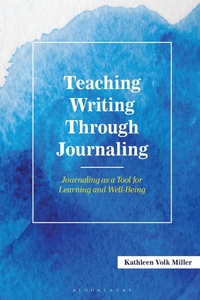
Teaching Writing Through Journaling
Journaling as a Tool for Learning and Well-Being
1st Edition
Published on 30. October 2025
160 pages
979-8-7651-6157-9 (ISBN)
Description

We are in the midst of a youth mental health crisis so severe that the U.S. Surgeon General has called it "the defining public health crisis of our time." By the age of 18, 17.1 million young people are living with a mental health disorder. Alarming statistics show that 60% of teens report feeling sad or hopeless most of the time, and one in three teen girls has experienced suicidal ideation. But there is hope: early intervention can change outcomes. Helping children develop a healthier outlook early on is key-and writing can be a powerful tool in this process. When schools prioritize students' social-emotional and mental health needs alongside academics, overall performance improves.
Writing helps students identify, regulate, and express their emotions, which not only fosters emotional resilience but also improves writing skills and academic achievement. Journaling can increase students' self-awareness, confidence, and ability to process complex thoughts. Research shows that students who write regularly perform better academically than those who don't, as writing strengthens conceptual understanding and critical thinking. The first book in a new series on teaching writing, Teaching Writing through Journaling presents practices that make writing a daily habit, helping students internalize its value for learning and well-being. Instructors who engage in these practices benefit as well-emotionally and physically. It's time to flip the script: success doesn't create happiness; happiness fuels success.
Teaching Writing series:
This series for K-12 and collegiate writing and English teachers, educators, curriculum specialists, and preservice teacher education candidates provides methods, pedagogy and practical exercises in the teaching of writing.
Books in the series explore the vast array of ideas, strategies and topics that actively engage students in developing skills that will help them become better writers, critical readers and critical thinkers. These fresh methodologies will expand students' ideas on what writing means, as well as what learning can mean. Various approaches in the series will rejuvenate instructors and feed educators' own desires as lifelong learners.
Each book is meant to make the educators lives both easier and more fulfilling, as the texts in this series include a plethora of writing exercises, prompts and approaches. Many titles will benefit educators from various disciplines who are interested in implementing more writing into their curriculum.
Writing helps students identify, regulate, and express their emotions, which not only fosters emotional resilience but also improves writing skills and academic achievement. Journaling can increase students' self-awareness, confidence, and ability to process complex thoughts. Research shows that students who write regularly perform better academically than those who don't, as writing strengthens conceptual understanding and critical thinking. The first book in a new series on teaching writing, Teaching Writing through Journaling presents practices that make writing a daily habit, helping students internalize its value for learning and well-being. Instructors who engage in these practices benefit as well-emotionally and physically. It's time to flip the script: success doesn't create happiness; happiness fuels success.
Teaching Writing series:
This series for K-12 and collegiate writing and English teachers, educators, curriculum specialists, and preservice teacher education candidates provides methods, pedagogy and practical exercises in the teaching of writing.
Books in the series explore the vast array of ideas, strategies and topics that actively engage students in developing skills that will help them become better writers, critical readers and critical thinkers. These fresh methodologies will expand students' ideas on what writing means, as well as what learning can mean. Various approaches in the series will rejuvenate instructors and feed educators' own desires as lifelong learners.
Each book is meant to make the educators lives both easier and more fulfilling, as the texts in this series include a plethora of writing exercises, prompts and approaches. Many titles will benefit educators from various disciplines who are interested in implementing more writing into their curriculum.
More details
Series
Edition
1. Auflage
Language
English
Place of publication
New York
United States
Publishing group
Bloomsbury Publishing Plc
ISBN-13
979-8-7651-6157-9 (9798765161579)
Copyright in bibliographic data and cover images is held by Nielsen Book Services Limited or by the publishers or by their respective licensors: all rights reserved.
Schweitzer Classification
Other editions
Additional editions
Kathleen Volk Miller
Teaching Writing Through Journaling
Journaling as a Tool for Learning and Well-Being
Book
approx. 01/2026
Rowman & Littlefield Publishers
€31.50
Not yet published
Person
The Teaching Writing series is edited by Kathleen Volk Miller, Teaching Professor at Drexel University, co-editor of Painted Bride Quarterly. Kathleen Volk Miller has written for LitHub, NYT Modern Love, O, the Oprah magazine, Salon, the NYTimes, Huffington Post, Washington Post, Family Circle, Philadelphia Magazine and other venues. "How We Want to Live," an essay, was chosen as the penultimate piece in Oprah's Book of Starting Over (Flat Iron Books, Hearst Publications, 2016). She is co-editor of the anthology, Humor: A Reader for Writers (Oxford University Press, 2014). She is co-host of PBQ's podcast, Slush Pile. She has also published in literary magazines, such as Drunken Boat, Opium, and other venues. She holds "Healing through Writing" workshops, and other memoir classes. She consults on literary magazine start up, working with college students, and getting published in literary magazines.
Content
Acknowledgements
Introduction
Chapter 1: Writing as Thinking
Chapter 2: Writing as Offloading
Chapter 3: Gratitude Journaling
Chapter 4: The Science
Chapter 5: Pedagogy Philosophy and Student Well-Being
Chapter 6: Journaling with Younger Children
Chapter 7: Journaling with Neurodiverse Learners
Chapter 8: Lifelong Life Skills
Introduction
Chapter 1: Writing as Thinking
Chapter 2: Writing as Offloading
Chapter 3: Gratitude Journaling
Chapter 4: The Science
Chapter 5: Pedagogy Philosophy and Student Well-Being
Chapter 6: Journaling with Younger Children
Chapter 7: Journaling with Neurodiverse Learners
Chapter 8: Lifelong Life Skills
