

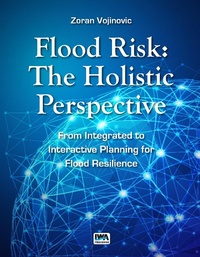
Flood Risk
The Holistic Perspective
Published on 15. March 2015
292 pages
978-1-78040-533-9 (ISBN)
Description

According to the International Disaster Database (EM-DAT), over the last seventy years, floods have shown the fastest rate of increase relative to any other type of disasters. Devastation due to these events occurs almost daily. Even though our technological capabilities for dealing with floods have advanced rapidly over the same period, and while global economic growth per capita has doubled, flood events have become ever more disastrous. Does this mean that our technological developments have advanced independently from the social and wider ecological needs?
Flood Risk: The Holistic Perspective is a direct response to this question and it argues that this paradoxical situation is a result from our narrow and fragmented perception of reality which has been characteristic of our academic disciplines and government agencies. It suggests that the way forward can be found only if we broaden our view and learn how the natural or social phenomena can provoke a response in a society, or a social group, which in turn can trigger the technical developments, and so on, again and again, in what has the potential to become a network of interactions and relationships through positive feedback (or coevolving) cycles. The holistic perspective however may raise the following question: If everything is connected to everything else, how can we ever hope to understand anything? Our response draws from the understandings brought by complexity theory where individual elements coevolve together both in development and application. This recognition opens a new analysis which goes beyond the direct objects or actors of concern (risk forecasting, early warning, land-use planning technology and systems for example), and into the relationships between them. The book suggests that our initial response to this and many other challenges is to change our perception from a disciplinary and defensive one to a progressive (or transcendental) and transdiciplinary, i.e., the one that turns challenges into the possibilities that can re-shape our future.
The book is structured in eight chapters. Chapter 1 provides exposure to the complexity of flood-related issues and illustrates diversity of multiple points of view. Chapter 2 elaborates on the history of holistic thinking with connection to the flood resilience process. Chapter 3 discusses the holistic risk governance approach which progresses beyond the integrated urban flood management. Chapter 4 describes the Green Cities Initiative, an initiative which is essentially holistic in its nature as it aims to improve transport, energy efficiency, industrial metabolism including water supply and distribution as well as drainage and sewerage services through the holistic lens of interactions between different sectors. Chapter 5 discusses various risk assessment practices and it concludes that any practice that omits social, ethical and wider ecological points of view will be severely restricted in its scope and its reach. Chapter 6 describes the root causes of floods in the Pasig-Marikina River Basin in Metro Manila, Philippines. Chapter 7 reflects upon the key issues and challenges from 2011 Thailand floods. Finally, Chapter 8 presents some of the key aspects concerning urban stormwater management practice in Beijing, China.
Flood Risk: The Holistic Perspective is a direct response to this question and it argues that this paradoxical situation is a result from our narrow and fragmented perception of reality which has been characteristic of our academic disciplines and government agencies. It suggests that the way forward can be found only if we broaden our view and learn how the natural or social phenomena can provoke a response in a society, or a social group, which in turn can trigger the technical developments, and so on, again and again, in what has the potential to become a network of interactions and relationships through positive feedback (or coevolving) cycles. The holistic perspective however may raise the following question: If everything is connected to everything else, how can we ever hope to understand anything? Our response draws from the understandings brought by complexity theory where individual elements coevolve together both in development and application. This recognition opens a new analysis which goes beyond the direct objects or actors of concern (risk forecasting, early warning, land-use planning technology and systems for example), and into the relationships between them. The book suggests that our initial response to this and many other challenges is to change our perception from a disciplinary and defensive one to a progressive (or transcendental) and transdiciplinary, i.e., the one that turns challenges into the possibilities that can re-shape our future.
The book is structured in eight chapters. Chapter 1 provides exposure to the complexity of flood-related issues and illustrates diversity of multiple points of view. Chapter 2 elaborates on the history of holistic thinking with connection to the flood resilience process. Chapter 3 discusses the holistic risk governance approach which progresses beyond the integrated urban flood management. Chapter 4 describes the Green Cities Initiative, an initiative which is essentially holistic in its nature as it aims to improve transport, energy efficiency, industrial metabolism including water supply and distribution as well as drainage and sewerage services through the holistic lens of interactions between different sectors. Chapter 5 discusses various risk assessment practices and it concludes that any practice that omits social, ethical and wider ecological points of view will be severely restricted in its scope and its reach. Chapter 6 describes the root causes of floods in the Pasig-Marikina River Basin in Metro Manila, Philippines. Chapter 7 reflects upon the key issues and challenges from 2011 Thailand floods. Finally, Chapter 8 presents some of the key aspects concerning urban stormwater management practice in Beijing, China.
More details
Series
Language
English
Place of publication
London
United Kingdom
Target group
College/higher education
Professional and scholarly
File size
19,79 MB
ISBN-13
978-1-78040-533-9 (9781780405339)
Copyright in bibliographic data and cover images is held by Nielsen Book Services Limited or by the publishers or by their respective licensors: all rights reserved.
Schweitzer Classification
Other editions
Additional editions
Book
03/2015
IWA Publishing
€153.01
Article exhausted; check different version
Content
- Cover
- Copyright
- Dedication
- Contents
- Foreword by Michael B. Abbott
- Foreword by Kuniyoshi Takeuchi
- Preface
- Acknowledgements
- Chapter 1: Floods in urban areas
- 1.1 Setting the Scene
- 1.2 On Values and Qualities
- 1.3 Paving the Way Forward: Shifting the Focus
- 1.4 Differentiating between Different Types of Floods and Their Impacts
- 1.5 The Need for Adaptation Calls for Holistic Approaches
- 1.6 Towards a New Economic Paradigm: Economics, Ethics and Wellbeing
- Chapter 2: Holistic thinking
- 2.1 The Rise of Holistic Thinking
- 2.2 From the Parts to the Whole
- 2.3 Tracing the Roots of Urban Flood Risk from Four Levels of the Whole
- 2.4 Mathematics of Complexity and Interactions
- Chapter 3: Moving beyond traditional practices
- 3.1 Towards Holistic Planning for Flood Resilience
- 3.2 Synergy with Ecosystem Services
- 3.3 Good Governance for Holistic Planning
- 3.4 The ABC Framework for Implementation of Holistic Approaches
- Chapter 4: A. Holistic risk assessment
- 4.1 The Purpose of the Holistic Flood Risk Assessment
- 4.2 Data Gathering
- 4.3 Root Causes
- 4.4 Diagnostics
- 4.4.1 Assessment of hazards
- 4.4.2 Assessment of vulnerabilities
- 4.4.3 Assessment of impacts
- 4.4.4 Quantitative assessment of risk
- 4.4.5 Qualitative assessment of risk
- 4.4.6 Combining quantitative and qualitative data and methods into holistic frameworks
- 4.5 Uncertainty in Flood Risk Assessment
- 4.6 Recognition - Raising Risk Awareness
- 4.6.1 Methods for raising hazard/risk awareness
- Chapter 5: B. Holistic scenario analysis
- 5.1 The Purpose of the Holistic Scenario Analysis
- 5.2 Identification of Drivers and Actors
- 5.2.1 Climate change impacts on rainfall characteristics
- 5.2.2 Population growth
- 5.2.3 Land use change and economic growth
- 5.2.4 Urban actors
- 5.3 Assessment and Evaluation of Scenarios
- 5.3.1 Climate change scenarios
- 5.3.2 Socio-economic scenarios
- 5.3.3 Evaluation of scenarios
- 5.4 Supporting Tools for Holistic Scenario Analysis
- 5.4.1 Climate modelling
- 5.4.2 Modelling land-use change
- 5.4.3 Modelling behaviour of actors
- 5.5 Development of a Knowledgebase of Measures
- 5.5.1 Pluvial flood protection
- 5.5.2 Fluvial flood protection
- 5.5.3 Groundwater flood protection
- 5.5.4 Coastal flood protection
- 5.5.5 Flash flood protection
- 5.5.6 Stakeholder capacity building
- 5.5.7 Land use planning
- 5.5.8 Flood preparedness
- 5.5.9 Contingency planning
- 5.5.10 Financial preparedness
- 5.5.11 Amenities of flood resilience measures
- Chapter 6: C. Holistic decision-making
- 6.1 The Purpose of the Holistic Decision-Making
- 6.2 Development of Indicators
- 6.3 Combining Different Measures for Flood Resilience
- 6.4 Evaluation and Selection of Measures
- 6.5 Development of Plans and Implementation of Projects
- 6.5.1 Data and information
- 6.5.2 Some common steps in the production of flood management plans
- 6.5.3 Integrated water resources management plans
- 6.5.4 River basin management plans
- 6.5.5 Catchment flood risk management plans
- 6.5.6 Coastal management plans
- 6.5.7 Disaster management plans
- 6.5.8 Asset management plans
- 6.6 Monitoring and Review
- 6.7 Decision Support Toolkit for Holistic Decision-Making
- Chapter 7: Tracing the root causes of floods in the Pasig-Marikina River Basin in Metro Manila, Philippines
- 7.1 Introduction
- 7.2 Identifying Some of the Dominant Root Causes
- 7.3 Flooding Attributed to Human Activities and Urbanisation
- 7.4 Flood Control Design Level of Protection
- 7.5 Metro Manila Flood Control Master Plan
- 7.5.1 Marikina river stormwater tunnel
- 7.5.2 Maximizing flood control function of Laguna de Bay
- 7.6 Holistic Flood Risk Management for Urban Areas
- 7.7 Holistic Flood Risk Mitigation Through Sustainability Science
- 7.8 Conclusions and Recommendations
- Chapter 8: Some notable reflections from the 2011 Thailand floods
- 8.1 Introduction
- 8.2 Tracing some of the Dominant Root Causes
- 8.3 Analysis of Impacts
- 8.4 Responses
- 8.5 Towards Holistic Risk Assessment in Ayutthaya
- 8.5.1 Hazard assessment
- 8.5.2 Vulnerability assessment
- 8.5.3 Risk assessment
- 8.6 Conclusions
- Chapter 9: Combination of different types of measures enhances Beijing's best practices
- 9.1 Problems and Challenges
- 9.1.1 General
- 9.1.2 Current stormwater management issues
- 9.1.3 Urban waterlogging
- 9.1.4 Stormwater runoff pollution
- 9.1.5 Conflicts between water shortage and stormwater loss
- 9.1.6 Challenges facing Beijing
- 9.2 Current Stormwater Management
- 9.2.1 Evolution of stormwater management
- 9.2.2 Engineering measures
- 9.2.3 Urban flood control system
- 9.2.4 Urban waterlogging control facility
- 9.2.5 Urban stormwater utilization facility
- 9.2.6 Low Impact Development (LID) practice
- 9.3 Non-Structural Measures for Stormwater Management
- 9.3.1 Institutional arrangements
- 9.3.2 Emergency response
- 9.3.3 Stormwater management policies and laws/regulations
- 9.4 Lessons Learned
- 9.4.1 Valuable experiences
- 9.4.2 Lessons
- Chapter 10: Holistic risk governance - where do we stand?
- 10.1 Synthesis
- 10.2 Placing ABCs of Holistic Planning into Practice
- 10.3 Concluding Remarks
- 10.3.1 Holistic governance and active stakeholder participation
- 10.3.2 Methods, tools and planning of resources
- 10.3.3 Possible funding schemes
- Afterword
- References
- Appendix
- Glossary
- Subject Index
