

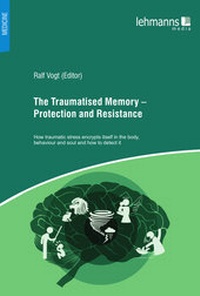
The Traumatised Memory - Protection and Resistance
How traumatic stress encrypts itself in the body, behaviour and soul and how to detect it
1st Edition
Published on 7. February 2019
210 pages
978-3-96543-006-8 (ISBN)
Description

Much has already been written about trauma psychotherapeutic methods. However, little research has so far been done on how psychodynamic traumatic incidents are psychologically mapped and coded into symptoms of the body and into mental images - although this topic is extremely exciting!
How is psychological stressful data saved and stored by humans depending on their age, the cruelty level of the incident or the accumulation of terrible events? Which variants of remembrance are available to the body and mind? How can encrypted data be later retrieved and decrypted, so it is therapeutically effective and emotionally acceptable?
This book is a collection of theoretical and practical contributions that can be understood by psychotherapeutic colleagues and affected clients alike. The illustrative case examples are also interesting for anyone who wants to experience the logic and contradictions of the fascinating unconscious.
More details
Other editions
Additional editions
Ralf Vogt
The Traumatised Memory - Protection and Resistance
How traumatic stress encrypts itself in the body, behaviour and soul and how to detect it
Book
03/2019
1st Edition
Lehmanns Media
€29.95
Shipment within 10-20 days
Person
Content
- Intro
- Contents
- Acknowledgements
- 1 Theoretical Previews
- Ralf Vogt - Zeitgeist and Trauma Memory
- Winja Lutz - The Reality of False Memories
- The History of the False Memory Syndrome Foundation
- Research paradigms
- Shaw and Porter's Rich-False-Memories Study
- Loftus' Lost-In-The-Mall Study
- Conclusions
- Ralf Vogt - The SPIM 30 Concept of Beseelbare Symbolization Media to Resolve Severe Transference Problems in Dissociative Trauma Disorders
- Introduction
- Exploring Transference Media for the Treatment of Trauma
- Further Fields of Application of Beseelbare Therapy Media and Outlook
- Ralf Vogt - The Previous SPIM-30-Orientation
- Ralf Vogt - The Psychodynamic Transformation
- Case vignettes of how traumatic data are coded in memory
- Case vignettes on how trauma data are decoded in the mind
- Conclusions from all data conversion processes
- Ralf Vogt - Classification of Psychodynamic Data Qualities of Memories in Dissociative Psychotrauma Clients
- 2 Various Clinical Contributions to the Analysis and Treatment of Trauma Memory
- Renée Potgieter Marks - The Frozen Child: The Process of Memory Recall in Children with Complex Trauma and Dissociation
- The Case Example of Jake
- Powerful Body Responses and No Memory
- Beseelbare Objects
- Memory recall
- Activation and Integration
- The Case Example of Lee
- Summary
- Valerie Sinason - Time and Memory and DID
- Introduction
- Categories of Dissociative Dialogues
- Other Societal Reasons that Impact Memory
- The Role of Fairbairn
- The Moral Defence - In work with Children and Adults with an Intellectual Disability
- Final Statement
- Joanne H. Twombly - Case of a Woman with Complex DID and a History of Inadequate Treatment
- Kevin J. Connors - On Memory and Dissociative Process
- Introduction
- The Case Example of Andrew
- Implications for Therapy
- Irina Vogt - Remembering Prenatal and Birth Trauma - A Case Example - DESNOS
- Ralf Vogt - The Shamed Prince - A Case Example - DESNOS
- First Phase of Therapy
- Middle Phase of Therapy
- Interpretation
- Last Phase of Therapy
- Interpretation
- Ralf Vogt - Dissociative Late Discovery - A Case Example - DDNOS
- First Interpretational Framework and Therapy Phase
- Middle Phase of Therapy
- Interpretation
- Last Therapy Phase
- Interpretation
- Ralf Vogt - The Weak Troublemaker - A Case Example - DID
- First Phase of Therapy
- Middle Phase of Therapy
- Last or Third Phase of Therapy
- Interpretation
- 3 New Research Results on Trauma Memory
- Ralf Vogt - Pilot Study Excerpts on Trauma Memory through a Client Survey
- Preliminary note
- Study Excerpts
- Summary
- 4 New Contributions to the Treatment Model SPIM 30
- Ralf Vogt - Neurophysiological and Psychodynamic Regulation stages of Interaction and their Implications for Therapeutic Relationship Building and Memory Work
- Ralf Vogt - Attachment-Oriented Reform Approaches for Psychotraumatology
- Trauma Attachment Styles
- Victim attachment style (VA)
- Perpetrator attachment style (PA)
- The Oscillating Victim Perpetrator Attachment Style (OscA)
- 5 Appendix
- Selection of photographs showing SPIM-30-Settings
- Author Index
- List of References
- Accessing SPIM 30
